


Why More Forex Traders Are Moving From Brokers to Prop Firms
The conversation around prop firms vs brokers has become one of the most discussed topics in modern Forex trading. Over the last few years, a growing number of traders have started shifting away from traditional broker accounts and toward proprietary trading firms.
This change is not accidental. It reflects how traders now think about capital, risk exposure, and long-term sustainability in trading. While brokers remain an essential part of the market, prop firms are increasingly becoming the preferred environment for traders who want to scale faster while protecting personal capital.
Understanding why this shift is happening requires looking at how both models actually work in practice.
The Traditional Broker Model: Control Comes With Full Risk
Trading through a broker has long been the standard entry point into Forex markets. A trader deposits personal funds, accesses leverage, and trades independently while keeping 100% of profits, which is why many traders first explore the differences between traditional vs prop trading before transitioning to funded models.
At first glance, this sounds ideal. There are fewer restrictions, complete flexibility, and no profit sharing. However, the reality becomes clear once trading begins.
Every loss comes directly from personal savings. Account growth depends entirely on either consistent compounding or adding more funds.
For many traders, especially those starting with smaller balances, this creates a major limitation. Even strong strategies struggle to generate meaningful income when position sizing is restricted by limited capital.
This is where the discussion of prop firms vs brokers begins to change direction.
Prop Firms Introduced a Capital-First Trading Model
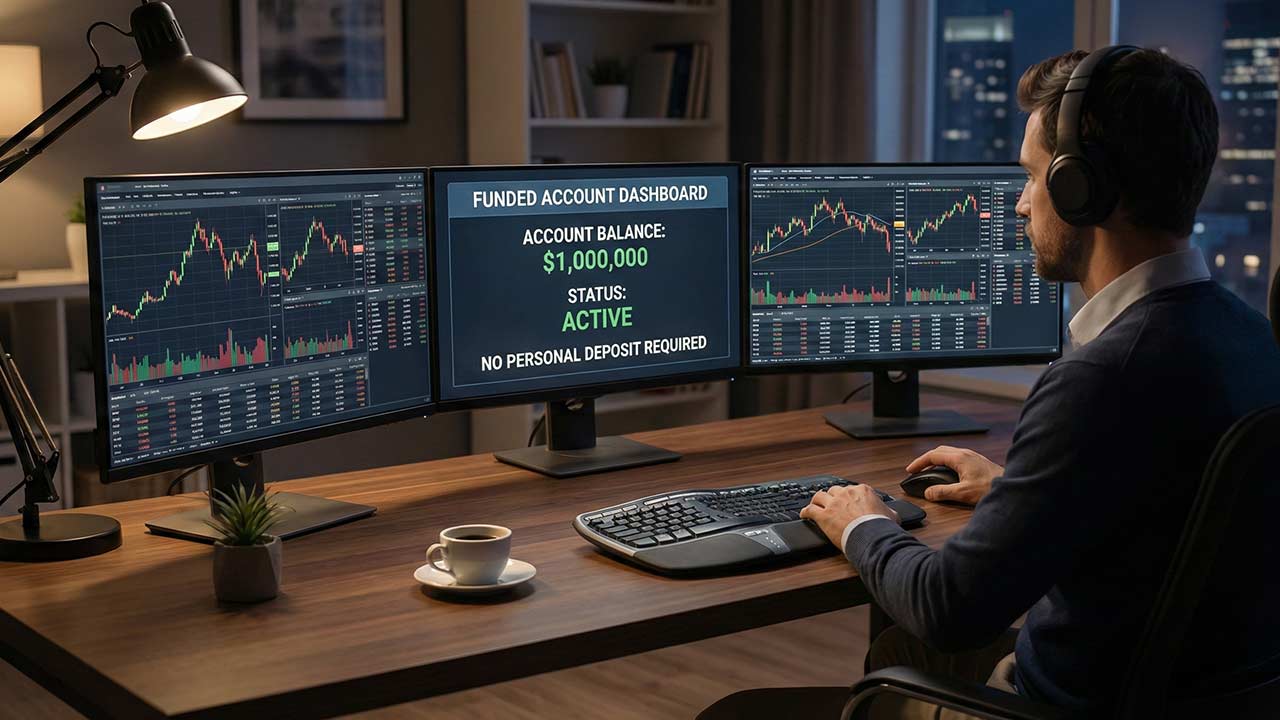
Prop firms approach trading from a completely different angle. Instead of requiring traders to risk large deposits, they provide access to funded accounts once traders demonstrate consistency through an evaluation process - a structure explained in detail when understanding what prop trading is.
Rather than trading personal money, traders manage firm-allocated capital and receive a profit split based on performance.
This model shifts the focus away from how much money a trader has and toward how well they can trade. Skill becomes the primary requirement instead of savings.
For many Forex traders, this removes one of the biggest barriers that previously slowed their progress.

Capital Access: The Main Reason Traders Are Switching
The biggest difference in the prop firms vs brokers debate is access to buying power.
With brokers, account size determines opportunity. A trader with a small balance must accept smaller gains even when executing strong trades. Scaling takes time, and many traders never reach account sizes capable of producing consistent income.
Prop firms change this dynamic by allowing traders to control significantly larger capital through a fixed evaluation cost, similar to how a funded account in forex works in modern proprietary trading models. Managing six-figure accounts becomes possible without committing equivalent personal funds.
This allows experienced traders to fully apply their strategies without being limited by personal financial resources.
Reduced Personal Financial Risk
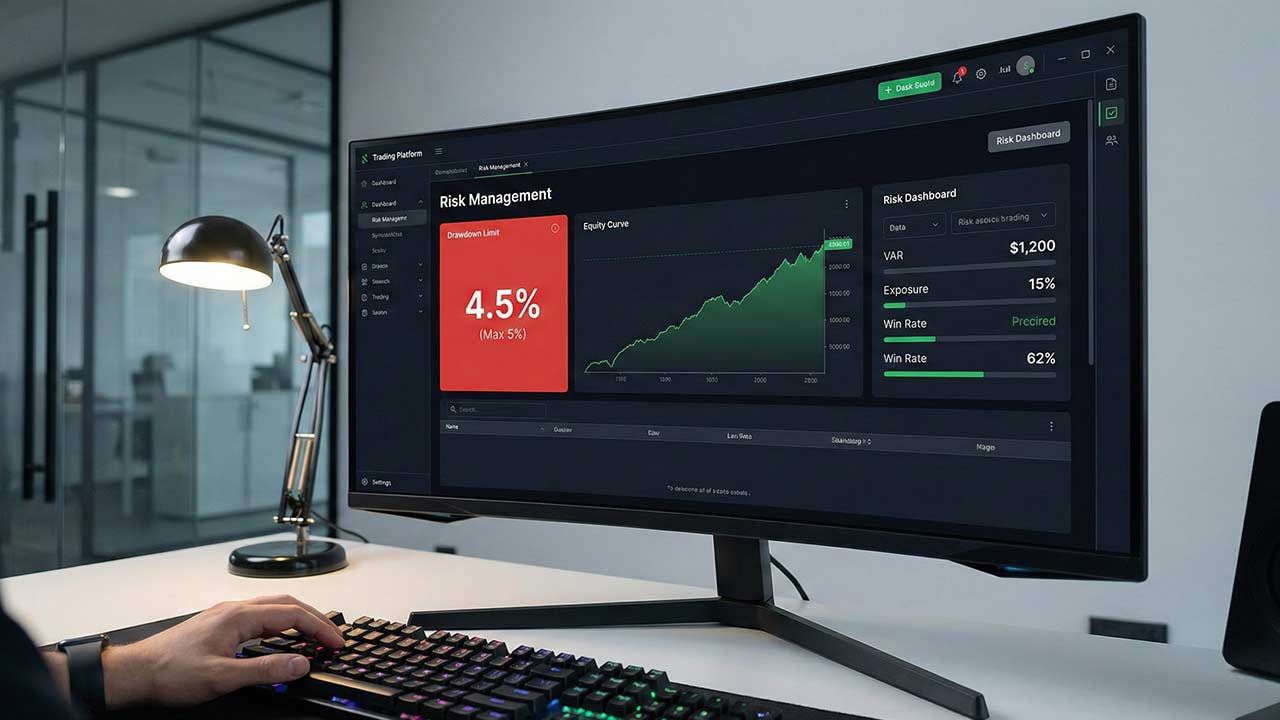
One of the strongest benefits of choosing a prop firm is risk containment.
When trading with brokers, drawdowns directly affect personal finances. Losing streaks can quickly erode confidence because the consequences extend beyond trading performance.
Prop firms introduce predefined risk parameters such as maximum drawdown limits, reinforcing the importance of structured risk management in forex within funded environments. While traders must follow these rules, they also create a clear boundary for losses. The trader’s exposure is typically limited to the evaluation fee rather than the full account value.
This controlled downside is a major reason traders prefer funded environments. Knowing the worst-case scenario in advance allows traders to focus on execution rather than fear.
Why Prop Firms Improve Trading Discipline
Many traders underestimate how much psychology affects performance.
Trading personal money often leads to emotional decision-making, a challenge frequently discussed in the context of trading psychology and performance consistency. Fear of loss causes hesitation, while recovery attempts after losses can lead to overtrading. These behaviors are common even among technically skilled traders.
Prop firms encourage structured trading habits. Because accounts operate under risk rules, traders naturally adopt better risk management practices. The environment rewards consistency instead of aggressive risk-taking.
Over time, this structure helps traders develop professional habits that are harder to maintain in unrestricted broker accounts.
Key Benefits of Choosing a Prop Firm vs Broker

When comparing prop firms vs brokers, several advantages explain why prop firms are gaining momentum:
Access to Larger Capital
Traders can manage significantly higher buying power without risking personal savings.
Limited Personal Risk
Loss exposure is capped, creating predictable downside conditions.
Structured Scaling Opportunities
Many prop firms increase account size as traders demonstrate consistent performance.
Performance-Based Earnings
Income potential is tied to skill rather than deposit size.
Professional Trading Environment
Risk rules, evaluation stages, and performance metrics promote disciplined trading behavior.
These benefits collectively make prop firms attractive to traders who want growth without excessive financial pressure, especially for those learning how to pass a funded account challenge successfully.
Faster Growth Compared to Personal Accounts
Growing a broker account requires patience and often additional deposits. Even profitable traders may need years to reach meaningful account sizes.
Prop firms accelerate this process through scaling programs, particularly through models such as a one step evaluation that simplify access to funded capital. Traders who maintain consistency can access progressively larger allocations, allowing profits to grow alongside performance.
This structured advancement gives traders a clearer pathway compared to traditional retail trading, where progress can feel uncertain and slow.
Support Systems and Trading Ecosystems
Another difference between prop firms and brokers is the surrounding ecosystem.
Brokers primarily provide execution infrastructure. Traders are responsible for their own development beyond basic educational materials.
Prop firms often provide communities, educational sessions, and performance tools designed to help traders improve, helping traders understand how to make money with funded forex accounts through consistent execution. While trading remains an individual activity, access to structured resources helps traders stay accountable and refine their strategies.
This environment contributes to why many newer traders start directly with prop firms instead of traditional broker accounts.
Rules Are Becoming an Advantage, Not a Limitation
A common misconception is that prop firm rules restrict traders too much. In reality, many traders now view these rules as protective rather than limiting.
Risk parameters prevent catastrophic losses - something retail traders frequently experience when trading without constraints, which is why mastering tools like stop loss and take profit becomes essential. The structure mirrors professional trading desks where capital preservation is mandatory.
In the prop firms vs brokers comparison, traders increasingly accept slightly reduced flexibility in exchange for greater stability and scalability.
Prop Firms as the Bridge to Professional Trading
Perhaps the biggest reason for this industry shift is perception. Trading through brokers often feels like a personal venture funded by savings. Prop firms introduce evaluations, performance tracking, and scaling systems that resemble professional trading environments.
This transforms trading from a speculative activity into a performance-based progression, giving traders clearer expectations about how much money you can make with a funded account as they scale.
For traders seeking long-term consistency rather than short-term experimentation, this structured pathway is highly appealing.
Prop firms vs brokers: The Future Direction of Forex Trading
Brokers will always remain part of the financial ecosystem, but trader preferences are evolving. Modern traders are prioritizing capital efficiency, controlled risk, and scalable opportunities.
The growing popularity of prop firms shows that traders no longer want success to depend solely on how much money they can afford to deposit. Instead, they want environments where skill determines growth.
Prop Firms such as Pipstone Capital reflect this shift by offering structured funded challenges, high profit splits, transparent risk rules, and fast payout models designed to reward consistent traders rather than large deposits.
As the discussion around prop firms vs brokers continues, one trend is clear: more Forex traders are choosing funded trading models because they align better with sustainable performance and long-term development.
For many traders today, prop firms are not replacing brokers, they are redefining how trading careers begin and grow.
FAQs: Prop Firms vs Brokers
Are prop firms better than brokers for Forex trading?
Prop firms can be better for traders who want access to larger capital while limiting personal financial risk. Brokers may suit traders who prefer full control and no trading rules.
Do you risk your own money with a prop firm?
Typically, the main risk is the evaluation fee. Traders do not risk the full funded account balance like they would with a personal broker account.
Why are more traders choosing prop firms?
Many traders prefer prop firms because they offer scaling opportunities, structured risk management, and the ability to trade larger capital without large deposits.
Can beginners use prop firms?
Yes, but beginners should first understand risk management and trading discipline, since funded accounts operate under specific rules.
Can you still trade with a broker while using a prop firm?
Yes. Many traders use both, a broker account for flexibility and a prop firm account for capital scaling opportunities.



Why More Forex Traders Are Moving From Brokers to Prop Firms
The conversation around prop firms vs brokers has become one of the most discussed topics in modern Forex trading. Over the last few years, a growing number of traders have started shifting away from traditional broker accounts and toward proprietary trading firms.
This change is not accidental. It reflects how traders now think about capital, risk exposure, and long-term sustainability in trading. While brokers remain an essential part of the market, prop firms are increasingly becoming the preferred environment for traders who want to scale faster while protecting personal capital.
Understanding why this shift is happening requires looking at how both models actually work in practice.
The Traditional Broker Model: Control Comes With Full Risk
Trading through a broker has long been the standard entry point into Forex markets. A trader deposits personal funds, accesses leverage, and trades independently while keeping 100% of profits, which is why many traders first explore the differences between traditional vs prop trading before transitioning to funded models.
At first glance, this sounds ideal. There are fewer restrictions, complete flexibility, and no profit sharing. However, the reality becomes clear once trading begins.
Every loss comes directly from personal savings. Account growth depends entirely on either consistent compounding or adding more funds.
For many traders, especially those starting with smaller balances, this creates a major limitation. Even strong strategies struggle to generate meaningful income when position sizing is restricted by limited capital.
This is where the discussion of prop firms vs brokers begins to change direction.
Prop Firms Introduced a Capital-First Trading Model
Prop firms approach trading from a completely different angle. Instead of requiring traders to risk large deposits, they provide access to funded accounts once traders demonstrate consistency through an evaluation process - a structure explained in detail when understanding what prop trading is.
Rather than trading personal money, traders manage firm-allocated capital and receive a profit split based on performance.
This model shifts the focus away from how much money a trader has and toward how well they can trade. Skill becomes the primary requirement instead of savings.
For many Forex traders, this removes one of the biggest barriers that previously slowed their progress.
Capital Access: The Main Reason Traders Are Switching
The biggest difference in the prop firms vs brokers debate is access to buying power.
With brokers, account size determines opportunity. A trader with a small balance must accept smaller gains even when executing strong trades. Scaling takes time, and many traders never reach account sizes capable of producing consistent income.
Prop firms change this dynamic by allowing traders to control significantly larger capital through a fixed evaluation cost, similar to how a funded account in forex works in modern proprietary trading models. Managing six-figure accounts becomes possible without committing equivalent personal funds.
This allows experienced traders to fully apply their strategies without being limited by personal financial resources.
Reduced Personal Financial Risk
One of the strongest benefits of choosing a prop firm is risk containment.
When trading with brokers, drawdowns directly affect personal finances. Losing streaks can quickly erode confidence because the consequences extend beyond trading performance.
Prop firms introduce predefined risk parameters such as maximum drawdown limits, reinforcing the importance of structured risk management in forex within funded environments. While traders must follow these rules, they also create a clear boundary for losses. The trader’s exposure is typically limited to the evaluation fee rather than the full account value.
This controlled downside is a major reason traders prefer funded environments. Knowing the worst-case scenario in advance allows traders to focus on execution rather than fear.
Why Prop Firms Improve Trading Discipline
Many traders underestimate how much psychology affects performance.
Trading personal money often leads to emotional decision-making, a challenge frequently discussed in the context of trading psychology and performance consistency. Fear of loss causes hesitation, while recovery attempts after losses can lead to overtrading. These behaviors are common even among technically skilled traders.
Prop firms encourage structured trading habits. Because accounts operate under risk rules, traders naturally adopt better risk management practices. The environment rewards consistency instead of aggressive risk-taking.
Over time, this structure helps traders develop professional habits that are harder to maintain in unrestricted broker accounts.
Key Benefits of Choosing a Prop Firm vs Broker
When comparing prop firms vs brokers, several advantages explain why prop firms are gaining momentum:
Access to Larger Capital
Traders can manage significantly higher buying power without risking personal savings.
Limited Personal Risk
Loss exposure is capped, creating predictable downside conditions.
Structured Scaling Opportunities
Many prop firms increase account size as traders demonstrate consistent performance.
Performance-Based Earnings
Income potential is tied to skill rather than deposit size.
Professional Trading Environment
Risk rules, evaluation stages, and performance metrics promote disciplined trading behavior.
These benefits collectively make prop firms attractive to traders who want growth without excessive financial pressure, especially for those learning how to pass a funded account challenge successfully.
Faster Growth Compared to Personal Accounts
Growing a broker account requires patience and often additional deposits. Even profitable traders may need years to reach meaningful account sizes.
Prop firms accelerate this process through scaling programs, particularly through models such as a one step evaluation that simplify access to funded capital. Traders who maintain consistency can access progressively larger allocations, allowing profits to grow alongside performance.
This structured advancement gives traders a clearer pathway compared to traditional retail trading, where progress can feel uncertain and slow.
Support Systems and Trading Ecosystems
Another difference between prop firms and brokers is the surrounding ecosystem.
Brokers primarily provide execution infrastructure. Traders are responsible for their own development beyond basic educational materials.
Prop firms often provide communities, educational sessions, and performance tools designed to help traders improve, helping traders understand how to make money with funded forex accounts through consistent execution. While trading remains an individual activity, access to structured resources helps traders stay accountable and refine their strategies.
This environment contributes to why many newer traders start directly with prop firms instead of traditional broker accounts.
Rules Are Becoming an Advantage, Not a Limitation
A common misconception is that prop firm rules restrict traders too much. In reality, many traders now view these rules as protective rather than limiting.
Risk parameters prevent catastrophic losses - something retail traders frequently experience when trading without constraints, which is why mastering tools like stop loss and take profit becomes essential. The structure mirrors professional trading desks where capital preservation is mandatory.
In the prop firms vs brokers comparison, traders increasingly accept slightly reduced flexibility in exchange for greater stability and scalability.
Prop Firms as the Bridge to Professional Trading
Perhaps the biggest reason for this industry shift is perception. Trading through brokers often feels like a personal venture funded by savings. Prop firms introduce evaluations, performance tracking, and scaling systems that resemble professional trading environments.
This transforms trading from a speculative activity into a performance-based progression, giving traders clearer expectations about how much money you can make with a funded account as they scale.
For traders seeking long-term consistency rather than short-term experimentation, this structured pathway is highly appealing.
Prop firms vs brokers: The Future Direction of Forex Trading
Brokers will always remain part of the financial ecosystem, but trader preferences are evolving. Modern traders are prioritizing capital efficiency, controlled risk, and scalable opportunities.
The growing popularity of prop firms shows that traders no longer want success to depend solely on how much money they can afford to deposit. Instead, they want environments where skill determines growth.
Prop Firms such as Pipstone Capital reflect this shift by offering structured funded challenges, high profit splits, transparent risk rules, and fast payout models designed to reward consistent traders rather than large deposits.
As the discussion around prop firms vs brokers continues, one trend is clear: more Forex traders are choosing funded trading models because they align better with sustainable performance and long-term development.
For many traders today, prop firms are not replacing brokers, they are redefining how trading careers begin and grow.
FAQs: Prop Firms vs Brokers
Are prop firms better than brokers for Forex trading?
Prop firms can be better for traders who want access to larger capital while limiting personal financial risk. Brokers may suit traders who prefer full control and no trading rules.
Do you risk your own money with a prop firm?
Typically, the main risk is the evaluation fee. Traders do not risk the full funded account balance like they would with a personal broker account.
Why are more traders choosing prop firms?
Many traders prefer prop firms because they offer scaling opportunities, structured risk management, and the ability to trade larger capital without large deposits.
Can beginners use prop firms?
Yes, but beginners should first understand risk management and trading discipline, since funded accounts operate under specific rules.
Can you still trade with a broker while using a prop firm?
Yes. Many traders use both, a broker account for flexibility and a prop firm account for capital scaling opportunities.
