


Understanding The Importance of Prop Firm Payouts and Profit Sharing
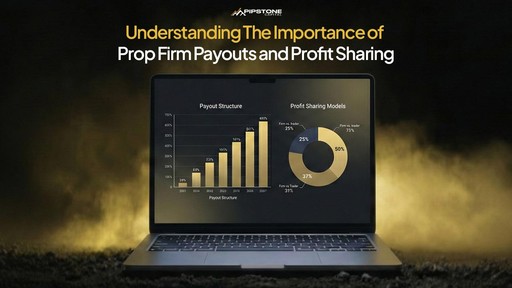
For many traders, joining a proprietary trading firm isn’t just about getting access to larger capital - it’s about one thing that ultimately matters most: getting paid consistently for performance.
Prop firm payouts and profit-sharing models are what separate serious trading opportunities from short-term trading experiments. While strategies, platforms, and account sizes often get the spotlight, the real long-term value of prop trading lies in how profits are distributed and how reliably traders receive them.
If you’re planning to trade funded accounts in 2026, understanding how payouts work, and why they matter, is essential before choosing a firm.
The Basics of Prop Firm Payouts
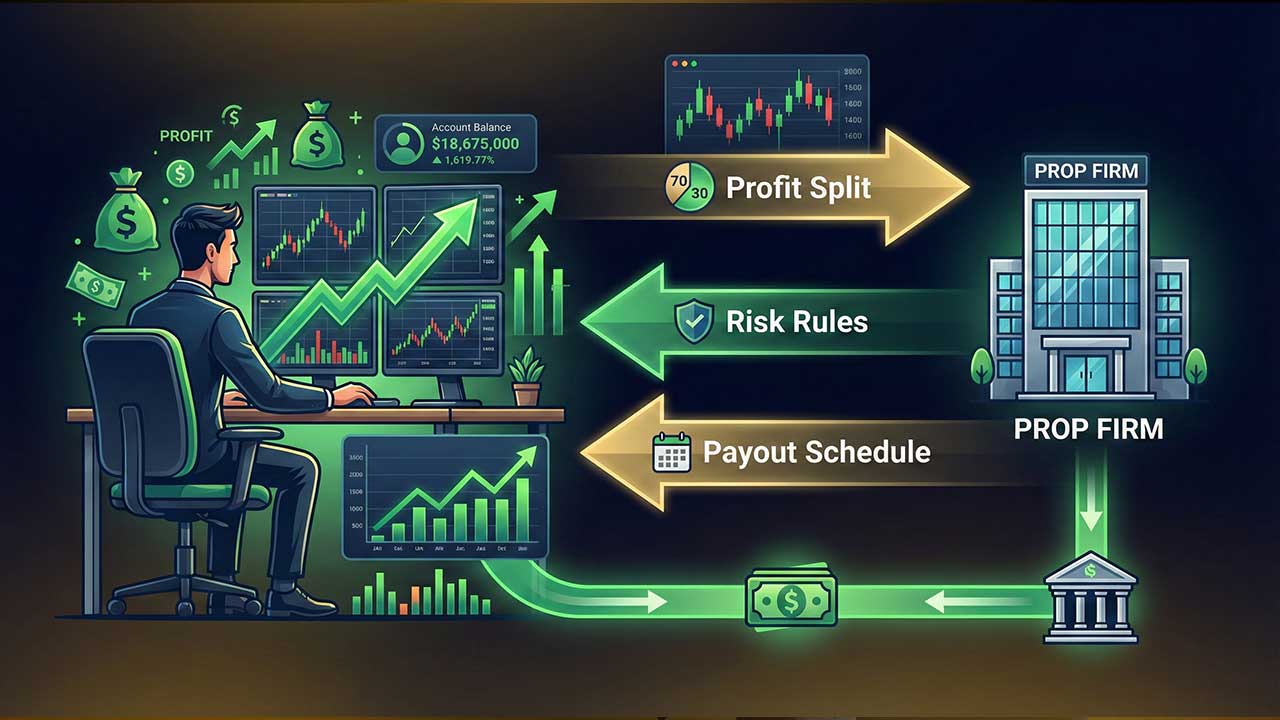
A prop firm payout is the portion of trading profits shared between the trader and the firm after performance requirements are met.
Unlike traditional trading, where profits come entirely from your personal capital, prop firms allow traders to operate larger accounts after passing an evaluation or challenge phase. Once funded, traders earn a percentage of the profits they generate while following the firm’s risk rules. Traders exploring how to profit with forex funded accounts often realize that payout structure matters just as much as trading performance.
Most reputable prop firms structure payouts around three core elements:
Profit split percentage
Withdrawal schedule
Compliance with trading rules
In simple terms: perform well, respect risk limits, and you earn a share of the profits generated using the firm’s capital.
This model creates alignment - traders focus on consistency, while firms reward disciplined performance.

How Traders Actually Earn Payouts
Prop trading payouts don’t happen randomly. They are tied to structured evaluation systems designed to measure skill and risk management.
Typically, traders must:
Pass a challenge or evaluation phase
Follow maximum loss and drawdown rules
Trade consistently without violating risk parameters
Generate positive net profits
Once these conditions are met, payout eligibility begins.
According to industry education guides, traders earn payouts after meeting challenge objectives and maintaining profitable performance within account rules, with profit splits varying between firms and account types.
This structure filters out reckless trading and rewards traders who treat trading as a professional process rather than gambling. Many traders first learn this while researching how to pass a forex prop challenge and understanding what actually leads to withdrawals.
Why Profit Sharing Matters More Than Account Size
Many beginners focus on funded account size - $50K, $100K, or even $200K accounts sound impressive.
But experienced traders know the real question is:
How much of the profit do you actually keep?
Profit splits across the industry commonly range between 50% and 80%, while some firms offer higher percentages for consistent traders.
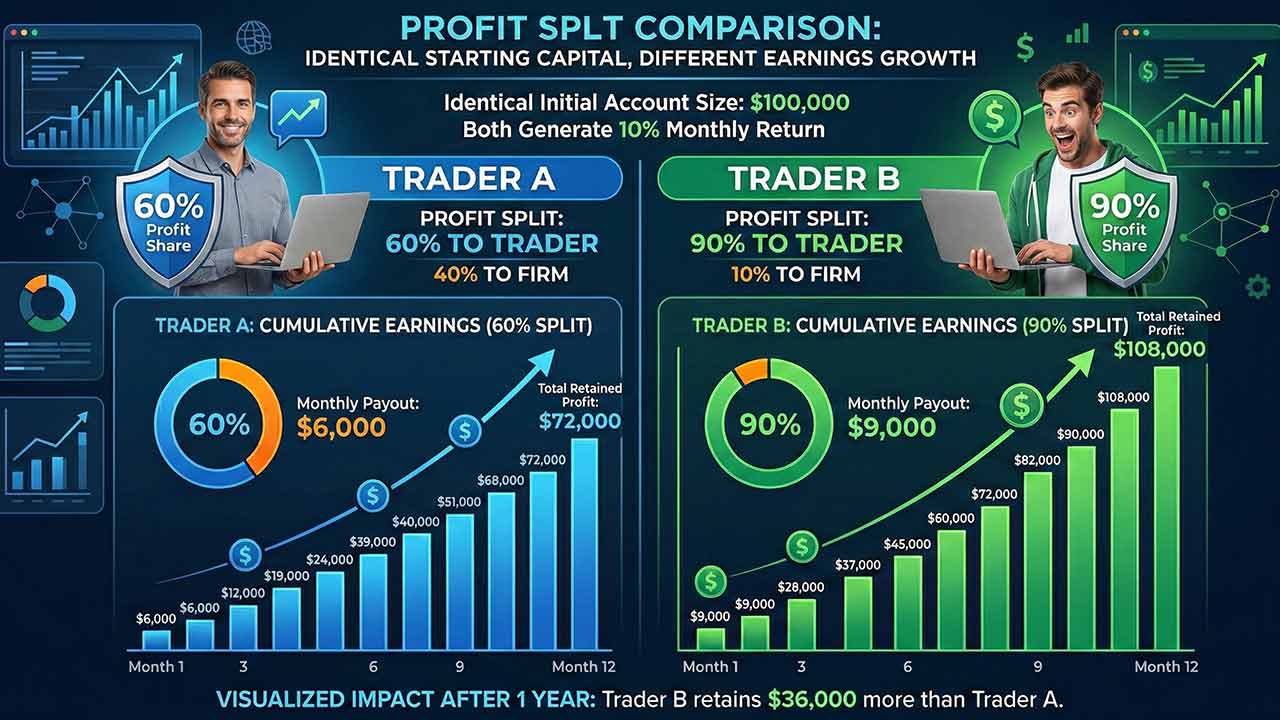
A higher profit split can dramatically change long-term earnings.
For example:
Trader A earns 5% monthly with a 60% split
Trader B earns the same performance with a 90% split
Over a year, Trader B keeps significantly more income despite identical trading results.
This is why payout structure often matters more than marketing claims about account size. In fact, traders comparing earnings scenarios often look at how much money you can make with a forex funded account rather than just headline account balances.
Prop Firms vs Traditional Trading Income
Traditional retail trading comes with one major limitation: capital.
Traders risk their own funds, meaning growth is often slow and emotionally stressful. Losses directly impact personal finances, which can lead to poor decision-making.
Prop trading changes that dynamic.
Key differences include:
Traditional Trading
Personal capital at risk
Limited scalability
Emotional pressure tied to personal savings
Prop Firm Trading
Access to larger capital pools
Fixed evaluation cost instead of large deposits
Losses limited to account rules rather than personal liability
Most importantly, traders can scale income faster through profit sharing rather than account funding alone, which explains why many traders researching brokers vs prop firms ultimately move toward funded trading models.
The Role of Payout Consistency
Fast payouts sound attractive, but consistency matters more than speed.
Reliable firms clearly communicate:
Withdrawal timelines
Payment methods
Processing expectations
Eligibility conditions
Some firms offer weekly payouts, while others operate bi-weekly or monthly cycles. Longer schedules aren’t necessarily negative - what matters is predictability.
A stable payout system builds trader confidence and allows professionals to treat trading as a structured income stream rather than uncertain rewards. Traders learning what is a forex funded account quickly understand that payouts depend on structure, not luck.
Rules That Affect Payout Eligibility
One of the biggest misunderstandings among new traders is assuming profits automatically qualify for withdrawal.
In reality, payouts depend on respecting trading rules such as:
Maximum daily loss limits
Overall drawdown restrictions
Minimum trading days
Consistency requirements
These rules exist to encourage sustainable trading behavior. Strong risk management in prop trading is often the deciding factor between traders who receive payouts and those who repeatedly fail challenges.
Firms design payout systems around risk management because long-term profitability matters more than short bursts of aggressive trading.
Traders who understand this early tend to remain funded longer - and earn more payouts over time.
How to Evaluate a Prop Firm’s Payout System
Before joining any prop firm, traders should evaluate payout credibility carefully.
Look for firms that:
Clearly publish payout terms and profit splits
Show verified trader payouts or testimonials
Maintain active trader communities
Provide responsive support
Avoid unrealistic promises
Transparent payout communication is often the strongest indicator of a legitimate operation. This is why experienced traders follow guides on how to choose funded accounts before committing to a firm.
If payout rules are unclear, hidden, or constantly changing, that’s usually a red flag.
Why More Traders Are Choosing Pipstone Capital for Faster, More Reliable Payouts
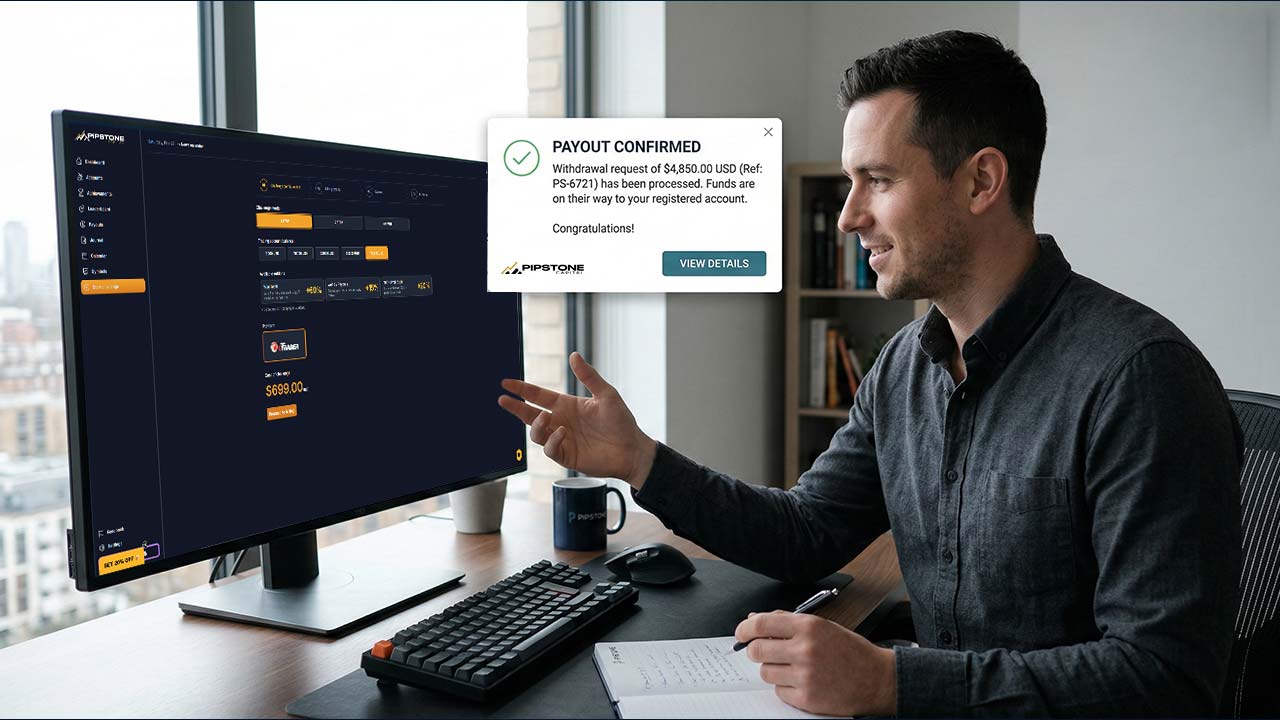
As the prop trading industry evolves, newer firms are focusing heavily on trader-friendly payout structures rather than complicated evaluation barriers.
For example, Pipstone Capital has positioned its challenges around simplified objectives and competitive profit sharing designed to reward consistency instead of forcing aggressive trading targets.
With features like flexible profit targets, structured drawdown limits, and high profit‑split potential, the model encourages traders to focus on risk management - the same principle that drives sustainable payouts across top prop firms. Pipstone Capital’s approach also aligns with traders seeking prop firms with no consistency rule, allowing payouts to reflect real trading performance rather than forced daily profit patterns.
Instead of chasing unrealistic gains, traders are incentivized to build repeatable performance, which ultimately leads to more frequent withdrawals over time.
The Long-Term Importance of Profit Sharing
Prop firm payouts aren’t just short-term rewards, they define a trader’s long-term career potential.
A strong profit-sharing system allows traders to:
Scale income without increasing personal risk
Build predictable monthly earnings
Reinforce disciplined trading habits
Transition from hobby trading to professional trading
When payouts are structured correctly, traders shift their mindset from “winning trades” to consistent performance management. Many traders reinforce this discipline through structured planning and execution similar to the trading plan needed to pass a funded account challenge.
That mindset difference is often what separates funded traders who last months from those who build multi-year trading careers.
Final Thoughts
Prop firm payouts and profit sharing are the foundation of modern funded trading. While strategies and platforms matter, the real value lies in how profits are distributed and how reliably traders are rewarded.
Choosing a prop firm should never be based only on account size or marketing claims. Instead, traders should focus on transparency, payout consistency, and fair profit splits.
Because in the end, successful trading isn’t just about making profits, it’s about keeping them.



Understanding The Importance of Prop Firm Payouts and Profit Sharing
For many traders, joining a proprietary trading firm isn’t just about getting access to larger capital - it’s about one thing that ultimately matters most: getting paid consistently for performance.
Prop firm payouts and profit-sharing models are what separate serious trading opportunities from short-term trading experiments. While strategies, platforms, and account sizes often get the spotlight, the real long-term value of prop trading lies in how profits are distributed and how reliably traders receive them.
If you’re planning to trade funded accounts in 2026, understanding how payouts work, and why they matter, is essential before choosing a firm.
The Basics of Prop Firm Payouts
A prop firm payout is the portion of trading profits shared between the trader and the firm after performance requirements are met.
Unlike traditional trading, where profits come entirely from your personal capital, prop firms allow traders to operate larger accounts after passing an evaluation or challenge phase. Once funded, traders earn a percentage of the profits they generate while following the firm’s risk rules. Traders exploring how to profit with forex funded accounts often realize that payout structure matters just as much as trading performance.
Most reputable prop firms structure payouts around three core elements:
Profit split percentage
Withdrawal schedule
Compliance with trading rules
In simple terms: perform well, respect risk limits, and you earn a share of the profits generated using the firm’s capital.
This model creates alignment - traders focus on consistency, while firms reward disciplined performance.
How Traders Actually Earn Payouts
Prop trading payouts don’t happen randomly. They are tied to structured evaluation systems designed to measure skill and risk management.
Typically, traders must:
Pass a challenge or evaluation phase
Follow maximum loss and drawdown rules
Trade consistently without violating risk parameters
Generate positive net profits
Once these conditions are met, payout eligibility begins.
According to industry education guides, traders earn payouts after meeting challenge objectives and maintaining profitable performance within account rules, with profit splits varying between firms and account types.
This structure filters out reckless trading and rewards traders who treat trading as a professional process rather than gambling. Many traders first learn this while researching how to pass a forex prop challenge and understanding what actually leads to withdrawals.
Why Profit Sharing Matters More Than Account Size
Many beginners focus on funded account size - $50K, $100K, or even $200K accounts sound impressive.
But experienced traders know the real question is:
How much of the profit do you actually keep?
Profit splits across the industry commonly range between 50% and 80%, while some firms offer higher percentages for consistent traders.
A higher profit split can dramatically change long-term earnings.
For example:
Trader A earns 5% monthly with a 60% split
Trader B earns the same performance with a 90% split
Over a year, Trader B keeps significantly more income despite identical trading results.
This is why payout structure often matters more than marketing claims about account size. In fact, traders comparing earnings scenarios often look at how much money you can make with a forex funded account rather than just headline account balances.
Prop Firms vs Traditional Trading Income
Traditional retail trading comes with one major limitation: capital.
Traders risk their own funds, meaning growth is often slow and emotionally stressful. Losses directly impact personal finances, which can lead to poor decision-making.
Prop trading changes that dynamic.
Key differences include:
Traditional Trading
Personal capital at risk
Limited scalability
Emotional pressure tied to personal savings
Prop Firm Trading
Access to larger capital pools
Fixed evaluation cost instead of large deposits
Losses limited to account rules rather than personal liability
Most importantly, traders can scale income faster through profit sharing rather than account funding alone, which explains why many traders researching brokers vs prop firms ultimately move toward funded trading models.
The Role of Payout Consistency
Fast payouts sound attractive, but consistency matters more than speed.
Reliable firms clearly communicate:
Withdrawal timelines
Payment methods
Processing expectations
Eligibility conditions
Some firms offer weekly payouts, while others operate bi-weekly or monthly cycles. Longer schedules aren’t necessarily negative - what matters is predictability.
A stable payout system builds trader confidence and allows professionals to treat trading as a structured income stream rather than uncertain rewards. Traders learning what is a forex funded account quickly understand that payouts depend on structure, not luck.
Rules That Affect Payout Eligibility
One of the biggest misunderstandings among new traders is assuming profits automatically qualify for withdrawal.
In reality, payouts depend on respecting trading rules such as:
Maximum daily loss limits
Overall drawdown restrictions
Minimum trading days
Consistency requirements
These rules exist to encourage sustainable trading behavior. Strong risk management in prop trading is often the deciding factor between traders who receive payouts and those who repeatedly fail challenges.
Firms design payout systems around risk management because long-term profitability matters more than short bursts of aggressive trading.
Traders who understand this early tend to remain funded longer - and earn more payouts over time.
How to Evaluate a Prop Firm’s Payout System
Before joining any prop firm, traders should evaluate payout credibility carefully.
Look for firms that:
Clearly publish payout terms and profit splits
Show verified trader payouts or testimonials
Maintain active trader communities
Provide responsive support
Avoid unrealistic promises
Transparent payout communication is often the strongest indicator of a legitimate operation. This is why experienced traders follow guides on how to choose funded accounts before committing to a firm.
If payout rules are unclear, hidden, or constantly changing, that’s usually a red flag.
Why More Traders Are Choosing Pipstone Capital for Faster, More Reliable Payouts
As the prop trading industry evolves, newer firms are focusing heavily on trader-friendly payout structures rather than complicated evaluation barriers.
For example, Pipstone Capital has positioned its challenges around simplified objectives and competitive profit sharing designed to reward consistency instead of forcing aggressive trading targets.
With features like flexible profit targets, structured drawdown limits, and high profit‑split potential, the model encourages traders to focus on risk management - the same principle that drives sustainable payouts across top prop firms. Pipstone Capital’s approach also aligns with traders seeking prop firms with no consistency rule, allowing payouts to reflect real trading performance rather than forced daily profit patterns.
Instead of chasing unrealistic gains, traders are incentivized to build repeatable performance, which ultimately leads to more frequent withdrawals over time.
The Long-Term Importance of Profit Sharing
Prop firm payouts aren’t just short-term rewards, they define a trader’s long-term career potential.
A strong profit-sharing system allows traders to:
Scale income without increasing personal risk
Build predictable monthly earnings
Reinforce disciplined trading habits
Transition from hobby trading to professional trading
When payouts are structured correctly, traders shift their mindset from “winning trades” to consistent performance management. Many traders reinforce this discipline through structured planning and execution similar to the trading plan needed to pass a funded account challenge.
That mindset difference is often what separates funded traders who last months from those who build multi-year trading careers.
Final Thoughts
Prop firm payouts and profit sharing are the foundation of modern funded trading. While strategies and platforms matter, the real value lies in how profits are distributed and how reliably traders are rewarded.
Choosing a prop firm should never be based only on account size or marketing claims. Instead, traders should focus on transparency, payout consistency, and fair profit splits.
Because in the end, successful trading isn’t just about making profits, it’s about keeping them.
