


Why Many Retail Traders Fail Funded Trading Challenges

Many traders dream about passing a funded trading challenge. The idea is simple. You prove your skill, pass the test, and trade a larger account without risking your own money.
But most traders fail these challenges.
Not because they cannot trade.
Many fail because the rules of a funded challenge change how they behave. Pressure rises. Risk control slips. One mistake can end the account.
Let’s look at the real reasons this happens.
The Challenge Rules Are Strict
Funded trading challenges have clear rules. Traders must make profit while staying within risk limits.
Typical rules include:
Daily loss limits
Maximum overall drawdown
Profit targets
Minimum trading days
These rules sound fair. But together they create a narrow path.
A trader might have a good strategy. Yet one bad day can break the daily loss rule and end the challenge.
In a personal account, the same trader might recover from that loss later. In a challenge, there is no second chance.
The margin for error is small. Traders who want to improve their odds often study guides on passing a funded account challenge before starting an evaluation.
Time Pressure Changes Decision Making
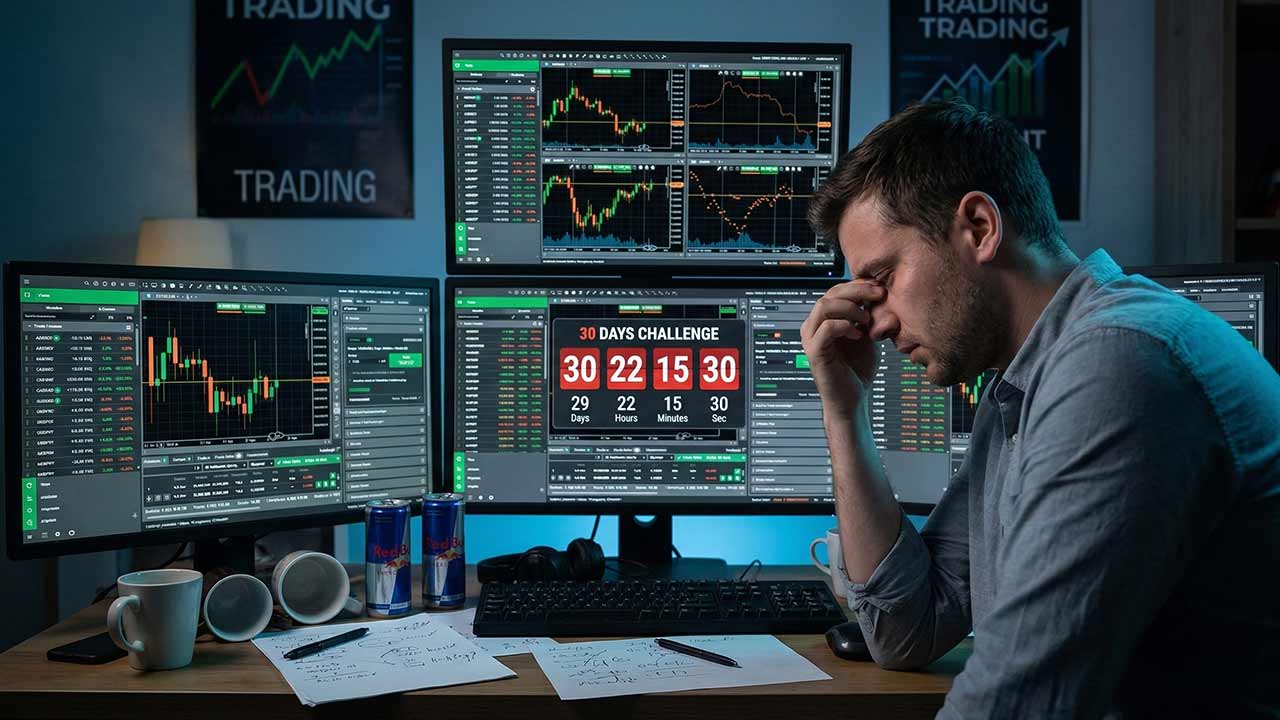
Many challenges run on a time limit.
Traders may have 30 days to reach the profit target. Some firms also require a minimum number of trading days.
This creates pressure.
Instead of waiting for the best setups, traders start looking for trades just to stay active. When the deadline gets close, the pressure rises even more.
A trader who usually takes two strong setups per week might suddenly take five trades a day.
Quality drops.
Risk increases.
And the account slowly moves toward failure.

Many Traders Try to Recover Losses Too Fast
Losses happen in trading. Even strong traders have losing days.
The problem begins when traders try to recover those losses quickly.
Imagine a trader loses two percent in one session. The drawdown limit is five percent. Now the trader feels pressure.
Instead of waiting for the next clean setup, they increase position size.
They take trades that do not fully match their plan.
This often leads to another loss.
One emotional trade becomes two or three. Soon the daily loss rule is hit and the challenge ends.
The attempt to recover is what causes the failure. This is why many funded traders spend time learning risk management in trading before attempting a challenge.
Emotional Trading Breaks the Rules
Funded accounts are strict about rule violations.
Once a rule is broken, the account usually closes right away.
Emotions make this worse.
After a loss, traders often feel the urge to win the money back. This leads to revenge trading.
Revenge trading usually looks like this:
Entering trades without full analysis
Increasing lot size after losses
Ignoring the daily loss limit
Taking trades outside the strategy
A trader may follow their system for weeks. But one emotional moment can break the rules.
The challenge ends in seconds. Many traders try to avoid this by choosing firms with simpler rules, such as proprietary firms with no consistency rule.
Some Strategies Do Not Fit Challenge Rules
Not every trading strategy works well in a funded challenge.
Some systems allow deeper drawdowns before profit comes. Others add positions while a trade moves against them.
These styles can work in a personal account. A trader may accept short term losses while waiting for the market to turn.
But challenge rules rarely allow this.
If the drawdown limit is five percent, a strategy that often dips six percent before profit will fail every time.
The strategy may still be profitable over months.
It simply does not fit the challenge structure. Understanding how to choose funded accounts can help traders find challenges that match their strategy.

Traders Focus Too Much on the Profit Target
Many traders look at the profit target first.
For example, a challenge may require ten percent profit. Traders begin to think about that number from the first day.
This creates a problem.
The trader starts chasing profit instead of focusing on good trades.
When traders focus only on the target, they may:
Take trades too often
Risk more per trade
Enter markets they normally avoid
Ironically, the best way to reach the profit target is to ignore it.
Focus on the process instead.
Take clean setups. Protect the account. Let profit build slowly. Traders who want a simpler structure sometimes prepare for a one step prop firm evaluation instead of multi‑phase challenges.
Market Conditions Can Ruin a Challenge
Even when traders follow their plan, markets can move in strange ways.
News events can cause sharp spikes. Liquidity can drop during quiet hours. Spreads may widen during high volatility.
These events can push trades into stop loss levels faster than expected.
In a personal account, a trader may accept a bad week and continue trading.
In a funded challenge, that same week might end the account.
This is another reason many traders fail.
Sometimes the timing is simply bad.
Warning Signs Before Traders Fail
Many traders show the same behavior right before failing a challenge.
Common warning signs include:
Trading more often than usual
Changing the trading plan mid challenge
Increasing position size after losses
Watching the profit target constantly
Trading during poor market hours
These actions often come from stress.
The trader feels the challenge slipping away. Instead of slowing down, they push harder.
That pressure usually makes things worse.
Discipline Matters More Than Skill
One hard truth about funded challenges is this.
Skill alone is not enough.
A trader may know technical analysis well. They may read charts clearly. They may even have a profitable system.
But if they cannot follow rules under pressure, they will fail the challenge.
The traders who pass are not always the most skilled.
They are the most disciplined.
They manage risk carefully. They accept losses. They stop trading when rules say stop.
And they stay patient even when profit comes slowly. We suggest reading our blog about how discipline beats skills in trading every time.
Failing a Challenge Does Not Mean You Cannot Trade
Many traders fail several challenges before passing one.
This does not mean they lack skill.
It often means they are still adjusting to the challenge structure.
Funded trading accounts reward patience, risk control, and emotional control.
Once traders understand these limits, their chances improve.
The goal is not to trade more.
The goal is to trade better and protect the account.

Final Thoughts
Funded trading challenges offer a great opportunity for retail traders. Passing one can lead to trading larger capital and sharing profits.
But the rules make the environment different from normal trading.
Time pressure, drawdown limits, and strict risk rules expose weaknesses in discipline.
Most traders fail because they rush trades, chase losses, or ignore risk limits.
The traders who succeed focus on one thing.
Protecting the account.
Many traders who want a structured path start by joining Pipstone Capital, where clear rules and funded challenges give traders a chance to prove their discipline.
When risk stays under control and emotions stay calm, passing a funded challenge becomes far more realistic.
FAQs
Why do most traders fail funded trading challenges?
Most traders fail because they break risk rules. One emotional trade or a large loss can hit the drawdown limit and end the challenge.
How can traders increase their chances of passing a challenge?
Focus on risk first. Take fewer trades, stick to your plan, and avoid trying to recover losses too quickly.
Do good traders still fail funded challenges?
Yes. Many skilled traders fail challenges. The strict rules and time pressure make the environment very different from normal trading.



Why Many Retail Traders Fail Funded Trading Challenges
Many traders dream about passing a funded trading challenge. The idea is simple. You prove your skill, pass the test, and trade a larger account without risking your own money.
But most traders fail these challenges.
Not because they cannot trade.
Many fail because the rules of a funded challenge change how they behave. Pressure rises. Risk control slips. One mistake can end the account.
Let’s look at the real reasons this happens.
The Challenge Rules Are Strict
Funded trading challenges have clear rules. Traders must make profit while staying within risk limits.
Typical rules include:
Daily loss limits
Maximum overall drawdown
Profit targets
Minimum trading days
These rules sound fair. But together they create a narrow path.
A trader might have a good strategy. Yet one bad day can break the daily loss rule and end the challenge.
In a personal account, the same trader might recover from that loss later. In a challenge, there is no second chance.
The margin for error is small. Traders who want to improve their odds often study guides on passing a funded account challenge before starting an evaluation.
Time Pressure Changes Decision Making
Many challenges run on a time limit.
Traders may have 30 days to reach the profit target. Some firms also require a minimum number of trading days.
This creates pressure.
Instead of waiting for the best setups, traders start looking for trades just to stay active. When the deadline gets close, the pressure rises even more.
A trader who usually takes two strong setups per week might suddenly take five trades a day.
Quality drops.
Risk increases.
And the account slowly moves toward failure.
Many Traders Try to Recover Losses Too Fast
Losses happen in trading. Even strong traders have losing days.
The problem begins when traders try to recover those losses quickly.
Imagine a trader loses two percent in one session. The drawdown limit is five percent. Now the trader feels pressure.
Instead of waiting for the next clean setup, they increase position size.
They take trades that do not fully match their plan.
This often leads to another loss.
One emotional trade becomes two or three. Soon the daily loss rule is hit and the challenge ends.
The attempt to recover is what causes the failure. This is why many funded traders spend time learning risk management in trading before attempting a challenge.
Emotional Trading Breaks the Rules
Funded accounts are strict about rule violations.
Once a rule is broken, the account usually closes right away.
Emotions make this worse.
After a loss, traders often feel the urge to win the money back. This leads to revenge trading.
Revenge trading usually looks like this:
Entering trades without full analysis
Increasing lot size after losses
Ignoring the daily loss limit
Taking trades outside the strategy
A trader may follow their system for weeks. But one emotional moment can break the rules.
The challenge ends in seconds. Many traders try to avoid this by choosing firms with simpler rules, such as proprietary firms with no consistency rule.
Some Strategies Do Not Fit Challenge Rules
Not every trading strategy works well in a funded challenge.
Some systems allow deeper drawdowns before profit comes. Others add positions while a trade moves against them.
These styles can work in a personal account. A trader may accept short term losses while waiting for the market to turn.
But challenge rules rarely allow this.
If the drawdown limit is five percent, a strategy that often dips six percent before profit will fail every time.
The strategy may still be profitable over months.
It simply does not fit the challenge structure. Understanding how to choose funded accounts can help traders find challenges that match their strategy.
Traders Focus Too Much on the Profit Target
Many traders look at the profit target first.
For example, a challenge may require ten percent profit. Traders begin to think about that number from the first day.
This creates a problem.
The trader starts chasing profit instead of focusing on good trades.
When traders focus only on the target, they may:
Take trades too often
Risk more per trade
Enter markets they normally avoid
Ironically, the best way to reach the profit target is to ignore it.
Focus on the process instead.
Take clean setups. Protect the account. Let profit build slowly. Traders who want a simpler structure sometimes prepare for a one step prop firm evaluation instead of multi‑phase challenges.
Market Conditions Can Ruin a Challenge
Even when traders follow their plan, markets can move in strange ways.
News events can cause sharp spikes. Liquidity can drop during quiet hours. Spreads may widen during high volatility.
These events can push trades into stop loss levels faster than expected.
In a personal account, a trader may accept a bad week and continue trading.
In a funded challenge, that same week might end the account.
This is another reason many traders fail.
Sometimes the timing is simply bad.
Warning Signs Before Traders Fail
Many traders show the same behavior right before failing a challenge.
Common warning signs include:
Trading more often than usual
Changing the trading plan mid challenge
Increasing position size after losses
Watching the profit target constantly
Trading during poor market hours
These actions often come from stress.
The trader feels the challenge slipping away. Instead of slowing down, they push harder.
That pressure usually makes things worse.
Discipline Matters More Than Skill
One hard truth about funded challenges is this.
Skill alone is not enough.
A trader may know technical analysis well. They may read charts clearly. They may even have a profitable system.
But if they cannot follow rules under pressure, they will fail the challenge.
The traders who pass are not always the most skilled.
They are the most disciplined.
They manage risk carefully. They accept losses. They stop trading when rules say stop.
And they stay patient even when profit comes slowly. We suggest reading our blog about how discipline beats skills in trading every time.
Failing a Challenge Does Not Mean You Cannot Trade
Many traders fail several challenges before passing one.
This does not mean they lack skill.
It often means they are still adjusting to the challenge structure.
Funded trading accounts reward patience, risk control, and emotional control.
Once traders understand these limits, their chances improve.
The goal is not to trade more.
The goal is to trade better and protect the account.
Final Thoughts
Funded trading challenges offer a great opportunity for retail traders. Passing one can lead to trading larger capital and sharing profits.
But the rules make the environment different from normal trading.
Time pressure, drawdown limits, and strict risk rules expose weaknesses in discipline.
Most traders fail because they rush trades, chase losses, or ignore risk limits.
The traders who succeed focus on one thing.
Protecting the account.
Many traders who want a structured path start by joining Pipstone Capital, where clear rules and funded challenges give traders a chance to prove their discipline.
When risk stays under control and emotions stay calm, passing a funded challenge becomes far more realistic.
FAQs
Why do most traders fail funded trading challenges?
Most traders fail because they break risk rules. One emotional trade or a large loss can hit the drawdown limit and end the challenge.
How can traders increase their chances of passing a challenge?
Focus on risk first. Take fewer trades, stick to your plan, and avoid trying to recover losses too quickly.
Do good traders still fail funded challenges?
Yes. Many skilled traders fail challenges. The strict rules and time pressure make the environment very different from normal trading.
