


Skill vs Discipline: Why Skilled Traders Still Lose Funded Accounts
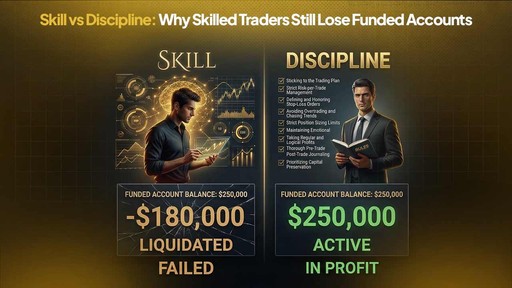
A lot of traders spend months learning how markets work. They study chart patterns, indicators, and price action. They understand where to enter, where to place a stop loss, and where profits should be taken.
On paper, they know exactly what they’re doing.
But when real trading begins, many of these same traders still lose their funded accounts.
The problem is not always lack of knowledge. In many cases, the real issue is discipline.
A trader can understand the market very well and still fail if they cannot follow their own rules when pressure builds.
Skill Helps You Find Trades
Trading skill is the technical side of the job. It’s everything related to reading the market and spotting opportunities.
Skilled traders usually know how to:
Read price action
Identify support and resistance
Recognize chart patterns
Understand market trends
Plan entries and stop losses
These skills take time to develop. Most traders spend years practicing them through backtesting, demo accounts, and live trading.
Over time, many traders become very good at this part.
They can look at a chart and quickly explain what the market is doing. They can identify strong setups and predict where price might move next.
But being able to analyze the market is only half the battle. Many traders also compare traditional trading vs prop trading to understand how funded trading environments work.

Discipline Keeps You in Control

Discipline is about behavior.
It’s the ability to stick to your trading rules when emotions start getting involved.
Every trader has a plan before entering a trade. The plan usually includes the entry point, the stop loss, and the target.
Following that plan sounds simple.
But when the trade starts moving, things often change.
When a trade moves against you, fear shows up. When a trade moves in your favor, greed appears. When several trades lose in a row, frustration builds.
This is where discipline matters.
Without discipline, traders start making decisions based on emotions instead of their strategy. You can also check our article about why most skilled traders still funded challenges.
That is where accounts often get destroyed. Many traders later realize the real issue was not strategy but poor trading psychology and emotional control.
Why Funded Accounts Are Harder Than They Look
Funded trading programs come with strict rules.
Most accounts have limits such as:
Maximum daily loss
Maximum overall drawdown
Profit targets
These rules are designed to control risk, but they also add pressure.
Traders know that one or two bad decisions can break the rules and end the account.
Because of this pressure, traders often behave differently than they would on a personal account.
Some become too aggressive trying to reach profit targets quickly. Others become too cautious and hesitate to take trades.
Both situations can lead to mistakes. Understanding what a funded account in forex is and how traders qualify helps explain why these rules exist and why discipline matters so much in prop environments.
Overconfidence After a Winning Streak
Winning trades feel good. But they can also create problems.
After several wins, some traders begin to feel unstoppable. Confidence grows quickly, and they start taking trades they normally would avoid.
They might increase their lot size or enter trades without waiting for their usual confirmation.
At first, this confidence might still produce wins.
But markets eventually change, and one large loss can wipe out several previous profits.
When position sizes increase, the damage becomes even bigger.
Overconfidence is one of the fastest ways skilled traders lose funded accounts. Traders trying to pass evaluations often ignore this risk, even though guides like how to pass an account challenge emphasize patience and controlled risk.
Revenge Trading After Losses
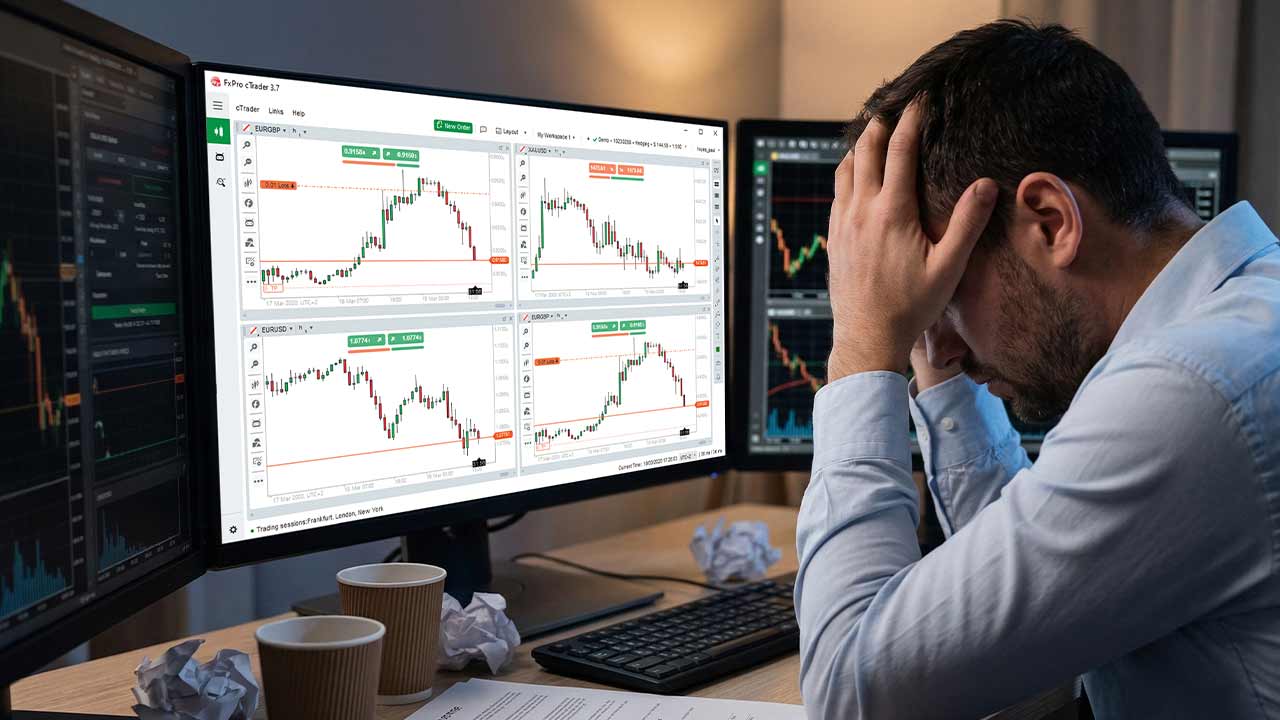
Losses are part of trading. Even strong strategies have losing streaks.
The problem starts when traders refuse to accept those losses.
After a losing trade, some traders feel the need to recover the money immediately. Instead of waiting for the next proper setup, they jump into another trade.
This behavior is known as revenge trading.
Revenge trading usually means:
Entering trades too quickly
Ignoring analysis
Increasing risk
Breaking trading rules
These trades are emotional decisions, not strategic ones.
In funded accounts with strict drawdown limits, a few revenge trades can end the account very quickly.
Moving Stop Losses
Another common mistake happens when traders move their stop loss.
Before entering a trade, most traders carefully decide where their stop should be. That level is chosen based on technical analysis.
But when price starts moving toward the stop, emotions begin to interfere.
Instead of accepting the loss, the trader moves the stop further away.
The idea is simple: give the trade more room to recover.
Sometimes the trade does recover, which makes the behavior seem justified.
But over time, this habit becomes dangerous.
Small losses turn into large losses, and large losses are exactly what funded account rules are designed to prevent. Learning proper risk management in forex prop trading is one of the first steps traders must take.
Fear of Losing Profits
Discipline problems do not only appear during losing trades.
They also show up when trades are profitable.
When a trade moves strongly in the right direction, traders sometimes become nervous about giving back profits. Instead of letting the trade reach its target, they close it early.
Closing early feels safe, but it slowly damages a strategy.
Many trading systems depend on a certain risk-to-reward ratio. If traders consistently cut their profits short, the strategy loses its edge.
Over time, even a good strategy can become unprofitable. Many traders solve this by building a structured trading plan designed for funded challenges that defines exits and profit targets clearly.
Knowledge Isn’t the Real Problem
Many traders believe the solution is to learn more strategies.
They watch more trading videos, read more books, and test new indicators.
Education helps, but it often does not solve the real issue. Many traders keep searching for new strategies instead of studying how traders actually succeed with capital, such as understanding how to make money with funded accounts.
Most traders already know what they should be doing.
They know they should follow their plan.
They know they should control risk.
They know they should avoid emotional decisions.
The challenge is doing these things consistently.
This is why discipline often matters more than skill.
A simple strategy followed with strict discipline can outperform a complex strategy that is used inconsistently.
The Traders Who Last the Longest
The traders who keep funded accounts over the long term are not always the most technically advanced.
Many of them use fairly simple strategies.
What separates them is their ability to stay consistent.
They accept losses quickly.
They follow their trading plan.
They manage risk carefully.
For traders who want to test their discipline with real capital, joining a prop firm like Pipstone Capital can be a practical step. The firm allows traders to prove their consistency through funded challenges while keeping strict risk rules that reward disciplined trading.
In trading, knowledge opens the door. Discipline is what keeps you inside the room.
Without discipline, even skilled traders can lose their funded accounts.
FAQs
Why do skilled traders fail funded accounts?
Most failures happen when traders break risk rules. The strategy may be fine, but emotional decisions like revenge trading or increasing position size can quickly violate drawdown limits.
Is discipline more important than trading strategy?
Both matter, but discipline often decides the outcome. A simple strategy followed consistently usually performs better than a great strategy used emotionally.
How can traders improve trading discipline?
Use a clear trading plan, risk the same amount per trade, and keep a trading journal. These habits make it easier to stay consistent when emotions start showing up.



Skill vs Discipline: Why Skilled Traders Still Lose Funded Accounts
A lot of traders spend months learning how markets work. They study chart patterns, indicators, and price action. They understand where to enter, where to place a stop loss, and where profits should be taken.
On paper, they know exactly what they’re doing.
But when real trading begins, many of these same traders still lose their funded accounts.
The problem is not always lack of knowledge. In many cases, the real issue is discipline.
A trader can understand the market very well and still fail if they cannot follow their own rules when pressure builds.
Skill Helps You Find Trades
Trading skill is the technical side of the job. It’s everything related to reading the market and spotting opportunities.
Skilled traders usually know how to:
Read price action
Identify support and resistance
Recognize chart patterns
Understand market trends
Plan entries and stop losses
These skills take time to develop. Most traders spend years practicing them through backtesting, demo accounts, and live trading.
Over time, many traders become very good at this part.
They can look at a chart and quickly explain what the market is doing. They can identify strong setups and predict where price might move next.
But being able to analyze the market is only half the battle. Many traders also compare traditional trading vs prop trading to understand how funded trading environments work.
Discipline Keeps You in Control
Discipline is about behavior.
It’s the ability to stick to your trading rules when emotions start getting involved.
Every trader has a plan before entering a trade. The plan usually includes the entry point, the stop loss, and the target.
Following that plan sounds simple.
But when the trade starts moving, things often change.
When a trade moves against you, fear shows up. When a trade moves in your favor, greed appears. When several trades lose in a row, frustration builds.
This is where discipline matters.
Without discipline, traders start making decisions based on emotions instead of their strategy. You can also check our article about why most skilled traders still funded challenges.
That is where accounts often get destroyed. Many traders later realize the real issue was not strategy but poor trading psychology and emotional control.
Why Funded Accounts Are Harder Than They Look
Funded trading programs come with strict rules.
Most accounts have limits such as:
Maximum daily loss
Maximum overall drawdown
Profit targets
These rules are designed to control risk, but they also add pressure.
Traders know that one or two bad decisions can break the rules and end the account.
Because of this pressure, traders often behave differently than they would on a personal account.
Some become too aggressive trying to reach profit targets quickly. Others become too cautious and hesitate to take trades.
Both situations can lead to mistakes. Understanding what a funded account in forex is and how traders qualify helps explain why these rules exist and why discipline matters so much in prop environments.
Overconfidence After a Winning Streak
Winning trades feel good. But they can also create problems.
After several wins, some traders begin to feel unstoppable. Confidence grows quickly, and they start taking trades they normally would avoid.
They might increase their lot size or enter trades without waiting for their usual confirmation.
At first, this confidence might still produce wins.
But markets eventually change, and one large loss can wipe out several previous profits.
When position sizes increase, the damage becomes even bigger.
Overconfidence is one of the fastest ways skilled traders lose funded accounts. Traders trying to pass evaluations often ignore this risk, even though guides like how to pass an account challenge emphasize patience and controlled risk.
Revenge Trading After Losses
Losses are part of trading. Even strong strategies have losing streaks.
The problem starts when traders refuse to accept those losses.
After a losing trade, some traders feel the need to recover the money immediately. Instead of waiting for the next proper setup, they jump into another trade.
This behavior is known as revenge trading.
Revenge trading usually means:
Entering trades too quickly
Ignoring analysis
Increasing risk
Breaking trading rules
These trades are emotional decisions, not strategic ones.
In funded accounts with strict drawdown limits, a few revenge trades can end the account very quickly.
Moving Stop Losses
Another common mistake happens when traders move their stop loss.
Before entering a trade, most traders carefully decide where their stop should be. That level is chosen based on technical analysis.
But when price starts moving toward the stop, emotions begin to interfere.
Instead of accepting the loss, the trader moves the stop further away.
The idea is simple: give the trade more room to recover.
Sometimes the trade does recover, which makes the behavior seem justified.
But over time, this habit becomes dangerous.
Small losses turn into large losses, and large losses are exactly what funded account rules are designed to prevent. Learning proper risk management in forex prop trading is one of the first steps traders must take.
Fear of Losing Profits
Discipline problems do not only appear during losing trades.
They also show up when trades are profitable.
When a trade moves strongly in the right direction, traders sometimes become nervous about giving back profits. Instead of letting the trade reach its target, they close it early.
Closing early feels safe, but it slowly damages a strategy.
Many trading systems depend on a certain risk-to-reward ratio. If traders consistently cut their profits short, the strategy loses its edge.
Over time, even a good strategy can become unprofitable. Many traders solve this by building a structured trading plan designed for funded challenges that defines exits and profit targets clearly.
Knowledge Isn’t the Real Problem
Many traders believe the solution is to learn more strategies.
They watch more trading videos, read more books, and test new indicators.
Education helps, but it often does not solve the real issue. Many traders keep searching for new strategies instead of studying how traders actually succeed with capital, such as understanding how to make money with funded accounts.
Most traders already know what they should be doing.
They know they should follow their plan.
They know they should control risk.
They know they should avoid emotional decisions.
The challenge is doing these things consistently.
This is why discipline often matters more than skill.
A simple strategy followed with strict discipline can outperform a complex strategy that is used inconsistently.
The Traders Who Last the Longest
The traders who keep funded accounts over the long term are not always the most technically advanced.
Many of them use fairly simple strategies.
What separates them is their ability to stay consistent.
They accept losses quickly.
They follow their trading plan.
They manage risk carefully.
For traders who want to test their discipline with real capital, joining a prop firm like Pipstone Capital can be a practical step. The firm allows traders to prove their consistency through funded challenges while keeping strict risk rules that reward disciplined trading.
In trading, knowledge opens the door. Discipline is what keeps you inside the room.
Without discipline, even skilled traders can lose their funded accounts.
FAQs
Why do skilled traders fail funded accounts?
Most failures happen when traders break risk rules. The strategy may be fine, but emotional decisions like revenge trading or increasing position size can quickly violate drawdown limits.
Is discipline more important than trading strategy?
Both matter, but discipline often decides the outcome. A simple strategy followed consistently usually performs better than a great strategy used emotionally.
How can traders improve trading discipline?
Use a clear trading plan, risk the same amount per trade, and keep a trading journal. These habits make it easier to stay consistent when emotions start showing up.
