


What Prop Traders Need to Consider Before News Trading Events in 2026
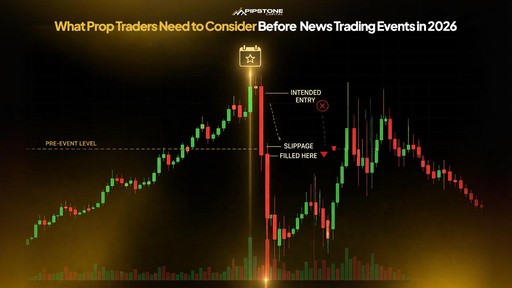
Most traders think news trading is about catching big moves and quick profits. They see strong price spikes and assume this is where the easiest money is made. The idea sounds simple. Wait for a major release, jump in, and ride the move. But this view misses what really happens in the market.
News does not just move price. It changes how the market behaves at a deeper level. When that happens, your execution starts to break down. This is where most traders lose, not because their trade idea was wrong, but because the market stops acting the way they expect.
The Market You Know Does Not Exist During News
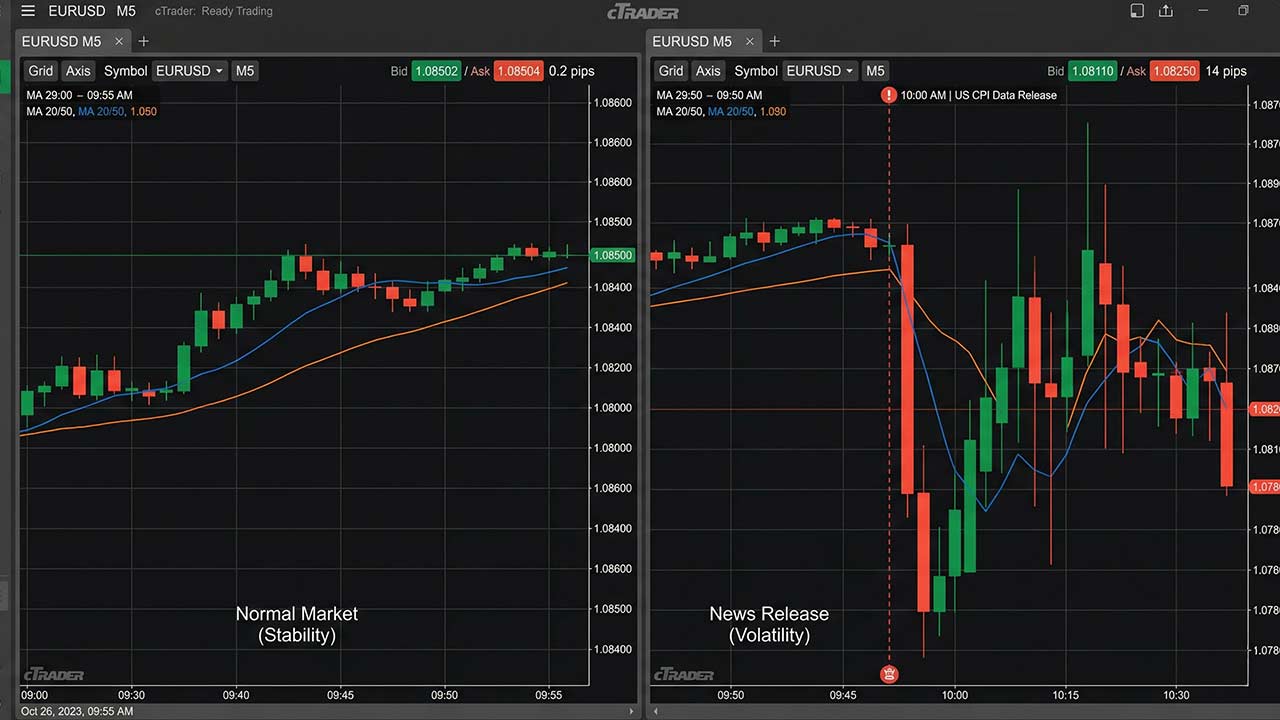
In normal conditions, the market feels stable and predictable. Spreads stay tight, orders fill quickly, and price moves in a way that traders can read and react to. You place a trade and expect a clean entry and a reasonable exit. Your strategy depends on this stability.
During high-impact news, that structure changes within seconds. Liquidity drops, quotes get pulled, and the order book becomes thin. Price no longer moves in smooth steps. It starts jumping between levels with very little in between. When this happens, the same strategy you trust in calm markets starts to break apart.
Liquidity Drops Before the News Hits
Most traders focus only on the moment the news is released, but the real shift begins before that. Liquidity providers reduce their exposure because they do not want to take risk during uncertain events. They either pull their orders or widen their quotes to protect themselves.
This creates a thin market where there are fewer buyers and sellers at each level. The depth that normally absorbs orders disappears. As a result, even a small order can move price more than usual. When the news finally hits, the market is already unstable, which is why price reacts so aggressively. This is why pairs known for fast movement behave even worse during releases, especially those covered in guides like most volatile forex pairs and how traders profit from them.
Spread Widening Is a Market Effect
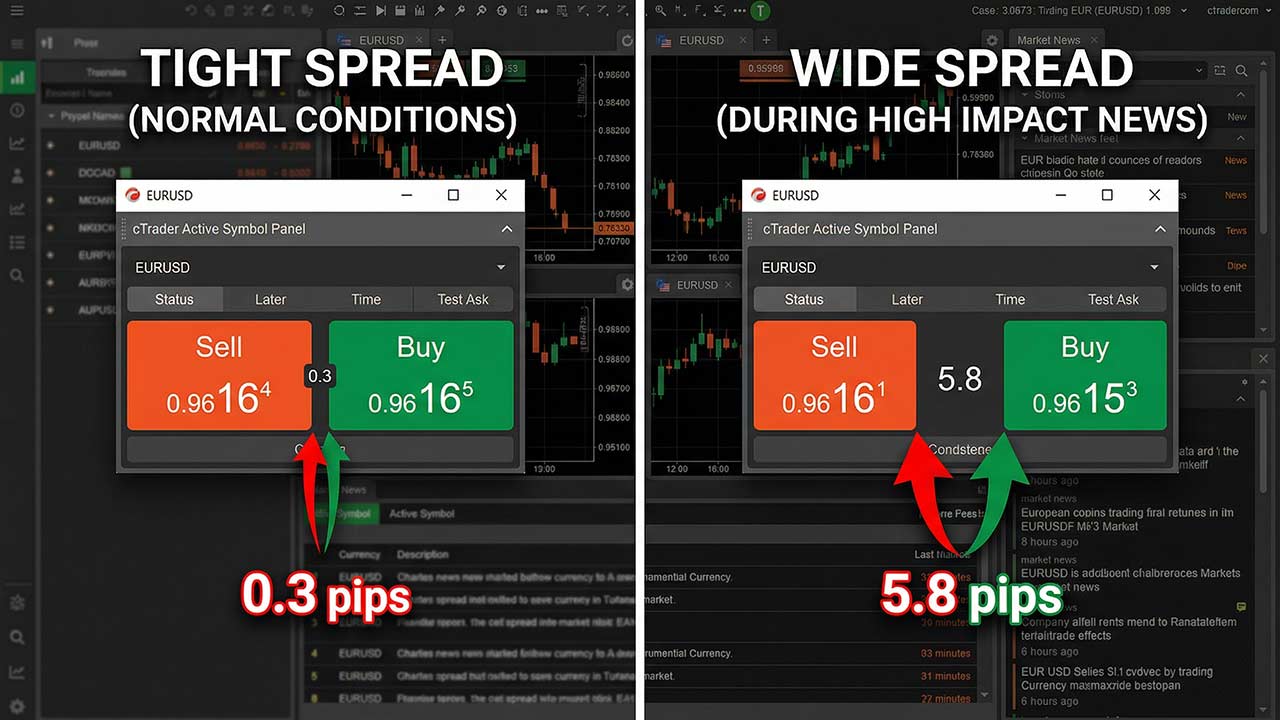
Many traders assume that spread widening is caused by brokers trying to take advantage of them. In reality, it is a direct result of lower liquidity. When there are fewer participants willing to trade at nearby prices, the gap between bid and ask naturally increases.
During news events, uncertainty is high, so fewer orders sit close to the current price. This forces spreads to expand. What is normally a tight spread can quickly become several times larger. That change alone can turn a good trade into a bad one before price even moves in your favor. This becomes even more visible in assets like gold, where volatility reacts sharply to macro events, as explained in gold trading strategy in 2026.
Slippage Becomes the Real Risk
Slippage is one of the most damaging effects during news trading. You may place an order at a certain price, but if there is no liquidity there, your trade gets filled at the next available level. In calm markets, this difference is small and often ignored.
During high-impact events, price levels can be far apart. This is similar to how gaps form in thin conditions, which is broken down clearly in what is gapping in trading. This means your entry can be worse than expected, and your stop loss can slip far beyond your planned risk. Instead of taking a controlled loss, you may face a much larger one. This is not an error in your strategy. It is the result of trading in unstable conditions.
Why Strategies Stop Working
Most trading strategies are built and tested in stable environments. They assume tight spreads, fast execution, and steady price movement. These conditions allow traders to plan entries, exits, and risk with some level of control.
News events remove that control. Breakout traders often get caught in false spikes that reverse quickly. Scalpers struggle because spreads become too wide to manage small targets. Trend traders enter late because price jumps too fast to follow cleanly. Even when the idea is correct, poor execution leads to bad results.
Backtests Hide the Truth
Backtesting is useful, but it has limits. Most historical data does not include real execution factors such as spread widening, slippage, delayed fills, or rejected orders. The charts look clean, and trades appear smooth.
In live trading, especially during news, those conditions do not exist. This is why a strategy that performs well in testing can fail in real conditions. Traders often feel confused when results change, but the missing piece is execution quality, not the strategy itself.
Prop Traders Face Higher Pressure
For prop traders, the risk is even greater because of strict rules. Daily drawdown limits leave little room for unexpected losses. A single trade affected by slippage or spread spikes can take up a large portion of that limit.
You might predict the direction correctly and still lose the trade because of poor fills. In some cases, one bad execution is enough to fail a challenge. This is why many prop firms place restrictions on trading during major news events. If you are working toward funding, understanding these risks matters a lot, especially when preparing through guides like how to pass one step trading evaluation. It helps control risk across all traders when market conditions become unstable.
A Smarter Approach to News
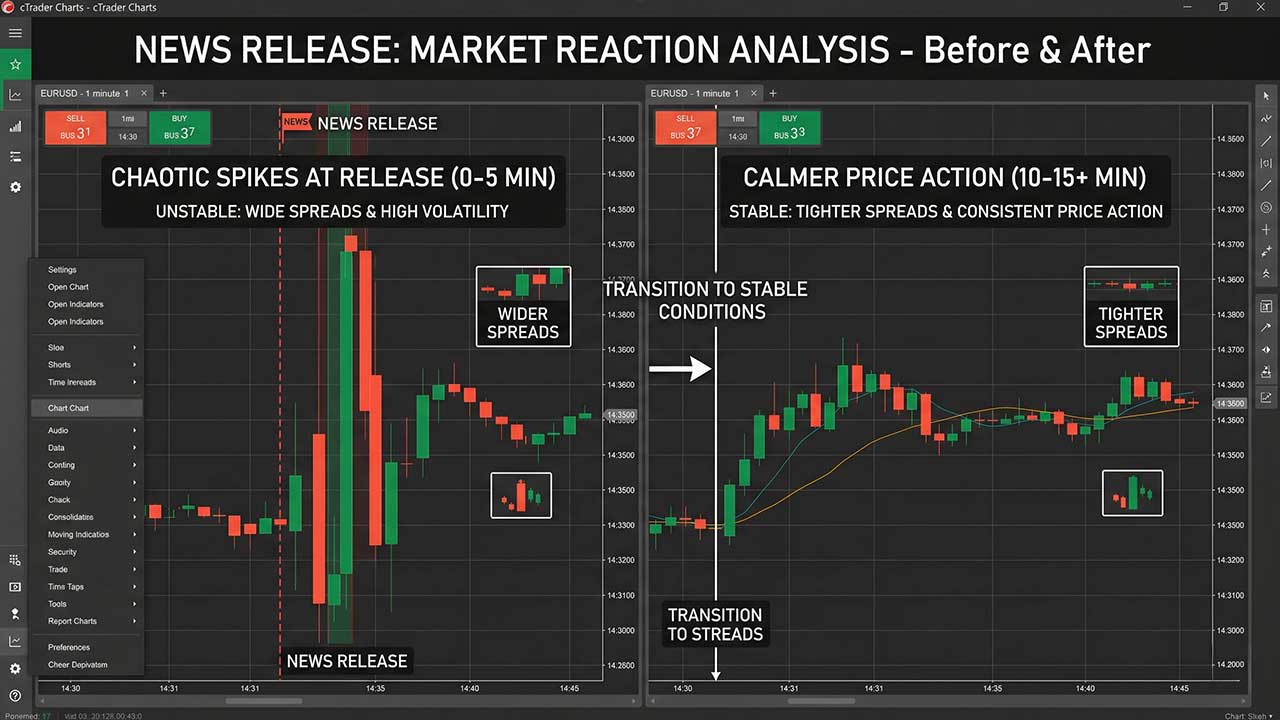
Instead of chasing news moves, focus on whether market conditions are tradable, not just where price is going. A simple way to think about it is to ask whether execution can be trusted at that moment. If spreads are wide and price is jumping, the answer is usually no.
Many experienced traders wait for the market to settle after the release. Once liquidity returns and spreads tighten, price begins to move in a more stable way. This creates a better environment for executing trades with control. Missing the first move is not a loss if it helps you trade with more consistency.
Protecting Your Edge
Your edge comes from consistency over time, not from one large trade. That means focusing on conditions where execution is reliable, spreads are stable, and price action is easier to read. News events disrupt all of these factors at once.
Instead of forcing trades during unstable periods, it is often better to wait for clarity. This approach may feel slower, but it protects your capital and keeps your performance steady. Over time, this is what allows traders to grow and stay in the game.
Final Thought
The biggest mistake traders make is thinking news is only about volatility. In reality, it is about a shift in market structure that affects how trades are executed. Liquidity drops, spreads widen, and fills become unpredictable.
When execution breaks, even a good strategy can fail. That is why understanding market conditions matters just as much as understanding price. The next time a major news event approaches, focus less on the move and more on the environment behind it. That is what truly determines the outcome of your trades. If you are serious about trading in stable conditions and scaling with real capital, this is where joining Pipstone Capital makes sense, with up to $400,000 in funding, no time limits, and fast payouts built around consistency.
FAQs
Should I avoid trading all news events?
You do not need to avoid every event, but you should be selective. High-impact releases like interest rate decisions or inflation data tend to disrupt execution the most. If spreads widen and price starts jumping, it is better to wait for conditions to stabilize.
Why do my stop losses slip during news?
Stops rely on available liquidity at your chosen price. When liquidity disappears, your order gets filled at the next available level, which can be far away. This is why losses can be larger than planned during volatile releases.
Is it safer to trade after the news instead?
In many cases, yes, because liquidity returns and spreads tighten after the initial reaction. Price starts to move in a more stable way, which makes execution more reliable. You may miss the first move, but you gain better control over your trades.



What Prop Traders Need to Consider Before News Trading Events in 2026
Most traders think news trading is about catching big moves and quick profits. They see strong price spikes and assume this is where the easiest money is made. The idea sounds simple. Wait for a major release, jump in, and ride the move. But this view misses what really happens in the market.
News does not just move price. It changes how the market behaves at a deeper level. When that happens, your execution starts to break down. This is where most traders lose, not because their trade idea was wrong, but because the market stops acting the way they expect.
The Market You Know Does Not Exist During News
In normal conditions, the market feels stable and predictable. Spreads stay tight, orders fill quickly, and price moves in a way that traders can read and react to. You place a trade and expect a clean entry and a reasonable exit. Your strategy depends on this stability.
During high-impact news, that structure changes within seconds. Liquidity drops, quotes get pulled, and the order book becomes thin. Price no longer moves in smooth steps. It starts jumping between levels with very little in between. When this happens, the same strategy you trust in calm markets starts to break apart.
Liquidity Drops Before the News Hits
Most traders focus only on the moment the news is released, but the real shift begins before that. Liquidity providers reduce their exposure because they do not want to take risk during uncertain events. They either pull their orders or widen their quotes to protect themselves.
This creates a thin market where there are fewer buyers and sellers at each level. The depth that normally absorbs orders disappears. As a result, even a small order can move price more than usual. When the news finally hits, the market is already unstable, which is why price reacts so aggressively. This is why pairs known for fast movement behave even worse during releases, especially those covered in guides like most volatile forex pairs and how traders profit from them.
Spread Widening Is a Market Effect
Many traders assume that spread widening is caused by brokers trying to take advantage of them. In reality, it is a direct result of lower liquidity. When there are fewer participants willing to trade at nearby prices, the gap between bid and ask naturally increases.
During news events, uncertainty is high, so fewer orders sit close to the current price. This forces spreads to expand. What is normally a tight spread can quickly become several times larger. That change alone can turn a good trade into a bad one before price even moves in your favor. This becomes even more visible in assets like gold, where volatility reacts sharply to macro events, as explained in gold trading strategy in 2026.
Slippage Becomes the Real Risk
Slippage is one of the most damaging effects during news trading. You may place an order at a certain price, but if there is no liquidity there, your trade gets filled at the next available level. In calm markets, this difference is small and often ignored.
During high-impact events, price levels can be far apart. This is similar to how gaps form in thin conditions, which is broken down clearly in what is gapping in trading. This means your entry can be worse than expected, and your stop loss can slip far beyond your planned risk. Instead of taking a controlled loss, you may face a much larger one. This is not an error in your strategy. It is the result of trading in unstable conditions.
Why Strategies Stop Working
Most trading strategies are built and tested in stable environments. They assume tight spreads, fast execution, and steady price movement. These conditions allow traders to plan entries, exits, and risk with some level of control.
News events remove that control. Breakout traders often get caught in false spikes that reverse quickly. Scalpers struggle because spreads become too wide to manage small targets. Trend traders enter late because price jumps too fast to follow cleanly. Even when the idea is correct, poor execution leads to bad results.
Backtests Hide the Truth
Backtesting is useful, but it has limits. Most historical data does not include real execution factors such as spread widening, slippage, delayed fills, or rejected orders. The charts look clean, and trades appear smooth.
In live trading, especially during news, those conditions do not exist. This is why a strategy that performs well in testing can fail in real conditions. Traders often feel confused when results change, but the missing piece is execution quality, not the strategy itself.
Prop Traders Face Higher Pressure
For prop traders, the risk is even greater because of strict rules. Daily drawdown limits leave little room for unexpected losses. A single trade affected by slippage or spread spikes can take up a large portion of that limit.
You might predict the direction correctly and still lose the trade because of poor fills. In some cases, one bad execution is enough to fail a challenge. This is why many prop firms place restrictions on trading during major news events. If you are working toward funding, understanding these risks matters a lot, especially when preparing through guides like how to pass one step trading evaluation. It helps control risk across all traders when market conditions become unstable.
A Smarter Approach to News
Instead of chasing news moves, focus on whether market conditions are tradable, not just where price is going. A simple way to think about it is to ask whether execution can be trusted at that moment. If spreads are wide and price is jumping, the answer is usually no.
Many experienced traders wait for the market to settle after the release. Once liquidity returns and spreads tighten, price begins to move in a more stable way. This creates a better environment for executing trades with control. Missing the first move is not a loss if it helps you trade with more consistency.
Protecting Your Edge
Your edge comes from consistency over time, not from one large trade. That means focusing on conditions where execution is reliable, spreads are stable, and price action is easier to read. News events disrupt all of these factors at once.
Instead of forcing trades during unstable periods, it is often better to wait for clarity. This approach may feel slower, but it protects your capital and keeps your performance steady. Over time, this is what allows traders to grow and stay in the game.
Final Thought
The biggest mistake traders make is thinking news is only about volatility. In reality, it is about a shift in market structure that affects how trades are executed. Liquidity drops, spreads widen, and fills become unpredictable.
When execution breaks, even a good strategy can fail. That is why understanding market conditions matters just as much as understanding price. The next time a major news event approaches, focus less on the move and more on the environment behind it. That is what truly determines the outcome of your trades. If you are serious about trading in stable conditions and scaling with real capital, this is where joining Pipstone Capital makes sense, with up to $400,000 in funding, no time limits, and fast payouts built around consistency.
FAQs
Should I avoid trading all news events?
You do not need to avoid every event, but you should be selective. High-impact releases like interest rate decisions or inflation data tend to disrupt execution the most. If spreads widen and price starts jumping, it is better to wait for conditions to stabilize.
Why do my stop losses slip during news?
Stops rely on available liquidity at your chosen price. When liquidity disappears, your order gets filled at the next available level, which can be far away. This is why losses can be larger than planned during volatile releases.
Is it safer to trade after the news instead?
In many cases, yes, because liquidity returns and spreads tighten after the initial reaction. Price starts to move in a more stable way, which makes execution more reliable. You may miss the first move, but you gain better control over your trades.
