


Stop Chasing Big Wins: How to Use Risk to Reward Ratio in 2026
Most traders chase big wins.
They wait for the perfect setup. They want one trade to make the week. Some even aim to double an account in a few days. It sounds good, but it rarely works for long.
The truth is simple. Small edges build accounts faster. Big wins feel good, but they are not stable. If you want to last in trading, you need to think in numbers, not emotions.
This shift changes everything.
The Big Win Trap Most Traders Fall Into
Many traders focus on one thing. A large reward.
They look for trades that can return 1:5, 1:10, or more. These setups exist, but they do not show up often. When traders wait for them, they start forcing trades that are not clean.
This leads to:
Poor entries
Wide stop losses
Low win rates
Emotional decisions
A trader might win big once, then lose it all in the next few trades. This cycle repeats. It feels like progress, but the account does not grow.
The problem is not the goal. The problem is how often that goal can be reached.

What a Small Edge Really Means With Proper Risk-to-Reward Ratio
A small edge is simple.
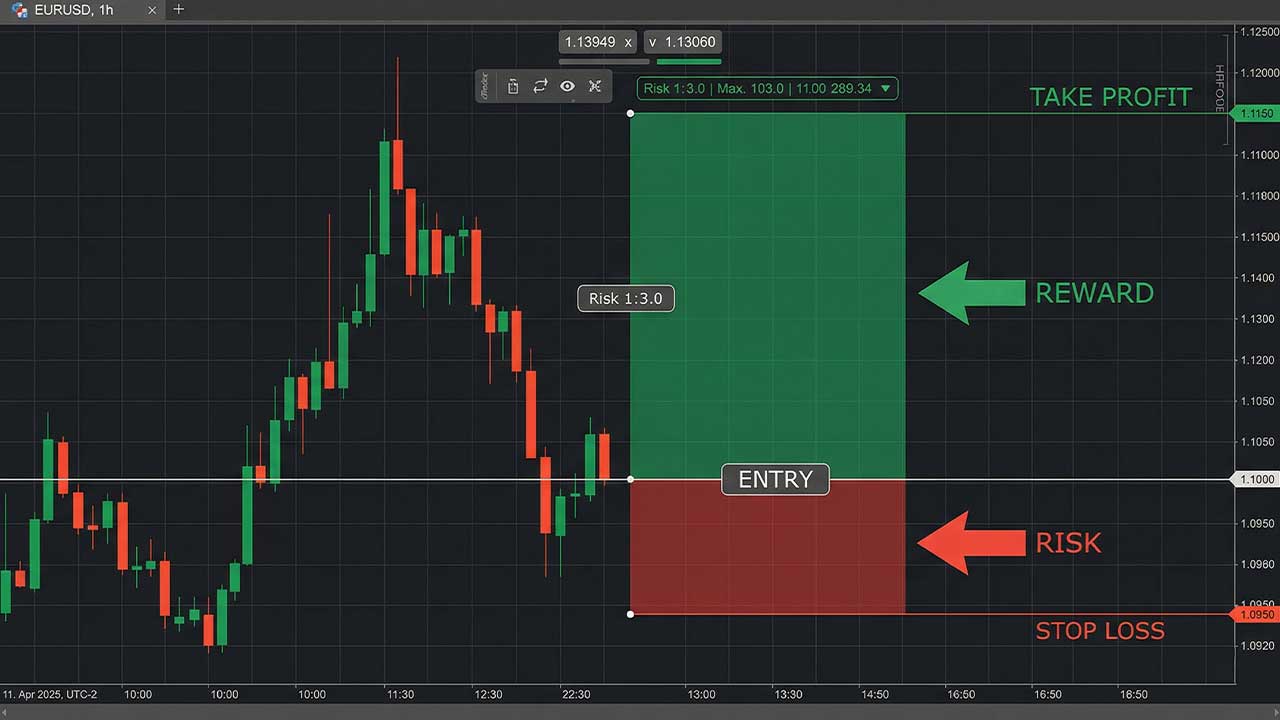
You take trades where the risk is clear. The setup makes sense. The outcome does not need to be huge. It just needs to be better than the risk.
This often looks like:
Risk 1% to make 2%
Risk 1% to make 3%
This is where the idea of risk to reward comes in.
Risk-to-reward = potential loss ÷ potential gain
You do not need extreme targets. You need repeatable ones.
If you can find the same type of setup again and again, you have something that can scale.
Why Small Edges Work Better Over Time
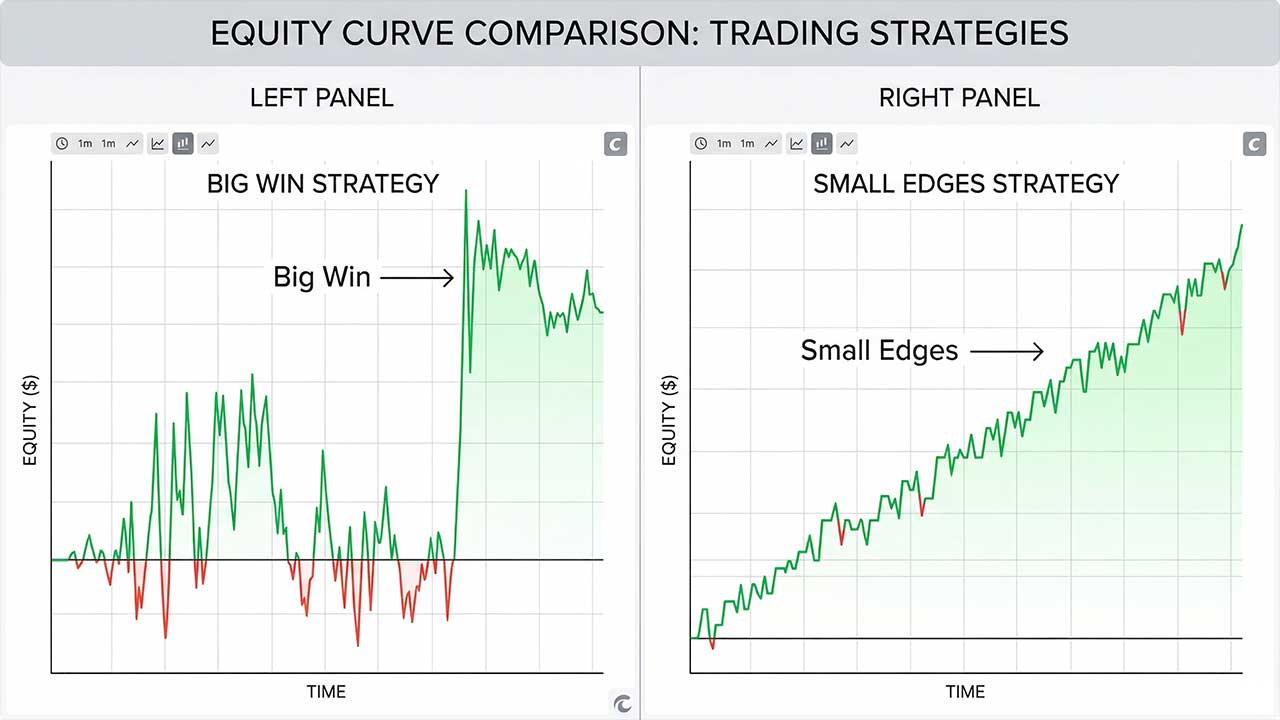
Small edges win because they happen more often.
Markets move in steps, not in one straight line. Clean moves of 1:2 or 1:3 show up daily. Huge moves do not.
This gives you:
More trades
More data
More control
When you trade often with a clear plan, your results become stable. You stop relying on luck.
Even if your win rate is not high, you can still grow.
For example:
40% win rate
1:3 risk to reward
You lose 6 trades. You win 4. The winners still cover the losses and leave profit.
This is how small edges scale.
High Risk-to-Reward Is Not the Problem
There is nothing wrong with high risk to reward setups.
In fact, they are powerful when used the right way. Strategies like liquidity grabs, breakouts, and demand zone entries can offer large returns with small risk.
But here is the key point.
They work best when:
The market has strong movement
Timing is right
The setup is clear
These conditions do not exist all the time.
If you treat every trade like a 1:10 setup, you will force trades. That is where most traders fail.
The goal is not to avoid high reward trades. The goal is to stop depending on them.
News Trading Shows This Clearly
Economic news is a good example.
When major news drops, price can move fast. This creates the chance for large wins. It also creates chaos.
During these moments:
Spreads widen
Slippage increases
Price moves too fast to control
For prop traders, this becomes risky.
A single bad fill can hit your daily loss limit. One fast move can wipe the account. Even if your idea is right, execution can fail.
This is why many traders avoid trading right at the news release.
The better approach is simple.
Wait for the move. Let the market settle. Then look for a clean setup.
This often leads to smaller, cleaner trades with better control.
Frequency Beats Intensity
Think of trading like a business.
A business does not rely on one big sale. It grows through many small, steady sales. Trading works the same way.
When you focus on small edges:
You trade more often
You collect more consistent gains
You reduce pressure on each trade
Each trade becomes less important. Your process becomes more important.
This shift removes a lot of stress.
Structure First, Not Targets
Many traders start with a target.
They decide they want a 1:5 trade, then try to fit the chart to that idea. This is backwards.
You should start with the chart.
Look for:
Key highs and lows
Support and resistance
Supply and demand zones
Liquidity areas
Then build your trade from that.
Your stop loss should sit where your idea breaks. Your target should sit where price is likely to move.
The risk to reward comes from the structure. Not from your preference.
This keeps your trades realistic.
Tight Risk Is the Real Edge
The real power in small edges comes from tight risk.
When your stop loss is small and logical, your trade becomes efficient. You do not need a huge move to make money.
This is why setups like liquidity grabs and retests work well.
They give you:
Clear invalidation points
Tight stop losses
Room for price to move
Even a modest move can give a strong return. This is why strong risk management in prop trading matters more than chasing one huge move.
Why Prop Traders Must Think This Way
If you are trading a prop account, this matters even more.
You have rules:
Daily drawdown limits
Max loss limits
Consistency requirements
You cannot afford wild swings.
One big loss can end the account. One bad news trade can break the rules.
Small edges help you stay within limits.
They allow you to:
Control risk
Avoid sudden losses
Build steady gains
This is how traders pass challenges and keep funded accounts. If you want a deeper breakdown, read this guide on how to pass a funded account challenge.
The Role of Discipline
Small edges only work if you follow them.
You need to:
Take the same type of setup
Use the same risk each time
Avoid random trades
This is where most traders struggle.
They win a few trades, then start chasing bigger wins. They increase risk. They break their own rules.
This destroys the edge.
Discipline is not about being perfect. It is about being consistent. That is also why deciding the right funded account matters more than most traders think.
A Simple Way to Apply This
You do not need a complex system.
Start with this:
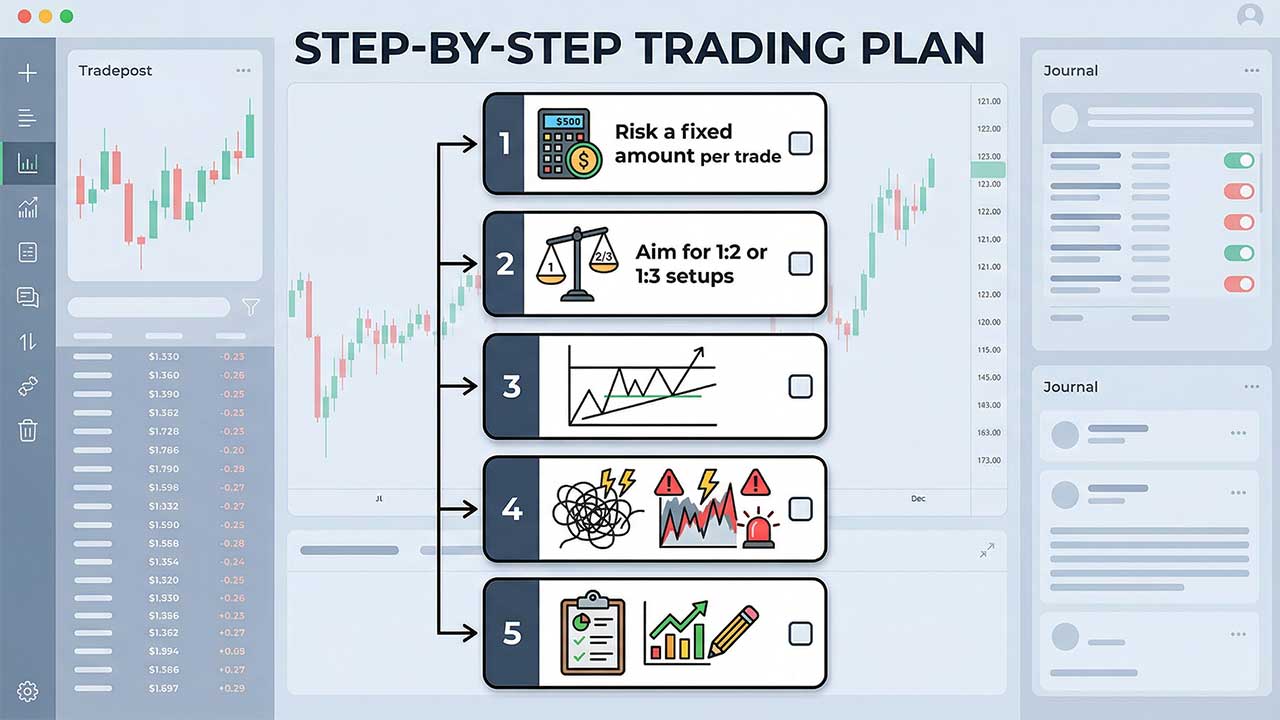
Risk a fixed amount per trade
Aim for 1:2 or 1:3 setups
Trade only clear structure
Avoid trading during chaos
Track your results
Do this over many trades.
You will start to see patterns. You will see what works. You will build confidence.
Over time, your account grows.
Big Wins Still Have a Place
This is not about avoiding big trades.
When the market lines up, take them.
For example:
Strong trend days
Clear breakout with volume
Clean liquidity sweep
These are moments where larger moves make sense.
But they should be a bonus, not the plan.
Your base should always be small, repeatable edges.
The Real Shift That Changes Everything
Most traders think like this:
“I need one big trade to grow.”
Profitable traders think like this:
“I need many small, clean trades.”
This is the difference.
One approach depends on luck. The other depends on process.
When you stop chasing big wins, you start seeing the market more clearly. You wait for clean setups. You manage risk better. You stay in the game longer.
That is what leads to growth.
Final Thoughts
Big wins look exciting, but they are not reliable.
Small edges look boring, but they build real results.
If you want to grow your account, focus on what you can repeat. Focus on structure, risk, and consistency.
If you are serious about scaling this approach, joining Pipstone Capital gives you the right setup. You get real funding, no time limits, and fast payouts, which makes it easier to focus on consistency instead of chasing big wins.
Let the big wins come when they come.
Do not chase them.
FAQs
Do I need a high win rate to grow my account?
No. If your risk to reward is strong, you can win less and still grow. A 1:2 or 1:3 setup can cover multiple losses.
Should I avoid high risk to reward trades?
No. Take them when the setup is clear. Just do not depend on them every day.
Is it better to trade during news for bigger wins?
Not always. News can move fast and break your rules. Waiting after the move often gives cleaner setups.
How many trades should I take each week?
There is no fixed number. Focus on quality setups you can repeat. Consistency matters more than volume.



Stop Chasing Big Wins: How to Use Risk to Reward Ratio in 2026
Most traders chase big wins.
They wait for the perfect setup. They want one trade to make the week. Some even aim to double an account in a few days. It sounds good, but it rarely works for long.
The truth is simple. Small edges build accounts faster. Big wins feel good, but they are not stable. If you want to last in trading, you need to think in numbers, not emotions.
This shift changes everything.
The Big Win Trap Most Traders Fall Into
Many traders focus on one thing. A large reward.
They look for trades that can return 1:5, 1:10, or more. These setups exist, but they do not show up often. When traders wait for them, they start forcing trades that are not clean.
This leads to:
Poor entries
Wide stop losses
Low win rates
Emotional decisions
A trader might win big once, then lose it all in the next few trades. This cycle repeats. It feels like progress, but the account does not grow.
The problem is not the goal. The problem is how often that goal can be reached.
What a Small Edge Really Means With Proper Risk-to-Reward Ratio
A small edge is simple.
You take trades where the risk is clear. The setup makes sense. The outcome does not need to be huge. It just needs to be better than the risk.
This often looks like:
Risk 1% to make 2%
Risk 1% to make 3%
This is where the idea of risk to reward comes in.
Risk-to-reward = potential loss ÷ potential gain
You do not need extreme targets. You need repeatable ones.
If you can find the same type of setup again and again, you have something that can scale.
Why Small Edges Work Better Over Time
Small edges win because they happen more often.
Markets move in steps, not in one straight line. Clean moves of 1:2 or 1:3 show up daily. Huge moves do not.
This gives you:
More trades
More data
More control
When you trade often with a clear plan, your results become stable. You stop relying on luck.
Even if your win rate is not high, you can still grow.
For example:
40% win rate
1:3 risk to reward
You lose 6 trades. You win 4. The winners still cover the losses and leave profit.
This is how small edges scale.
High Risk-to-Reward Is Not the Problem
There is nothing wrong with high risk to reward setups.
In fact, they are powerful when used the right way. Strategies like liquidity grabs, breakouts, and demand zone entries can offer large returns with small risk.
But here is the key point.
They work best when:
The market has strong movement
Timing is right
The setup is clear
These conditions do not exist all the time.
If you treat every trade like a 1:10 setup, you will force trades. That is where most traders fail.
The goal is not to avoid high reward trades. The goal is to stop depending on them.
News Trading Shows This Clearly
Economic news is a good example.
When major news drops, price can move fast. This creates the chance for large wins. It also creates chaos.
During these moments:
Spreads widen
Slippage increases
Price moves too fast to control
For prop traders, this becomes risky.
A single bad fill can hit your daily loss limit. One fast move can wipe the account. Even if your idea is right, execution can fail.
This is why many traders avoid trading right at the news release.
The better approach is simple.
Wait for the move. Let the market settle. Then look for a clean setup.
This often leads to smaller, cleaner trades with better control.
Frequency Beats Intensity
Think of trading like a business.
A business does not rely on one big sale. It grows through many small, steady sales. Trading works the same way.
When you focus on small edges:
You trade more often
You collect more consistent gains
You reduce pressure on each trade
Each trade becomes less important. Your process becomes more important.
This shift removes a lot of stress.
Structure First, Not Targets
Many traders start with a target.
They decide they want a 1:5 trade, then try to fit the chart to that idea. This is backwards.
You should start with the chart.
Look for:
Key highs and lows
Support and resistance
Supply and demand zones
Liquidity areas
Then build your trade from that.
Your stop loss should sit where your idea breaks. Your target should sit where price is likely to move.
The risk to reward comes from the structure. Not from your preference.
This keeps your trades realistic.
Tight Risk Is the Real Edge
The real power in small edges comes from tight risk.
When your stop loss is small and logical, your trade becomes efficient. You do not need a huge move to make money.
This is why setups like liquidity grabs and retests work well.
They give you:
Clear invalidation points
Tight stop losses
Room for price to move
Even a modest move can give a strong return. This is why strong risk management in prop trading matters more than chasing one huge move.
Why Prop Traders Must Think This Way
If you are trading a prop account, this matters even more.
You have rules:
Daily drawdown limits
Max loss limits
Consistency requirements
You cannot afford wild swings.
One big loss can end the account. One bad news trade can break the rules.
Small edges help you stay within limits.
They allow you to:
Control risk
Avoid sudden losses
Build steady gains
This is how traders pass challenges and keep funded accounts. If you want a deeper breakdown, read this guide on how to pass a funded account challenge.
The Role of Discipline
Small edges only work if you follow them.
You need to:
Take the same type of setup
Use the same risk each time
Avoid random trades
This is where most traders struggle.
They win a few trades, then start chasing bigger wins. They increase risk. They break their own rules.
This destroys the edge.
Discipline is not about being perfect. It is about being consistent. That is also why deciding the right funded account matters more than most traders think.
A Simple Way to Apply This
You do not need a complex system.
Start with this:
Risk a fixed amount per trade
Aim for 1:2 or 1:3 setups
Trade only clear structure
Avoid trading during chaos
Track your results
Do this over many trades.
You will start to see patterns. You will see what works. You will build confidence.
Over time, your account grows.
Big Wins Still Have a Place
This is not about avoiding big trades.
When the market lines up, take them.
For example:
Strong trend days
Clear breakout with volume
Clean liquidity sweep
These are moments where larger moves make sense.
But they should be a bonus, not the plan.
Your base should always be small, repeatable edges.
The Real Shift That Changes Everything
Most traders think like this:
“I need one big trade to grow.”
Profitable traders think like this:
“I need many small, clean trades.”
This is the difference.
One approach depends on luck. The other depends on process.
When you stop chasing big wins, you start seeing the market more clearly. You wait for clean setups. You manage risk better. You stay in the game longer.
That is what leads to growth.
Final Thoughts
Big wins look exciting, but they are not reliable.
Small edges look boring, but they build real results.
If you want to grow your account, focus on what you can repeat. Focus on structure, risk, and consistency.
If you are serious about scaling this approach, joining Pipstone Capital gives you the right setup. You get real funding, no time limits, and fast payouts, which makes it easier to focus on consistency instead of chasing big wins.
Let the big wins come when they come.
Do not chase them.
FAQs
Do I need a high win rate to grow my account?
No. If your risk to reward is strong, you can win less and still grow. A 1:2 or 1:3 setup can cover multiple losses.
Should I avoid high risk to reward trades?
No. Take them when the setup is clear. Just do not depend on them every day.
Is it better to trade during news for bigger wins?
Not always. News can move fast and break your rules. Waiting after the move often gives cleaner setups.
How many trades should I take each week?
There is no fixed number. Focus on quality setups you can repeat. Consistency matters more than volume.
