


How to Prevent Trading Burnout Before It Hurts Performance
Most traders think burnout only happens after a major loss.
In reality, trading burnout builds slowly. It starts with mental fatigue, emotional stress, poor sleep, and constant screen time. By the time traders notice it, their performance is already slipping.
They begin forcing trades. They hesitate on clean setups. Small losses feel heavier than usual. Confidence disappears even when the strategy still works.
This is one reason many traders struggle after months or years in the market. The issue is not always technical skill. Sometimes the nervous system is overloaded.
Burnout affects forex traders, funded traders, scalpers, swing traders, and even experienced professionals. Traders exploring different prop firms for new traders often underestimate how much emotional pressure can affect performance over time. If it is ignored for too long, it can damage consistency and decision-making.
The good news is that trading burnout can usually be prevented before it reaches that stage.
What Trading Burnout Actually Looks Like
Trading burnout is not just feeling tired after a long session.
It is a mental and emotional state where the brain struggles to handle pressure, uncertainty, and repeated decision-making.
Many traders assume they need:
a better strategy,
more indicators,
or more market exposure.
But often, the real issue is mental exhaustion.
Common signs of trading burnout include:
overtrading,
revenge trading,
emotional entries,
hesitation,
constantly changing strategies,
ignoring risk management,
frustration after small losses,
and difficulty staying focused.
Burnout also reduces patience. Traders begin forcing action because sitting still feels uncomfortable.
This becomes dangerous in funded trading environments where consistency matters more than excitement.

Why Trading Becomes Mentally Exhausting
Trading requires constant decision-making.
Your brain is always processing:
market structure,
price action,
risk,
volatility,
news,
emotions,
and potential outcomes.
That mental load adds up over time.
Unlike many jobs, trading also includes uncertainty. Even good decisions can lose money. That creates emotional stress that slowly drains mental energy.
After repeated exposure to pressure, the nervous system starts reacting differently.
Some traders enter “fight mode” and begin overtrading aggressively.
Others freeze and hesitate on setups they would normally take.
Some become emotionally numb and lose focus completely.
This is why trading can feel harder over time even when experience increases.
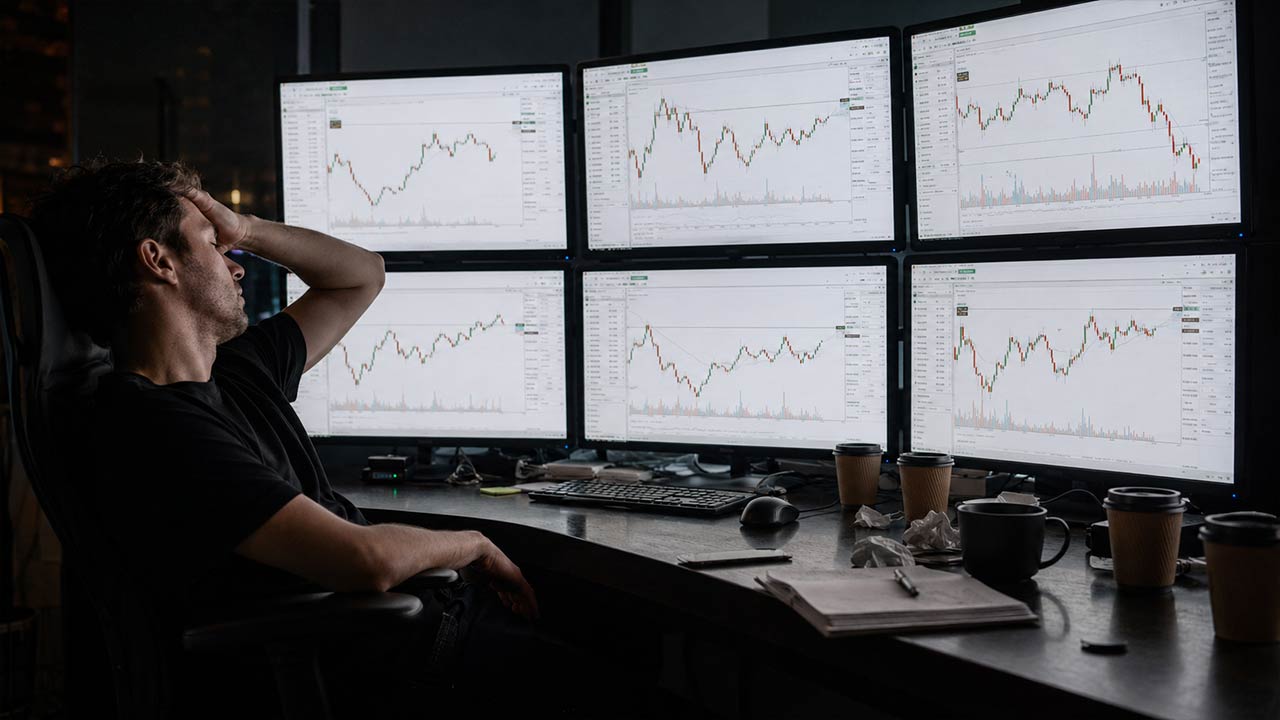
The Nervous System Plays a Bigger Role Than Most Traders Think
Many traders focus only on strategy.
Professional traders also focus on emotional regulation.
The nervous system controls how the body reacts to stress. In trading, that stress comes from:
losses,
uncertainty,
volatility,
drawdowns,
and pressure to perform.
When stress stays elevated for too long, the brain shifts into survival mode.
This affects:
focus,
impulse control,
emotional stability,
and decision quality.
That is why traders sometimes break rules they fully understand.
The problem is not lack of knowledge. The nervous system simply stops handling pressure efficiently.
This is also why traders often perform worse after:
long losing streaks,
excessive screen time,
poor sleep,
or emotional stress outside trading.
Burnout is rarely caused by one bad day. It usually builds from repeated stress without recovery.
Stop Treating Trading Like Endless Screen Time
Many traders believe more screen time automatically improves performance.
Sometimes it does the opposite.
Watching charts for 10 to 12 hours daily can reduce focus and increase emotional reactions. The brain becomes fatigued from constant stimulation.
Professional athletes do not train at maximum intensity every hour of the day. Traders should think similarly.
Quality decision-making matters more than endless market exposure.
Instead of staying glued to charts all day:
trade during your best sessions,
define clear trading hours,
and step away once your edge disappears.
This becomes even more important during volatile market conditions. Traders dealing with fast-moving commodities can learn a lot from managing volatile market moves without letting emotions take control.
If focus starts dropping, execution quality usually follows shortly after.
Build a Repeatable Trading Routine
Burnout becomes more common when trading feels chaotic.
A structured routine helps reduce emotional stress and mental overload.
Good trading routines often include:
pre-market preparation,
fixed trading sessions,
risk limits,
journaling,
and post-session review.
Routines reduce unnecessary decisions. That preserves mental energy.
For example, many traders burn out because they:
monitor too many pairs,
switch between strategies,
constantly check social media,
or trade random setups.
A repeatable process creates stability.
Funded traders especially benefit from this because prop firm environments reward consistency over emotional trading. Choosing a one-step prop firm can also help reduce unnecessary pressure and simplify the funding process for newer traders.
At Pipstone Capital, traders can access funded challenges with real market conditions, raw spreads, and fast execution. But even with good trading conditions, emotional discipline and routine still play a major role in long-term consistency.
Learn to Walk Away Earlier
One of the biggest signs of burnout is staying in front of the charts long after mental clarity disappears.
Many traders notice they perform worse later in the day but continue trading anyway.
This often leads to:
revenge trading,
impulsive entries,
and unnecessary losses.
Sometimes the best trading decision is stopping.
Walking away is not weakness. It is risk management.
Professional traders understand that protecting mental clarity matters just as much as protecting capital.
Some useful limits include:
maximum daily loss limits,
maximum number of trades,
mandatory breaks after losing streaks,
and reduced exposure during emotional periods.
These habits help prevent emotional spirals before they become serious.
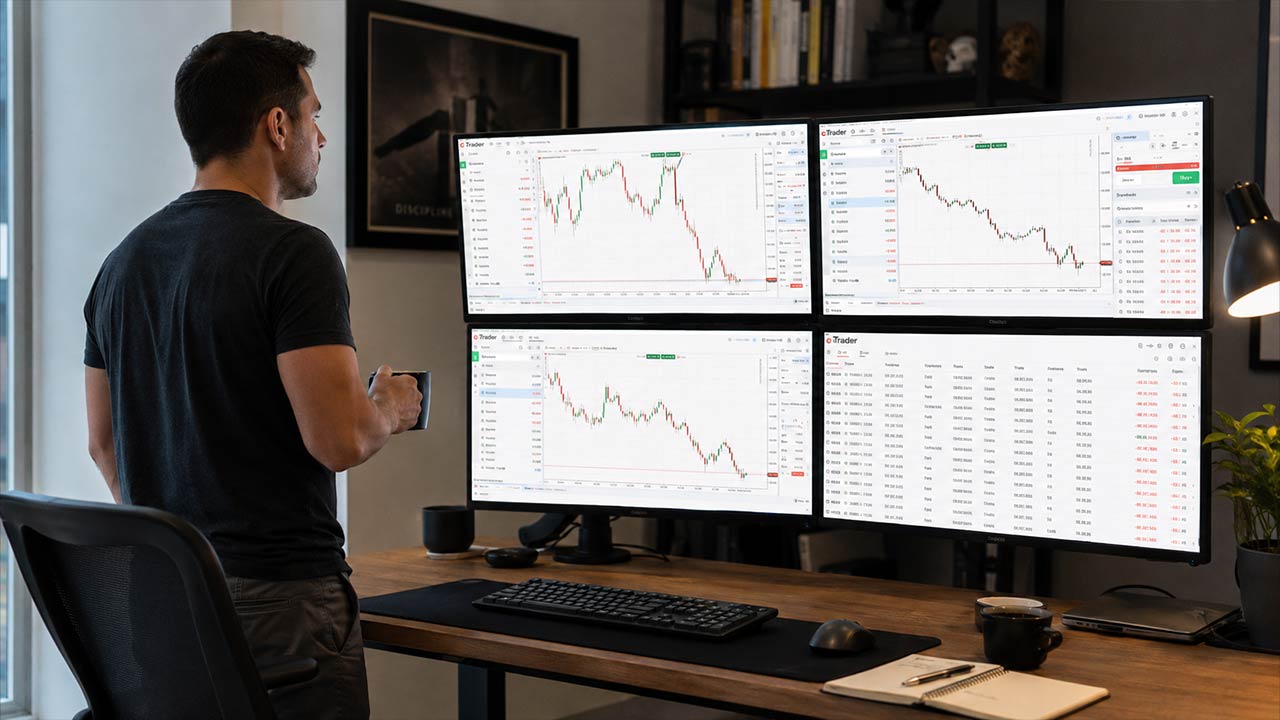
Sleep and Recovery Directly Affect Trading Performance
Many traders underestimate how much sleep impacts execution.
Poor sleep affects:
reaction time,
emotional control,
focus,
memory,
and decision-making.
This becomes even worse during high-volatility trading sessions.
Sleep deprivation also increases emotional sensitivity. Small losses feel larger, and frustration builds faster.
Burned-out traders often try solving this with:
more analysis,
more indicators,
or more trading hours.
But recovery matters more.
Strong recovery habits include:
consistent sleep schedules,
exercise,
time away from charts,
healthy routines,
and limiting stress outside trading.
The goal is not just avoiding exhaustion. It is protecting decision quality.
Reduce Emotional Attachment to Every Trade
Burnout becomes worse when traders emotionally attach themselves to results.
Not every trade needs to feel important.
One losing trade should not feel like personal failure.
When traders become emotionally attached to outcomes:
stress rises,
cortisol stays elevated,
and performance becomes unstable.
Professional traders focus more on process than individual results.
That mindset reduces emotional pressure over time.
A clean loss that followed the trading plan is still a good trade.
This shift helps traders stay calmer during drawdowns and reduces mental exhaustion. Emotional discipline also becomes critical during volatile conditions like managing gold volatility without losing a funded account, where emotional reactions can quickly damage consistency.
Journaling Helps Identify Burnout Early
Many traders only track profits and losses.
That is not enough.
A trading journal should also track:
emotional state,
confidence levels,
fatigue,
focus,
and decision quality.
This helps identify patterns before burnout becomes serious.
For example, traders may notice:
impulsive trades happen after long sessions,
mistakes increase after poor sleep,
or emotional trading appears after consecutive losses.
These patterns are valuable.
Burnout is easier to prevent when traders recognize early warning signs.
Avoid Turning Trading Into Constant Pressure
Many traders place themselves under nonstop pressure.
They feel they must:
trade every day,
recover losses quickly,
hit payout targets immediately,
or constantly prove themselves.
That pressure slowly damages performance.
Consistency in trading rarely comes from intensity.
It usually comes from emotional stability, patience, and sustainable routines.
This is especially important in prop trading where traders often become obsessed with passing challenges quickly.
At Pipstone Capital, traders have access to funded programs with no time limit on challenges. That flexibility can help reduce unnecessary pressure and allow traders to focus more on disciplined execution instead of rushing trades.
The Best Traders Protect Their Mental Edge
Trading is not only technical.
It is psychological and neurological.
Many traders lose performance not because they suddenly became less skilled, but because mental fatigue slowly damaged their execution quality.
Burnout affects:
patience,
discipline,
confidence,
and emotional control.
Preventing burnout starts with recognizing that recovery is part of performance.
The traders who last the longest are usually not the most emotional or aggressive. They are the ones who protect their focus, manage stress properly, and maintain stable routines over time.
Consistency in trading often comes from preserving mental clarity before burnout ever reaches a dangerous level. Traders looking to build long-term discipline can also join Pipstone Capital challenges with up to $400,000 in funding, up to 100% profit splits, fast execution, and no time pressure to complete the challenge.
FAQs
Can trading burnout affect profitable traders?
Yes. Even profitable traders can experience burnout. It often shows up through emotional fatigue, poor execution, or loss of focus.
How do I know if I’m mentally fatigued from trading?
Common signs include overtrading, hesitation, emotional reactions, frustration, and difficulty following your trading plan.
Does taking breaks improve trading performance?
In many cases, yes. Short breaks can help reset focus and improve emotional control during stressful market periods.
Why do traders perform worse after long screen time?
Mental fatigue reduces concentration and decision quality. After several hours, traders often become more impulsive and less disciplined.



How to Prevent Trading Burnout Before It Hurts Performance
Most traders think burnout only happens after a major loss.
In reality, trading burnout builds slowly. It starts with mental fatigue, emotional stress, poor sleep, and constant screen time. By the time traders notice it, their performance is already slipping.
They begin forcing trades. They hesitate on clean setups. Small losses feel heavier than usual. Confidence disappears even when the strategy still works.
This is one reason many traders struggle after months or years in the market. The issue is not always technical skill. Sometimes the nervous system is overloaded.
Burnout affects forex traders, funded traders, scalpers, swing traders, and even experienced professionals. Traders exploring different prop firms for new traders often underestimate how much emotional pressure can affect performance over time. If it is ignored for too long, it can damage consistency and decision-making.
The good news is that trading burnout can usually be prevented before it reaches that stage.
What Trading Burnout Actually Looks Like
Trading burnout is not just feeling tired after a long session.
It is a mental and emotional state where the brain struggles to handle pressure, uncertainty, and repeated decision-making.
Many traders assume they need:
a better strategy,
more indicators,
or more market exposure.
But often, the real issue is mental exhaustion.
Common signs of trading burnout include:
overtrading,
revenge trading,
emotional entries,
hesitation,
constantly changing strategies,
ignoring risk management,
frustration after small losses,
and difficulty staying focused.
Burnout also reduces patience. Traders begin forcing action because sitting still feels uncomfortable.
This becomes dangerous in funded trading environments where consistency matters more than excitement.
Why Trading Becomes Mentally Exhausting
Trading requires constant decision-making.
Your brain is always processing:
market structure,
price action,
risk,
volatility,
news,
emotions,
and potential outcomes.
That mental load adds up over time.
Unlike many jobs, trading also includes uncertainty. Even good decisions can lose money. That creates emotional stress that slowly drains mental energy.
After repeated exposure to pressure, the nervous system starts reacting differently.
Some traders enter “fight mode” and begin overtrading aggressively.
Others freeze and hesitate on setups they would normally take.
Some become emotionally numb and lose focus completely.
This is why trading can feel harder over time even when experience increases.
The Nervous System Plays a Bigger Role Than Most Traders Think
Many traders focus only on strategy.
Professional traders also focus on emotional regulation.
The nervous system controls how the body reacts to stress. In trading, that stress comes from:
losses,
uncertainty,
volatility,
drawdowns,
and pressure to perform.
When stress stays elevated for too long, the brain shifts into survival mode.
This affects:
focus,
impulse control,
emotional stability,
and decision quality.
That is why traders sometimes break rules they fully understand.
The problem is not lack of knowledge. The nervous system simply stops handling pressure efficiently.
This is also why traders often perform worse after:
long losing streaks,
excessive screen time,
poor sleep,
or emotional stress outside trading.
Burnout is rarely caused by one bad day. It usually builds from repeated stress without recovery.
Stop Treating Trading Like Endless Screen Time
Many traders believe more screen time automatically improves performance.
Sometimes it does the opposite.
Watching charts for 10 to 12 hours daily can reduce focus and increase emotional reactions. The brain becomes fatigued from constant stimulation.
Professional athletes do not train at maximum intensity every hour of the day. Traders should think similarly.
Quality decision-making matters more than endless market exposure.
Instead of staying glued to charts all day:
trade during your best sessions,
define clear trading hours,
and step away once your edge disappears.
This becomes even more important during volatile market conditions. Traders dealing with fast-moving commodities can learn a lot from managing volatile market moves without letting emotions take control.
If focus starts dropping, execution quality usually follows shortly after.
Build a Repeatable Trading Routine
Burnout becomes more common when trading feels chaotic.
A structured routine helps reduce emotional stress and mental overload.
Good trading routines often include:
pre-market preparation,
fixed trading sessions,
risk limits,
journaling,
and post-session review.
Routines reduce unnecessary decisions. That preserves mental energy.
For example, many traders burn out because they:
monitor too many pairs,
switch between strategies,
constantly check social media,
or trade random setups.
A repeatable process creates stability.
Funded traders especially benefit from this because prop firm environments reward consistency over emotional trading. Choosing a one-step prop firm can also help reduce unnecessary pressure and simplify the funding process for newer traders.
At Pipstone Capital, traders can access funded challenges with real market conditions, raw spreads, and fast execution. But even with good trading conditions, emotional discipline and routine still play a major role in long-term consistency.
Learn to Walk Away Earlier
One of the biggest signs of burnout is staying in front of the charts long after mental clarity disappears.
Many traders notice they perform worse later in the day but continue trading anyway.
This often leads to:
revenge trading,
impulsive entries,
and unnecessary losses.
Sometimes the best trading decision is stopping.
Walking away is not weakness. It is risk management.
Professional traders understand that protecting mental clarity matters just as much as protecting capital.
Some useful limits include:
maximum daily loss limits,
maximum number of trades,
mandatory breaks after losing streaks,
and reduced exposure during emotional periods.
These habits help prevent emotional spirals before they become serious.
Sleep and Recovery Directly Affect Trading Performance
Many traders underestimate how much sleep impacts execution.
Poor sleep affects:
reaction time,
emotional control,
focus,
memory,
and decision-making.
This becomes even worse during high-volatility trading sessions.
Sleep deprivation also increases emotional sensitivity. Small losses feel larger, and frustration builds faster.
Burned-out traders often try solving this with:
more analysis,
more indicators,
or more trading hours.
But recovery matters more.
Strong recovery habits include:
consistent sleep schedules,
exercise,
time away from charts,
healthy routines,
and limiting stress outside trading.
The goal is not just avoiding exhaustion. It is protecting decision quality.
Reduce Emotional Attachment to Every Trade
Burnout becomes worse when traders emotionally attach themselves to results.
Not every trade needs to feel important.
One losing trade should not feel like personal failure.
When traders become emotionally attached to outcomes:
stress rises,
cortisol stays elevated,
and performance becomes unstable.
Professional traders focus more on process than individual results.
That mindset reduces emotional pressure over time.
A clean loss that followed the trading plan is still a good trade.
This shift helps traders stay calmer during drawdowns and reduces mental exhaustion. Emotional discipline also becomes critical during volatile conditions like managing gold volatility without losing a funded account, where emotional reactions can quickly damage consistency.
Journaling Helps Identify Burnout Early
Many traders only track profits and losses.
That is not enough.
A trading journal should also track:
emotional state,
confidence levels,
fatigue,
focus,
and decision quality.
This helps identify patterns before burnout becomes serious.
For example, traders may notice:
impulsive trades happen after long sessions,
mistakes increase after poor sleep,
or emotional trading appears after consecutive losses.
These patterns are valuable.
Burnout is easier to prevent when traders recognize early warning signs.
Avoid Turning Trading Into Constant Pressure
Many traders place themselves under nonstop pressure.
They feel they must:
trade every day,
recover losses quickly,
hit payout targets immediately,
or constantly prove themselves.
That pressure slowly damages performance.
Consistency in trading rarely comes from intensity.
It usually comes from emotional stability, patience, and sustainable routines.
This is especially important in prop trading where traders often become obsessed with passing challenges quickly.
At Pipstone Capital, traders have access to funded programs with no time limit on challenges. That flexibility can help reduce unnecessary pressure and allow traders to focus more on disciplined execution instead of rushing trades.
The Best Traders Protect Their Mental Edge
Trading is not only technical.
It is psychological and neurological.
Many traders lose performance not because they suddenly became less skilled, but because mental fatigue slowly damaged their execution quality.
Burnout affects:
patience,
discipline,
confidence,
and emotional control.
Preventing burnout starts with recognizing that recovery is part of performance.
The traders who last the longest are usually not the most emotional or aggressive. They are the ones who protect their focus, manage stress properly, and maintain stable routines over time.
Consistency in trading often comes from preserving mental clarity before burnout ever reaches a dangerous level. Traders looking to build long-term discipline can also join Pipstone Capital challenges with up to $400,000 in funding, up to 100% profit splits, fast execution, and no time pressure to complete the challenge.
FAQs
Can trading burnout affect profitable traders?
Yes. Even profitable traders can experience burnout. It often shows up through emotional fatigue, poor execution, or loss of focus.
How do I know if I’m mentally fatigued from trading?
Common signs include overtrading, hesitation, emotional reactions, frustration, and difficulty following your trading plan.
Does taking breaks improve trading performance?
In many cases, yes. Short breaks can help reset focus and improve emotional control during stressful market periods.
Why do traders perform worse after long screen time?
Mental fatigue reduces concentration and decision quality. After several hours, traders often become more impulsive and less disciplined.
