


How to Beat Trading Greed Before It Hurts Your Results
Most traders think greed starts when someone wants “too much money.”
That is not how it usually happens.
Trading greed often starts quietly. A few winning trades build confidence. You increase position size slightly. You hold trades longer than planned. You take setups that do not fully match your strategy because you feel “locked in.”
At first, it feels harmless.
Then one bad trade wipes out a week of progress.
This is one of the biggest reasons traders struggle to stay profitable long term. Greed changes decision-making without traders noticing it early enough.
The problem is not wanting success. Every trader wants bigger payouts, funded accounts, and consistent profits. The real issue starts when emotions begin controlling execution.
The good news is that trading greed can be managed before it damages your account. Most professional traders are not emotionless. They simply build systems that stop emotions from taking over.
Why Greed Becomes Dangerous in Trading
Greed affects traders differently than fear.
Fear usually makes traders hesitate. Greed pushes traders to do more.
That is why greed often causes:
overtrading,
revenge trading after wins,
increasing lot sizes too quickly,
moving stop losses,
chasing market moves,
ignoring risk management.
The hardest part is that greed usually appears during good periods.
A trader makes profits for several days in a row and suddenly starts believing they have “figured out” the market. Discipline slowly disappears because confidence starts turning into overconfidence.
This is common in prop trading as well. Many traders pass challenges or build strong momentum, then lose consistency because they abandon the exact process that created the wins in the first place.
Markets punish emotional decision-making very quickly.
Many traders who lose funded accounts are not lacking skill. They simply lose discipline after a few good trades. This is why understanding the difference between confidence and consistency matters so much in funded trading. Read more about skill vs discipline for funded accounts.
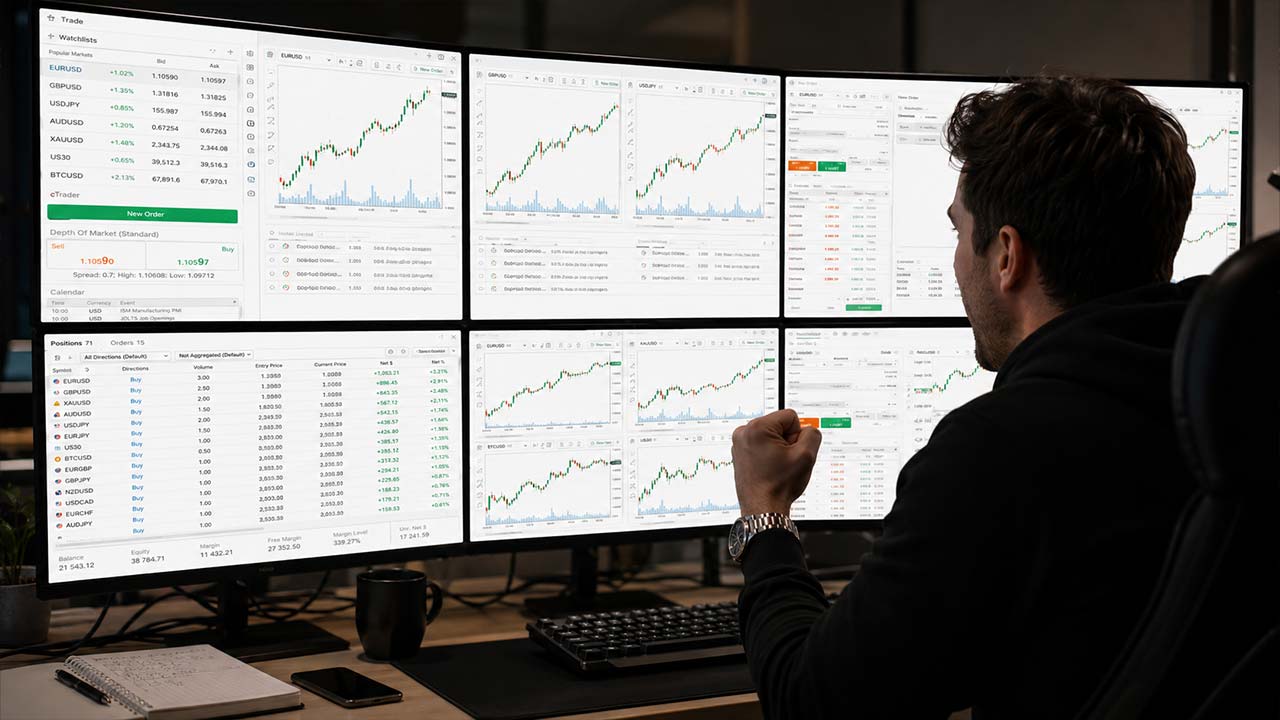
Winning Streaks Can Be More Dangerous Than Losing Streaks
Most traders fear losing streaks. Few realize winning streaks can be even more dangerous.
After several successful trades, traders often:
increase leverage,
take lower-quality setups,
enter trades too early,
ignore trading plans,
trade out of excitement instead of logic.
This creates a dangerous cycle.
The trader feels confident because recent trades worked. That confidence lowers discipline. Eventually, one emotional trade turns into a major drawdown.
Professional traders understand something important:
A winning streak does not mean market conditions will stay the same tomorrow.
The market does not care about your last five trades.
This is why experienced traders keep risk stable even during strong performance periods. They trust their strategy, but they still respect uncertainty.
A lot of traders fail challenges right before reaching profit targets because emotions start taking over near the finish line. Staying patient matters more than forcing extra trades. Here is a deeper breakdown on how to stay disciplined during a funded account challenge.
The Difference Between Confidence and Overconfidence
Confidence is healthy in trading.
You need confidence to execute trades properly.
But confidence becomes dangerous when traders stop respecting risk.
Healthy confidence sounds like:
“I trust my setup.”
“I will follow my rules.”
“Losses are part of trading.”
Overconfidence sounds different:
“This trade cannot fail.”
“I’ll recover losses quickly.”
“I don’t need a stop loss here.”
“I should increase size aggressively.”
That shift usually happens slowly.
Many traders do not notice they became emotionally attached to profits until they start breaking their own rules.
One of the best habits professional traders develop is separating execution from emotion. They focus on following their system instead of trying to feel unbeatable.
Why Greed Leads to Overtrading
Overtrading is one of the clearest signs of greed.
The market rewards patience, but greed creates urgency.
A trader sees one good trade and immediately looks for another. Then another. Then another.
Soon, the trader is forcing setups that are not even there.
This usually happens because traders become addicted to the emotional rush of winning. They stop trading strategically and start trading emotionally.
The problem is not only financial.
Overtrading also creates:
mental fatigue,
poor decision-making,
emotional burnout,
reduced focus,
impulsive entries.
This is why many experienced traders limit the number of trades they can take daily.
Sometimes protecting profits means doing less, not more.
Small Risk Builds Long-Term Consistency
Greedy traders usually think bigger position sizes will solve their problems faster.
In reality, oversized risk destroys consistency.
Many profitable traders risk only a small percentage per trade because they understand survival matters more than short-term excitement.
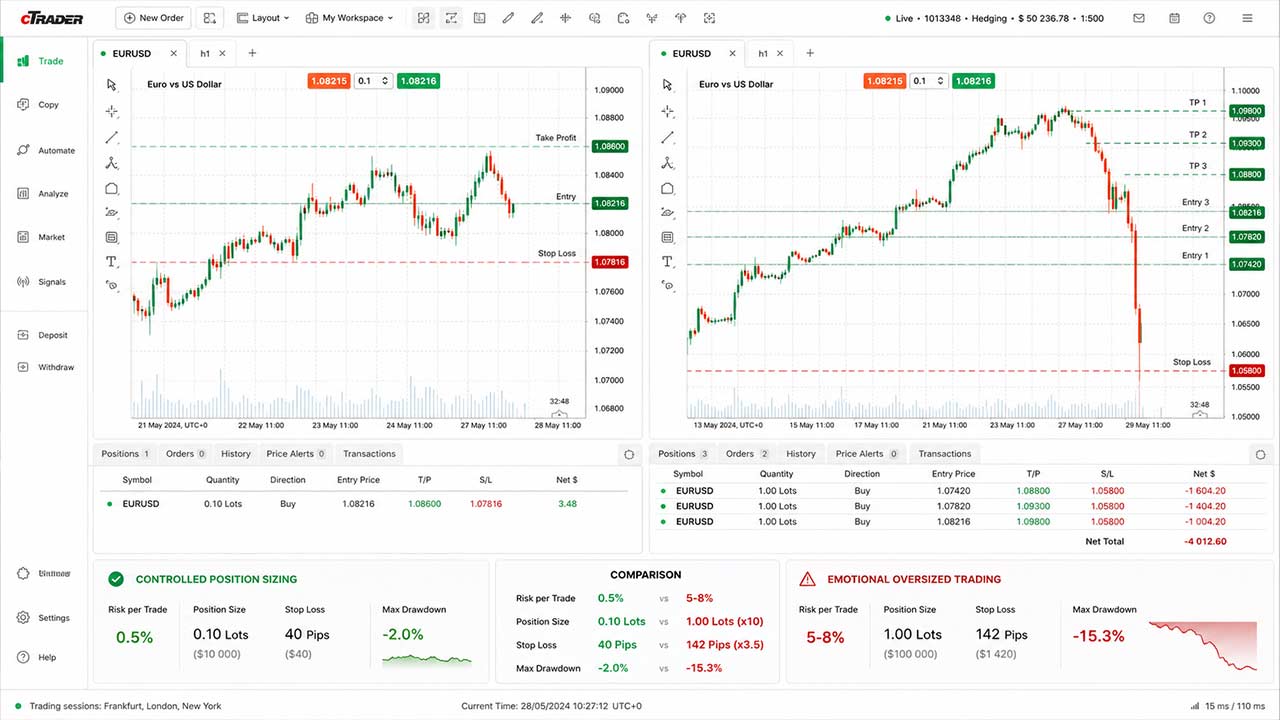
A trader risking 0.5% to 1% per trade can survive losing streaks without emotional panic.
A trader risking 5% to 10% per trade usually becomes emotional very quickly.
Once emotions control execution, discipline disappears.
That is also why experienced funded traders pay close attention to leverage, position sizing, and account drawdown limits. Understanding proper risk management in cTrader can help traders avoid emotional mistakes before they become account-ending losses.
This is especially important for funded traders. Most prop firms have strict drawdown rules. One emotional day can instantly end an account.
That is why disciplined traders focus heavily on capital protection before profit growth.
At prop firms like Pipstone Capital, traders who manage risk properly have a much better chance of keeping funded accounts long term instead of blowing them during emotional periods

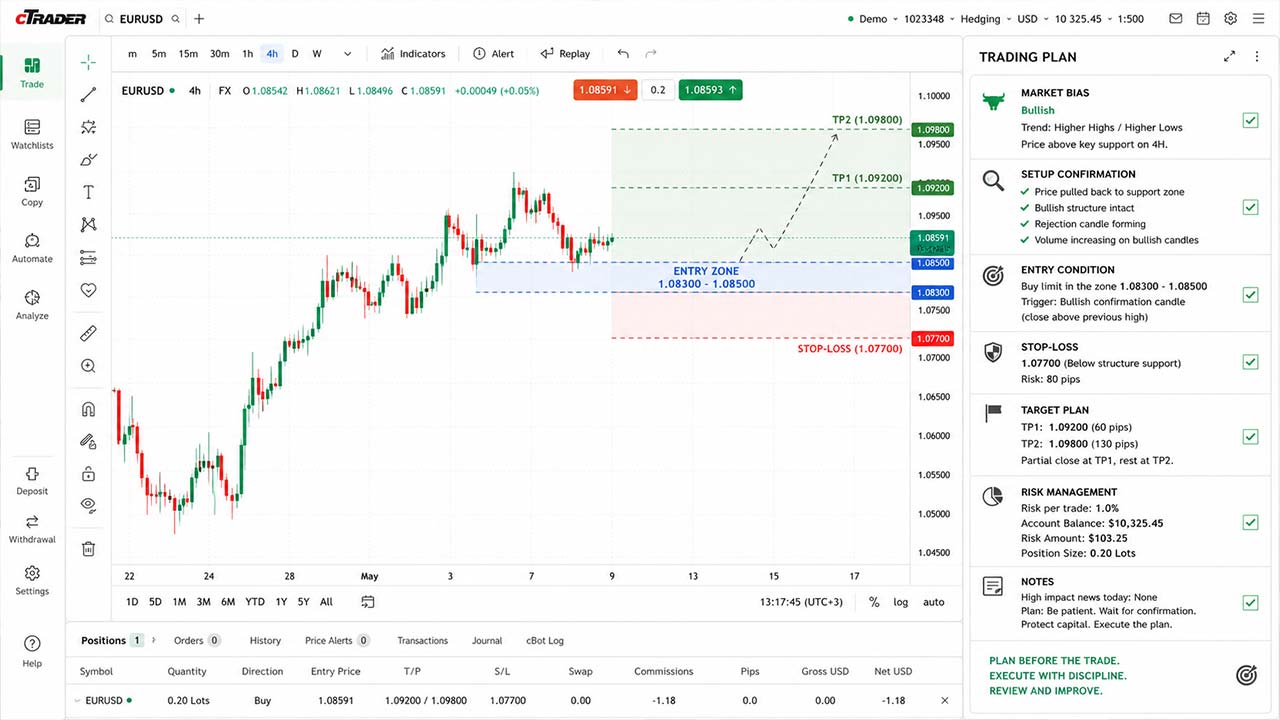
The Role of Trading Plans
Many traders only follow trading plans when markets are easy.
Real discipline appears during emotional moments.
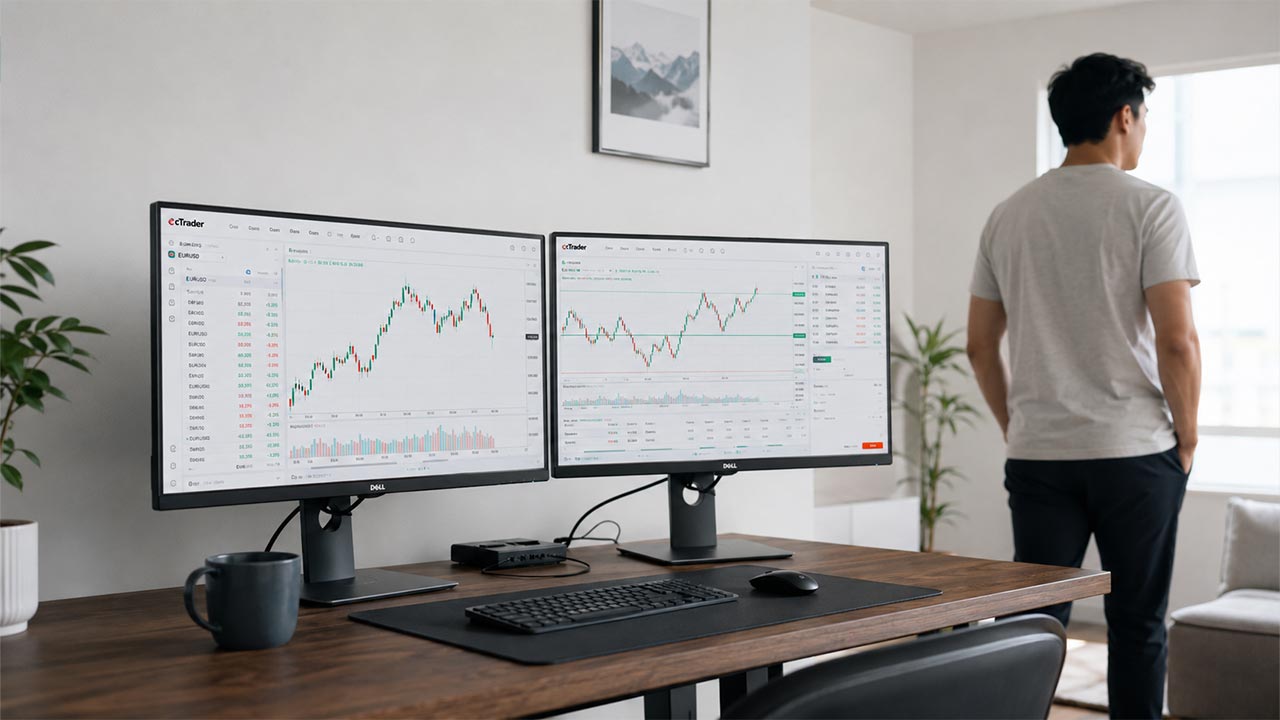
A proper trading plan helps remove emotional decision-making because rules are already defined before entering trades.
Good trading plans usually include:
maximum daily risk,
approved setups,
entry conditions,
stop-loss placement,
take-profit rules,
maximum trades per day,
trading session rules.
Without structure, emotions eventually take control.
The market moves too fast to rely on feelings alone.
Professional traders know that consistency comes from preparation, not prediction.
How Journaling Helps Reduce Greed
Most traders journal technical setups.
Very few journal emotions.
This is a mistake because emotional patterns repeat constantly in trading.
A journal can help identify:
impulsive entries,
emotional revenge trades,
fear-based exits,
greed after winning streaks,
frustration during drawdowns.
For example, some traders notice they become reckless after two or three winning trades. Others realize they increase size after recovering losses.
These patterns are hard to spot without written tracking.
You do not need a complicated journal.
Sometimes simple notes are enough:
Why did I enter?
Was this trade planned?
Did I follow my rules?
What emotions did I feel before entry?
Did greed influence this trade?
Over time, this creates self-awareness.
And self-awareness is one of the biggest advantages in trading psychology.
Process Goals Work Better Than Profit Goals
Many traders set unrealistic money goals:
“I need to double my account this month.”
“I must pass quickly.”
“I need a payout immediately.”
These goals create pressure.
Pressure often creates greed.
Instead of focusing only on money, professional traders focus on execution-based goals:
follow all setups correctly,
avoid emotional trades,
maintain proper risk,
respect stop losses,
finish the week disciplined.
Ironically, traders often become more profitable when they stop obsessing over profits.
This mindset reduces emotional urgency.
Trading becomes calmer and more structured.
Accept That Losses Are Normal
Greed becomes stronger when traders try to avoid losses completely.
But losses are part of trading.
Even strong strategies lose trades regularly.
Many traders become emotional because they expect perfection. Then they force trades trying to “make back” losses quickly.
This usually creates even bigger mistakes.
Experienced traders think differently.
They understand:
losses are normal,
probabilities matter more than single trades,
consistency matters more than excitement.
One losing trade should not emotionally change your strategy.
One winning trade should not emotionally inflate your confidence either.
Many traders underestimate how quickly emotional trading can violate drawdown limits. Knowing exactly what max overall loss means helps traders stay realistic with risk and avoid emotionally damaging decisions.
Create Rules That Protect You From Yourself
One of the smartest things traders can do is create rules for emotional situations before those situations happen.
For example:
stop trading after three losses,
reduce size after big wins,
avoid trading while angry,
take breaks after emotional sessions,
only trade during planned hours.
These rules act like emotional guardrails.
Because the truth is simple:
Most traders already know how to trade technically.
The real challenge is managing emotions under pressure.
Trading Success Comes From Stability
Social media often makes trading look exciting.
Fast profits.
Huge payouts.
Aggressive gains.
But long-term profitable traders usually look boring.
They:
manage risk carefully,
follow routines,
avoid emotional decisions,
stay patient,
think long term.
That consistency is what keeps them in the market for years.
Greed wants instant rewards.
Professional trading rewards discipline instead.
Final Thoughts
Trading greed rarely destroys accounts overnight.
It usually happens through small emotional mistakes repeated over time.
A trader increases risk slightly.
Forces one extra trade.
Moves one stop loss.
Breaks one rule after a winning streak.
Eventually those decisions catch up.
The goal is not to remove emotions completely. That is unrealistic.
The goal is to build systems strong enough to prevent emotions from controlling execution.
The traders who survive long term are usually not the smartest traders. They are the most disciplined.
If you want better trading results in 2026, focus less on chasing fast profits and more on protecting consistency.
Because in trading, discipline is what keeps profits alive.
A calmer trading environment matters more than most traders realize. Pipstone Capital keeps things flexible with no time limits, daily news trading, fast payouts, and up to 100% profit splits, which helps disciplined traders focus on consistency instead of rushing trades.
FAQs
How do traders stop greed in trading?
Usually by sticking to smaller risk and taking fewer emotional trades. A trading plan also helps a lot.
Is greed worse than fear in trading?
Greed usually causes bigger mistakes because traders start forcing trades after wins.
Why do traders become overconfident after wins?
A few good trades can make traders feel untouchable. That is when discipline usually slips.
Can good risk management reduce trading emotions?
Yes. Smaller risk keeps traders calmer and helps avoid panic decisions.



How to Beat Trading Greed Before It Hurts Your Results
Most traders think greed starts when someone wants “too much money.”
That is not how it usually happens.
Trading greed often starts quietly. A few winning trades build confidence. You increase position size slightly. You hold trades longer than planned. You take setups that do not fully match your strategy because you feel “locked in.”
At first, it feels harmless.
Then one bad trade wipes out a week of progress.
This is one of the biggest reasons traders struggle to stay profitable long term. Greed changes decision-making without traders noticing it early enough.
The problem is not wanting success. Every trader wants bigger payouts, funded accounts, and consistent profits. The real issue starts when emotions begin controlling execution.
The good news is that trading greed can be managed before it damages your account. Most professional traders are not emotionless. They simply build systems that stop emotions from taking over.
Why Greed Becomes Dangerous in Trading
Greed affects traders differently than fear.
Fear usually makes traders hesitate. Greed pushes traders to do more.
That is why greed often causes:
overtrading,
revenge trading after wins,
increasing lot sizes too quickly,
moving stop losses,
chasing market moves,
ignoring risk management.
The hardest part is that greed usually appears during good periods.
A trader makes profits for several days in a row and suddenly starts believing they have “figured out” the market. Discipline slowly disappears because confidence starts turning into overconfidence.
This is common in prop trading as well. Many traders pass challenges or build strong momentum, then lose consistency because they abandon the exact process that created the wins in the first place.
Markets punish emotional decision-making very quickly.
Many traders who lose funded accounts are not lacking skill. They simply lose discipline after a few good trades. This is why understanding the difference between confidence and consistency matters so much in funded trading. Read more about skill vs discipline for funded accounts.
Winning Streaks Can Be More Dangerous Than Losing Streaks
Most traders fear losing streaks. Few realize winning streaks can be even more dangerous.
After several successful trades, traders often:
increase leverage,
take lower-quality setups,
enter trades too early,
ignore trading plans,
trade out of excitement instead of logic.
This creates a dangerous cycle.
The trader feels confident because recent trades worked. That confidence lowers discipline. Eventually, one emotional trade turns into a major drawdown.
Professional traders understand something important:
A winning streak does not mean market conditions will stay the same tomorrow.
The market does not care about your last five trades.
This is why experienced traders keep risk stable even during strong performance periods. They trust their strategy, but they still respect uncertainty.
A lot of traders fail challenges right before reaching profit targets because emotions start taking over near the finish line. Staying patient matters more than forcing extra trades. Here is a deeper breakdown on how to stay disciplined during a funded account challenge.
The Difference Between Confidence and Overconfidence
Confidence is healthy in trading.
You need confidence to execute trades properly.
But confidence becomes dangerous when traders stop respecting risk.
Healthy confidence sounds like:
“I trust my setup.”
“I will follow my rules.”
“Losses are part of trading.”
Overconfidence sounds different:
“This trade cannot fail.”
“I’ll recover losses quickly.”
“I don’t need a stop loss here.”
“I should increase size aggressively.”
That shift usually happens slowly.
Many traders do not notice they became emotionally attached to profits until they start breaking their own rules.
One of the best habits professional traders develop is separating execution from emotion. They focus on following their system instead of trying to feel unbeatable.
Why Greed Leads to Overtrading
Overtrading is one of the clearest signs of greed.
The market rewards patience, but greed creates urgency.
A trader sees one good trade and immediately looks for another. Then another. Then another.
Soon, the trader is forcing setups that are not even there.
This usually happens because traders become addicted to the emotional rush of winning. They stop trading strategically and start trading emotionally.
The problem is not only financial.
Overtrading also creates:
mental fatigue,
poor decision-making,
emotional burnout,
reduced focus,
impulsive entries.
This is why many experienced traders limit the number of trades they can take daily.
Sometimes protecting profits means doing less, not more.
Small Risk Builds Long-Term Consistency
Greedy traders usually think bigger position sizes will solve their problems faster.
In reality, oversized risk destroys consistency.
Many profitable traders risk only a small percentage per trade because they understand survival matters more than short-term excitement.
A trader risking 0.5% to 1% per trade can survive losing streaks without emotional panic.
A trader risking 5% to 10% per trade usually becomes emotional very quickly.
Once emotions control execution, discipline disappears.
That is also why experienced funded traders pay close attention to leverage, position sizing, and account drawdown limits. Understanding proper risk management in cTrader can help traders avoid emotional mistakes before they become account-ending losses.
This is especially important for funded traders. Most prop firms have strict drawdown rules. One emotional day can instantly end an account.
That is why disciplined traders focus heavily on capital protection before profit growth.
At prop firms like Pipstone Capital, traders who manage risk properly have a much better chance of keeping funded accounts long term instead of blowing them during emotional periods
The Role of Trading Plans
Many traders only follow trading plans when markets are easy.
Real discipline appears during emotional moments.
A proper trading plan helps remove emotional decision-making because rules are already defined before entering trades.
Good trading plans usually include:
maximum daily risk,
approved setups,
entry conditions,
stop-loss placement,
take-profit rules,
maximum trades per day,
trading session rules.
Without structure, emotions eventually take control.
The market moves too fast to rely on feelings alone.
Professional traders know that consistency comes from preparation, not prediction.
How Journaling Helps Reduce Greed
Most traders journal technical setups.
Very few journal emotions.
This is a mistake because emotional patterns repeat constantly in trading.
A journal can help identify:
impulsive entries,
emotional revenge trades,
fear-based exits,
greed after winning streaks,
frustration during drawdowns.
For example, some traders notice they become reckless after two or three winning trades. Others realize they increase size after recovering losses.
These patterns are hard to spot without written tracking.
You do not need a complicated journal.
Sometimes simple notes are enough:
Why did I enter?
Was this trade planned?
Did I follow my rules?
What emotions did I feel before entry?
Did greed influence this trade?
Over time, this creates self-awareness.
And self-awareness is one of the biggest advantages in trading psychology.
Process Goals Work Better Than Profit Goals
Many traders set unrealistic money goals:
“I need to double my account this month.”
“I must pass quickly.”
“I need a payout immediately.”
These goals create pressure.
Pressure often creates greed.
Instead of focusing only on money, professional traders focus on execution-based goals:
follow all setups correctly,
avoid emotional trades,
maintain proper risk,
respect stop losses,
finish the week disciplined.
Ironically, traders often become more profitable when they stop obsessing over profits.
This mindset reduces emotional urgency.
Trading becomes calmer and more structured.
Accept That Losses Are Normal
Greed becomes stronger when traders try to avoid losses completely.
But losses are part of trading.
Even strong strategies lose trades regularly.
Many traders become emotional because they expect perfection. Then they force trades trying to “make back” losses quickly.
This usually creates even bigger mistakes.
Experienced traders think differently.
They understand:
losses are normal,
probabilities matter more than single trades,
consistency matters more than excitement.
One losing trade should not emotionally change your strategy.
One winning trade should not emotionally inflate your confidence either.
Many traders underestimate how quickly emotional trading can violate drawdown limits. Knowing exactly what max overall loss means helps traders stay realistic with risk and avoid emotionally damaging decisions.
Create Rules That Protect You From Yourself
One of the smartest things traders can do is create rules for emotional situations before those situations happen.
For example:
stop trading after three losses,
reduce size after big wins,
avoid trading while angry,
take breaks after emotional sessions,
only trade during planned hours.
These rules act like emotional guardrails.
Because the truth is simple:
Most traders already know how to trade technically.
The real challenge is managing emotions under pressure.
Trading Success Comes From Stability
Social media often makes trading look exciting.
Fast profits.
Huge payouts.
Aggressive gains.
But long-term profitable traders usually look boring.
They:
manage risk carefully,
follow routines,
avoid emotional decisions,
stay patient,
think long term.
That consistency is what keeps them in the market for years.
Greed wants instant rewards.
Professional trading rewards discipline instead.
Final Thoughts
Trading greed rarely destroys accounts overnight.
It usually happens through small emotional mistakes repeated over time.
A trader increases risk slightly.
Forces one extra trade.
Moves one stop loss.
Breaks one rule after a winning streak.
Eventually those decisions catch up.
The goal is not to remove emotions completely. That is unrealistic.
The goal is to build systems strong enough to prevent emotions from controlling execution.
The traders who survive long term are usually not the smartest traders. They are the most disciplined.
If you want better trading results in 2026, focus less on chasing fast profits and more on protecting consistency.
Because in trading, discipline is what keeps profits alive.
A calmer trading environment matters more than most traders realize. Pipstone Capital keeps things flexible with no time limits, daily news trading, fast payouts, and up to 100% profit splits, which helps disciplined traders focus on consistency instead of rushing trades.
FAQs
How do traders stop greed in trading?
Usually by sticking to smaller risk and taking fewer emotional trades. A trading plan also helps a lot.
Is greed worse than fear in trading?
Greed usually causes bigger mistakes because traders start forcing trades after wins.
Why do traders become overconfident after wins?
A few good trades can make traders feel untouchable. That is when discipline usually slips.
Can good risk management reduce trading emotions?
Yes. Smaller risk keeps traders calmer and helps avoid panic decisions.
