


How to Stay Disciplined Near the End of a Prop Firm Challenge
Getting close to the end of a prop firm challenge feels good. You can see the target. You may only need one or two strong trades to pass. This is where many traders start to lose control.
The final stretch is not only about skill. It is a test of discipline. A trader can follow a clean plan for days, then break every rule once the account gets close to the profit goal. The mind starts saying, “Just push a little harder.” That thought can ruin a good challenge.
Most traders do not fail because they forget how to trade. They fail because they change how they trade. They increase lot size, force setups, close trades too early, or take one more trade after the plan is already done.
The goal near the end is simple. Trade the same way that got you close in the first place.
Why the Final Stretch Feels Hard
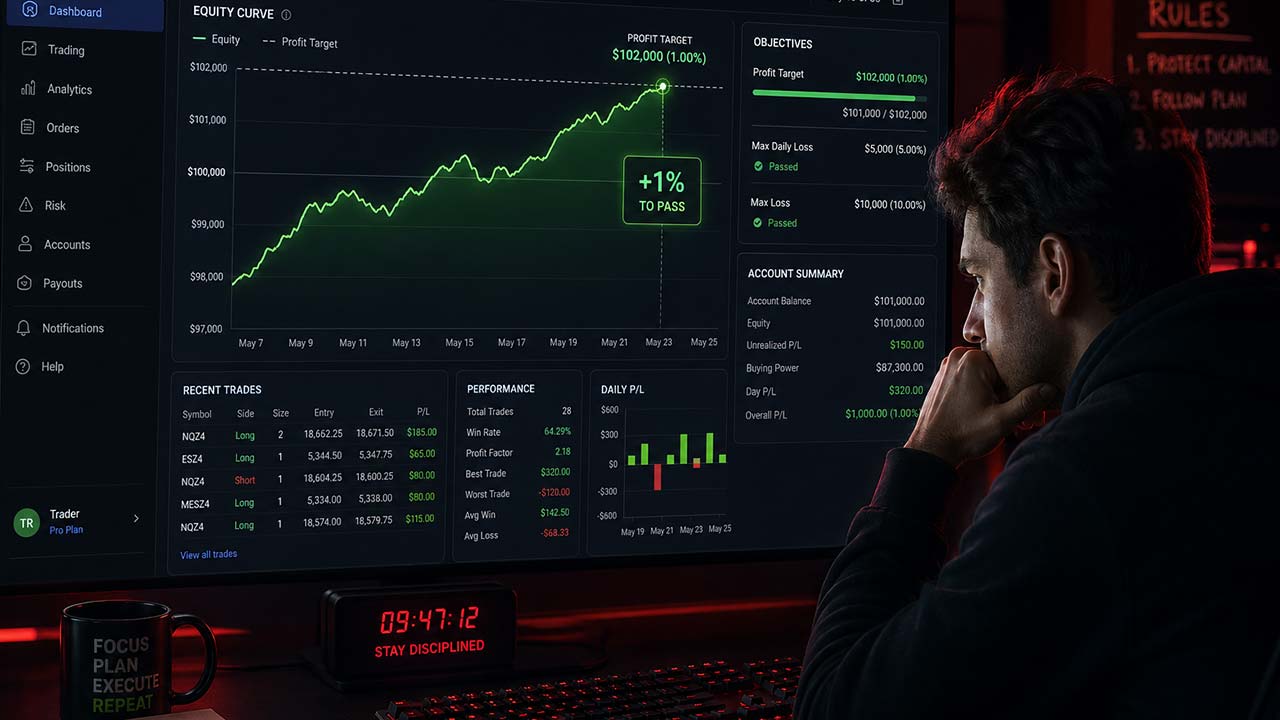
A prop firm challenge puts pressure on your choices. You have a profit target, a daily loss limit, and an overall loss limit. That alone can make trading feel tighter than normal.
Near the end, the pressure gets worse. You are not just trading the market anymore. You are trading against your own impatience.
When you are 1% or 2% away from passing, every move feels bigger. A small win feels like it could finish the challenge. A small loss feels like it delays everything. This can make you focus too much on the account balance instead of the chart.
That shift is dangerous. The chart should tell you what to do, not the profit target.
A good trader does not need to “finish” the challenge today. A good trader needs to follow the plan today. Passing should be the result of good trading, not the reason you start taking bad trades.

Do Not Change the Strategy That Got You There
One of the worst mistakes near the end of a challenge is changing your strategy. You may start thinking your normal setup is too slow. You may look for faster trades, bigger trades, or trades outside your usual time window.
That is how good challenges fall apart.
Your strategy got you near the target because it had structure. Maybe it used certain sessions, pairs, risk levels, or setups. Near the end, those rules matter even more.
Do not switch from clean trades to random trades because you feel close. Do not add new indicators. Do not use a new entry style. Do not trade news if you avoided news during the rest of the challenge.
The final stage is not the time to test ideas. It is the time to protect the work you already did.
A prop firm wants to see that you can trade with control. Passing by luck after breaking your rules is weak. Passing through stable actions shows that your trading can hold up under pressure.
If you want a full breakdown of this approach, read this guide on how to pass a prop firm challenge.
Keep Your Risk the Same
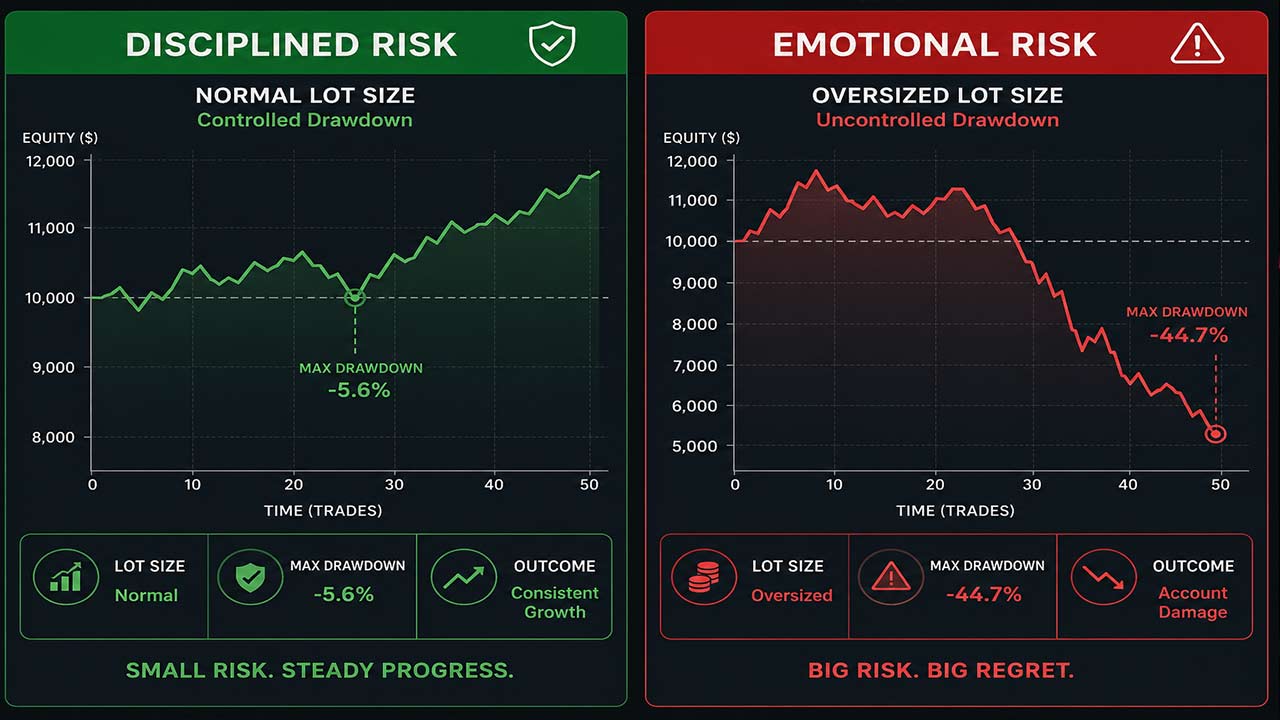
Many traders increase risk near the end. They think, “I only need one good trade.” That one thought causes many failures.
The market does not care that you are close to passing. A setup can still lose. A clean trade can still hit stop loss. When you increase lot size just because you are close, you turn one normal loss into a serious problem.
Keep your risk per trade the same from start to finish. Your account should not become more exposed just because your emotions are louder.
For example, if you were risking 0.5% per trade during the challenge, keep it at 0.5%. Do not jump to 1.5% or 2% because the finish line feels close. That is not confidence. That is pressure taking control.
Stable risk also helps you think clearly. When your lot size is normal, you can manage the trade based on the setup. When the lot size is too big, every candle feels stressful. You may close early, move stops, or panic.
Discipline gets harder when risk is too high. Make it easier by keeping size under control.
Stop Watching the Balance During the Session
The account balance can become a trap near the end. You watch every dollar. You count how much more you need. You start planning trades around the number instead of the market.
That is a bad habit.
During the session, focus on execution. Check the chart. Check the setup. Check the risk. Do not keep refreshing the account balance after every small move.
When you watch the balance too much, you start trading from emotion. You may close a good trade too early because it brings you close to the target. You may hold a weak trade too long because you want it to finish the challenge.
Both actions come from the same problem. You are trying to control the outcome instead of managing the trade.
Set your plan before the session. Know your risk. Know your max loss. Know your max number of trades. Then trade the setup, not the balance.
Use a Pre-Trade Checklist
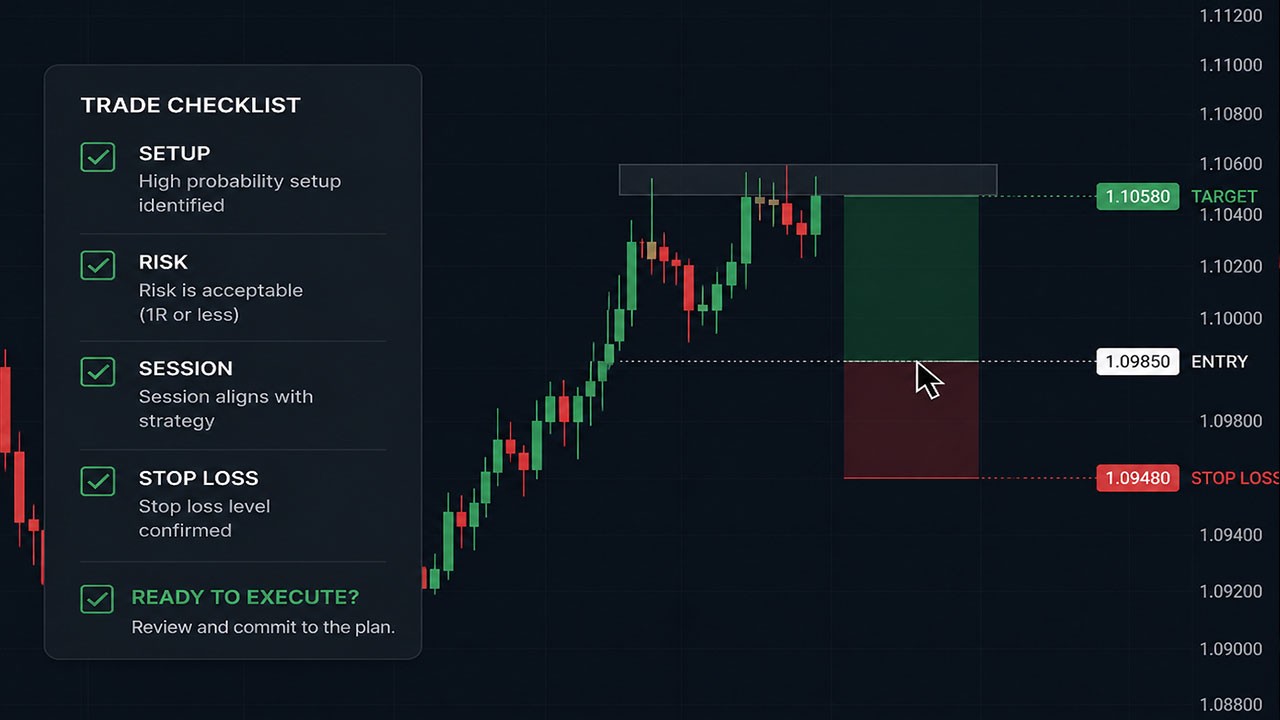
A checklist sounds simple, but it can save your challenge. Near the end, emotions can make you ignore basic rules. A checklist slows you down before you click buy or sell.
Your checklist does not need to be long. It should help you confirm that the trade fits your plan.
Use questions like:
Is this one of my main setups?
Is the market condition right?
Am I trading during my normal session?
Is my lot size correct?
Is my stop loss clear?
Does the risk fit my plan?
Am I entering because of the chart or because I want to pass today?
That last question matters most. It forces you to be honest.
A good checklist protects you from impulse. It gives you a small pause between feeling pressure and taking action.
You do not need more trades near the end. You need better decisions.
Set a Max Number of Trades Per Session
Overtrading is common near the end of a challenge. A trader takes one loss and tries to win it back. Then they take another trade. Then another. What started as a clean session turns into a fight with the market.
This is where a max trade rule helps.
Before the session starts, decide how many trades you are allowed to take. For many traders, two or three trades are enough. Once you hit that number, the session is done.
This rule stops emotional trading. It also keeps you from forcing trades after your best setups are gone.
A max trade rule is not there to limit your success. It is there to protect your account from your worst decisions.
Near the end of a prop firm challenge, one bad session can undo many good ones. You do not need to trade all day. You need to trade well.
Respect the Daily Loss Limit
The daily loss limit is not just a prop firm rule. It should also be part of your own plan.
Do not wait until you are close to the official daily loss limit before stopping. Set your own session loss limit. This should be smaller than the firm’s limit. That gives you room to breathe and protects the account.
For example, the firm may allow a 5% daily drawdown. That does not mean you should risk trading until you lose 5%. A personal stop at 1% or 1.5% can keep you safe.
This matters even more near the end. When you are close to passing, you may feel tempted to recover losses quickly. That is when revenge trading starts.
A strong trader knows when to stop. Some days do not give clean setups. Some days start badly. Walking away is not failure. It is part of passing.
Do Not Force the Final Trade
Many traders create a “final trade” in their mind. They believe one trade will pass the challenge, so they start looking for it everywhere.
This is risky.
A final trade should only happen when the market gives your setup. You cannot force it. You cannot make the chart cleaner than it is. You cannot turn a weak trade into a strong one because you want the challenge to end.
When you force the final trade, you are no longer trading your system. You are trading your desire to finish.
That is how traders lose control.
Let the final trade come to you. It may happen today. It may happen tomorrow. It may take a few more sessions. That is fine.
A clean pass is better than a rushed fail.
Treat Passing as a Result, Not the Main Focus
Passing the challenge matters, but it should not be your only focus. The real goal is to prove that you can manage risk and follow a process.
Many traders think the challenge ends when they hit the target. In reality, the same habits must carry into the funded account. If you pass by overtrading, oversizing, or gambling, those habits can hurt you later.
Prop trading rewards repeatable behavior. You need to show that your trading is not based on one lucky push. You need to show that you can follow rules when pressure is high.
This is why the final stretch is so important. It shows who you are when the target is close.
A disciplined trader does not need to rush. They know the edge works over time. They know losses are part of the process. They do not turn a good challenge into a gamble.
Build a Simple End-Phase Plan
Before you get close to the target, write a plan for the final stretch. Do this while you are calm. Do not wait until emotions are high.
Your plan should include your risk per trade, max trades per session, daily stop limit, pairs you will trade, trading sessions, and setup rules. It should also say what you will not do.
For example, you can write:
“I will not increase lot size near the target. I will not take more than three trades per session. I will stop after two losses. I will only trade my main setup. I will not check the balance during active trades.”
Simple rules work because they are easy to follow. The more clear your plan is, the less room there is for emotion to take over.
The end of the challenge should feel like normal trading. Not perfect. Not stress-free. Just controlled. This is where having a structured trading plan matters most.
You can review a solid example in our best trading plan for prop traders.
Final Thoughts
The final stretch of a prop firm challenge is where discipline matters most. You may feel close to passing, but that does not mean you should trade harder. It means you should protect your edge.
Keep the same risk. Follow the same strategy. Stop watching the balance during the session. Use a checklist. Limit your trades. Respect your daily stop. Do not force the final trade.
The traders who pass are not always the ones who trade the most. They are often the ones who stay calm when the pressure rises.
This is the same mindset used by traders who pass and scale with Pipstone Capital. With up to $400,000 in funding, a 90% profit split, and 24‑hour payouts, the focus stays on clean execution - not rushing to finish. You trade real conditions with raw spreads and fast execution, so sticking to stable risk from start to finish is what gets you through.
Getting near the target is a good sign. Staying disciplined until the end is what turns that progress into a pass.
FAQs
Should I increase my lot size when I’m close to passing?
No. Keep the same risk you used from the start. Bigger size adds pressure and can turn one normal loss into a setback.
How many trades should I take near the end of the challenge?
Keep it tight. Two to three quality trades per session is enough for most traders. More trades usually means you are forcing it.
Is it okay to stop trading for the day even if I’m close to the target?
Yes. If your plan is done or the setups are not clean, stop. Passing tomorrow with control is better than forcing trades today.
What is the biggest mistake traders make at the end?
They switch focus from the setup to the profit target. That leads to rushing trades, changing rules, and losing discipline.



How to Stay Disciplined Near the End of a Prop Firm Challenge
Getting close to the end of a prop firm challenge feels good. You can see the target. You may only need one or two strong trades to pass. This is where many traders start to lose control.
The final stretch is not only about skill. It is a test of discipline. A trader can follow a clean plan for days, then break every rule once the account gets close to the profit goal. The mind starts saying, “Just push a little harder.” That thought can ruin a good challenge.
Most traders do not fail because they forget how to trade. They fail because they change how they trade. They increase lot size, force setups, close trades too early, or take one more trade after the plan is already done.
The goal near the end is simple. Trade the same way that got you close in the first place.
Why the Final Stretch Feels Hard
A prop firm challenge puts pressure on your choices. You have a profit target, a daily loss limit, and an overall loss limit. That alone can make trading feel tighter than normal.
Near the end, the pressure gets worse. You are not just trading the market anymore. You are trading against your own impatience.
When you are 1% or 2% away from passing, every move feels bigger. A small win feels like it could finish the challenge. A small loss feels like it delays everything. This can make you focus too much on the account balance instead of the chart.
That shift is dangerous. The chart should tell you what to do, not the profit target.
A good trader does not need to “finish” the challenge today. A good trader needs to follow the plan today. Passing should be the result of good trading, not the reason you start taking bad trades.
Do Not Change the Strategy That Got You There
One of the worst mistakes near the end of a challenge is changing your strategy. You may start thinking your normal setup is too slow. You may look for faster trades, bigger trades, or trades outside your usual time window.
That is how good challenges fall apart.
Your strategy got you near the target because it had structure. Maybe it used certain sessions, pairs, risk levels, or setups. Near the end, those rules matter even more.
Do not switch from clean trades to random trades because you feel close. Do not add new indicators. Do not use a new entry style. Do not trade news if you avoided news during the rest of the challenge.
The final stage is not the time to test ideas. It is the time to protect the work you already did.
A prop firm wants to see that you can trade with control. Passing by luck after breaking your rules is weak. Passing through stable actions shows that your trading can hold up under pressure.
If you want a full breakdown of this approach, read this guide on how to pass a prop firm challenge.
Keep Your Risk the Same
Many traders increase risk near the end. They think, “I only need one good trade.” That one thought causes many failures.
The market does not care that you are close to passing. A setup can still lose. A clean trade can still hit stop loss. When you increase lot size just because you are close, you turn one normal loss into a serious problem.
Keep your risk per trade the same from start to finish. Your account should not become more exposed just because your emotions are louder.
For example, if you were risking 0.5% per trade during the challenge, keep it at 0.5%. Do not jump to 1.5% or 2% because the finish line feels close. That is not confidence. That is pressure taking control.
Stable risk also helps you think clearly. When your lot size is normal, you can manage the trade based on the setup. When the lot size is too big, every candle feels stressful. You may close early, move stops, or panic.
Discipline gets harder when risk is too high. Make it easier by keeping size under control.
Stop Watching the Balance During the Session
The account balance can become a trap near the end. You watch every dollar. You count how much more you need. You start planning trades around the number instead of the market.
That is a bad habit.
During the session, focus on execution. Check the chart. Check the setup. Check the risk. Do not keep refreshing the account balance after every small move.
When you watch the balance too much, you start trading from emotion. You may close a good trade too early because it brings you close to the target. You may hold a weak trade too long because you want it to finish the challenge.
Both actions come from the same problem. You are trying to control the outcome instead of managing the trade.
Set your plan before the session. Know your risk. Know your max loss. Know your max number of trades. Then trade the setup, not the balance.
Use a Pre-Trade Checklist
A checklist sounds simple, but it can save your challenge. Near the end, emotions can make you ignore basic rules. A checklist slows you down before you click buy or sell.
Your checklist does not need to be long. It should help you confirm that the trade fits your plan.
Use questions like:
Is this one of my main setups?
Is the market condition right?
Am I trading during my normal session?
Is my lot size correct?
Is my stop loss clear?
Does the risk fit my plan?
Am I entering because of the chart or because I want to pass today?
That last question matters most. It forces you to be honest.
A good checklist protects you from impulse. It gives you a small pause between feeling pressure and taking action.
You do not need more trades near the end. You need better decisions.
Set a Max Number of Trades Per Session
Overtrading is common near the end of a challenge. A trader takes one loss and tries to win it back. Then they take another trade. Then another. What started as a clean session turns into a fight with the market.
This is where a max trade rule helps.
Before the session starts, decide how many trades you are allowed to take. For many traders, two or three trades are enough. Once you hit that number, the session is done.
This rule stops emotional trading. It also keeps you from forcing trades after your best setups are gone.
A max trade rule is not there to limit your success. It is there to protect your account from your worst decisions.
Near the end of a prop firm challenge, one bad session can undo many good ones. You do not need to trade all day. You need to trade well.
Respect the Daily Loss Limit
The daily loss limit is not just a prop firm rule. It should also be part of your own plan.
Do not wait until you are close to the official daily loss limit before stopping. Set your own session loss limit. This should be smaller than the firm’s limit. That gives you room to breathe and protects the account.
For example, the firm may allow a 5% daily drawdown. That does not mean you should risk trading until you lose 5%. A personal stop at 1% or 1.5% can keep you safe.
This matters even more near the end. When you are close to passing, you may feel tempted to recover losses quickly. That is when revenge trading starts.
A strong trader knows when to stop. Some days do not give clean setups. Some days start badly. Walking away is not failure. It is part of passing.
Do Not Force the Final Trade
Many traders create a “final trade” in their mind. They believe one trade will pass the challenge, so they start looking for it everywhere.
This is risky.
A final trade should only happen when the market gives your setup. You cannot force it. You cannot make the chart cleaner than it is. You cannot turn a weak trade into a strong one because you want the challenge to end.
When you force the final trade, you are no longer trading your system. You are trading your desire to finish.
That is how traders lose control.
Let the final trade come to you. It may happen today. It may happen tomorrow. It may take a few more sessions. That is fine.
A clean pass is better than a rushed fail.
Treat Passing as a Result, Not the Main Focus
Passing the challenge matters, but it should not be your only focus. The real goal is to prove that you can manage risk and follow a process.
Many traders think the challenge ends when they hit the target. In reality, the same habits must carry into the funded account. If you pass by overtrading, oversizing, or gambling, those habits can hurt you later.
Prop trading rewards repeatable behavior. You need to show that your trading is not based on one lucky push. You need to show that you can follow rules when pressure is high.
This is why the final stretch is so important. It shows who you are when the target is close.
A disciplined trader does not need to rush. They know the edge works over time. They know losses are part of the process. They do not turn a good challenge into a gamble.
Build a Simple End-Phase Plan
Before you get close to the target, write a plan for the final stretch. Do this while you are calm. Do not wait until emotions are high.
Your plan should include your risk per trade, max trades per session, daily stop limit, pairs you will trade, trading sessions, and setup rules. It should also say what you will not do.
For example, you can write:
“I will not increase lot size near the target. I will not take more than three trades per session. I will stop after two losses. I will only trade my main setup. I will not check the balance during active trades.”
Simple rules work because they are easy to follow. The more clear your plan is, the less room there is for emotion to take over.
The end of the challenge should feel like normal trading. Not perfect. Not stress-free. Just controlled. This is where having a structured trading plan matters most.
You can review a solid example in our best trading plan for prop traders.
Final Thoughts
The final stretch of a prop firm challenge is where discipline matters most. You may feel close to passing, but that does not mean you should trade harder. It means you should protect your edge.
Keep the same risk. Follow the same strategy. Stop watching the balance during the session. Use a checklist. Limit your trades. Respect your daily stop. Do not force the final trade.
The traders who pass are not always the ones who trade the most. They are often the ones who stay calm when the pressure rises.
This is the same mindset used by traders who pass and scale with Pipstone Capital. With up to $400,000 in funding, a 90% profit split, and 24‑hour payouts, the focus stays on clean execution - not rushing to finish. You trade real conditions with raw spreads and fast execution, so sticking to stable risk from start to finish is what gets you through.
Getting near the target is a good sign. Staying disciplined until the end is what turns that progress into a pass.
FAQs
Should I increase my lot size when I’m close to passing?
No. Keep the same risk you used from the start. Bigger size adds pressure and can turn one normal loss into a setback.
How many trades should I take near the end of the challenge?
Keep it tight. Two to three quality trades per session is enough for most traders. More trades usually means you are forcing it.
Is it okay to stop trading for the day even if I’m close to the target?
Yes. If your plan is done or the setups are not clean, stop. Passing tomorrow with control is better than forcing trades today.
What is the biggest mistake traders make at the end?
They switch focus from the setup to the profit target. That leads to rushing trades, changing rules, and losing discipline.
