


What Is Overleveraging in Forex? Warning Signs and Risks

Leverage is one of the main reasons forex attracts traders. It lets you control a larger position with a smaller amount of capital. Used carefully, it can improve capital efficiency. Used recklessly, it can turn a normal market move into a major account loss.
Overleveraging begins when your total exposure is too large for your account to absorb ordinary volatility. The problem is not simply choosing a high leverage setting. It is opening positions that leave too little free margin and put too much equity at risk.
This matters whether you trade your own account or take part in a simulated evaluation. Pipstone Capital offers MT5 and cTrader challenges with no time limit and reward splits of up to 100% on eligible plans, but disciplined position sizing still matters.
What Is Overleveraging in Forex?
Overleveraging in forex means taking a position, or several positions, that is too large relative to your account equity, available margin and risk tolerance. Because forex positions are leveraged, even a small move against you can create a much larger percentage loss.
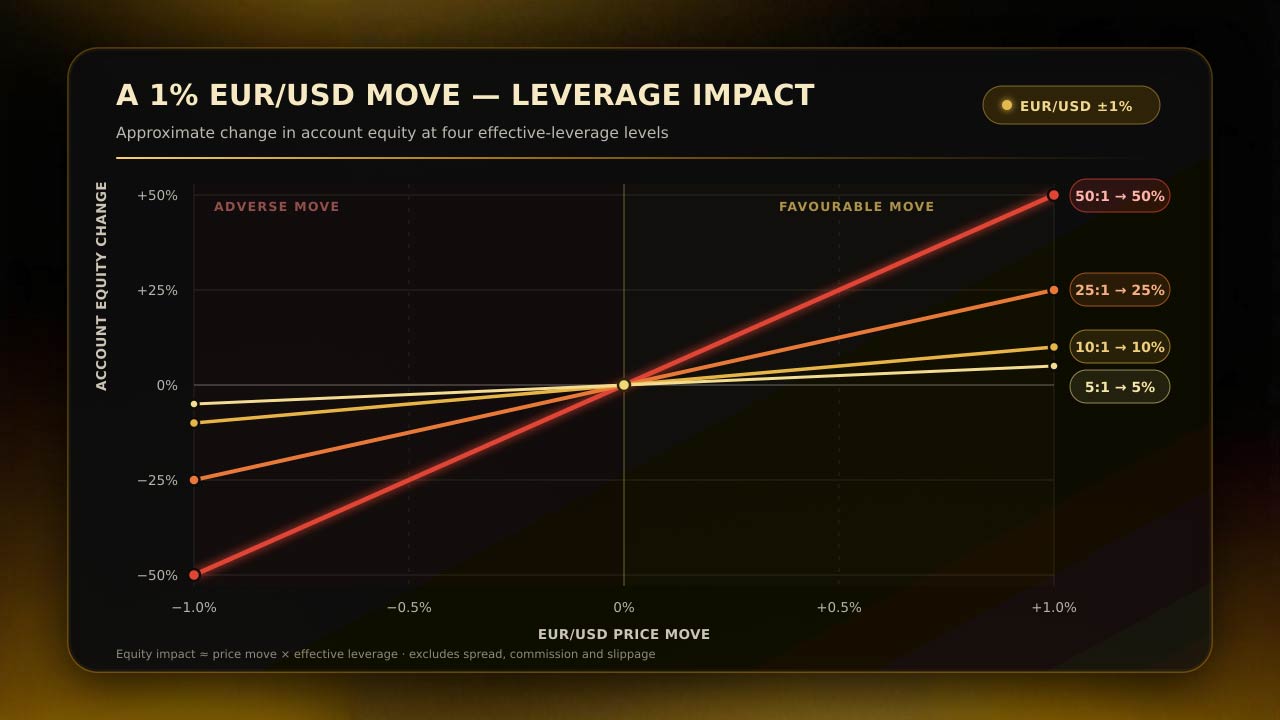
Suppose a trader has a $2,000 account and opens a $100,000 EUR/USD position. The position is 50 times larger than the account. A 1% move against the trade represents a $1,000 loss before costs, equal to half the account.
The market did not need to crash. An ordinary move caused serious damage because the position size was excessive.
Overleveraging happens when a trader takes more market exposure than the account can safely support. Understanding how leverage works in forex trading makes it easier to see why available buying power should not be treated as a target.
Leverage vs. Overleveraging
Leverage itself is only a tool. A platform may allow a high maximum ratio, but that does not mean you need to use all of it.
A more useful figure is effective leverage:
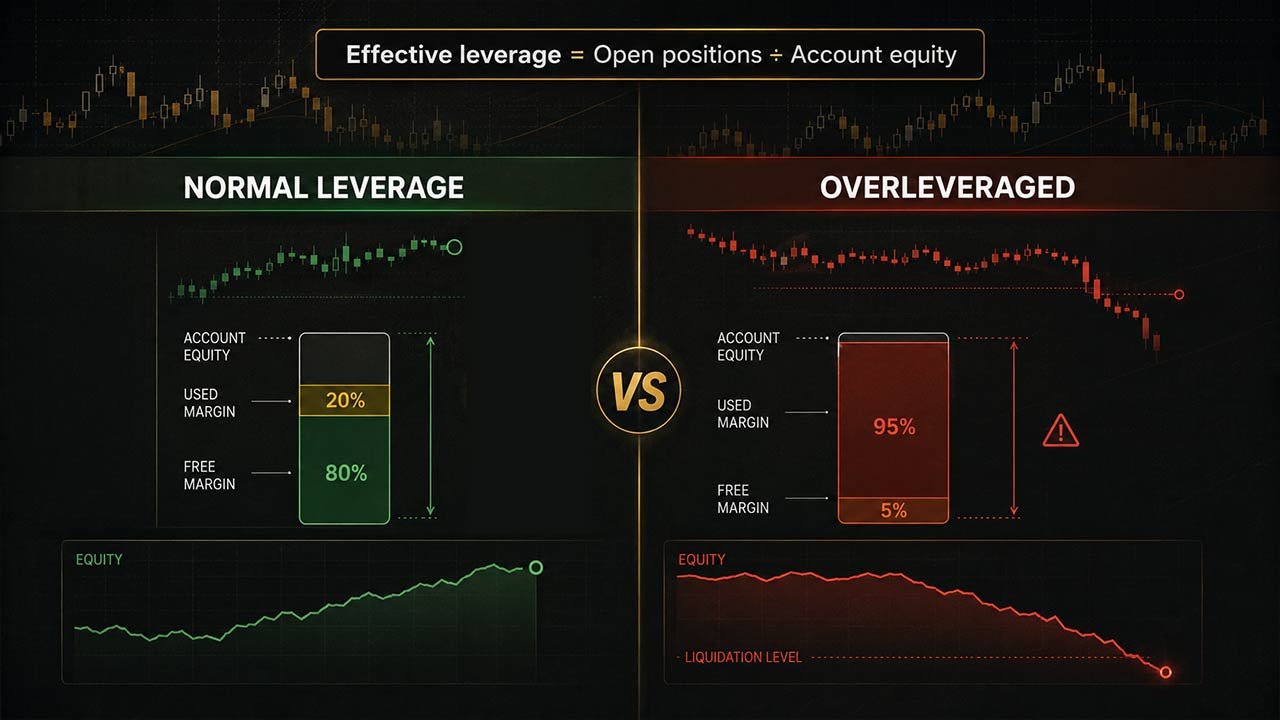
Effective leverage = total value of open positions ÷ account equity
A trader with access to 1:100 leverage can still trade conservatively by opening a small position. Someone using a lower ratio can still become overleveraged if one trade consumes most of the account’s margin.
Normal leverage use | Overleveraging |
Position size fits the account | Position size is too large |
Loss stays within a set limit | One loss removes a large share of equity |
Enough free margin remains | Most margin is tied up |
Normal volatility is manageable | A small move may trigger liquidation |
How Traders Become Overleveraged
Overleveraging often happens gradually. A trader may add another trade in the same direction, increase lot size after a winning streak, widen a stop-loss or open several correlated pairs without noticing the combined exposure.
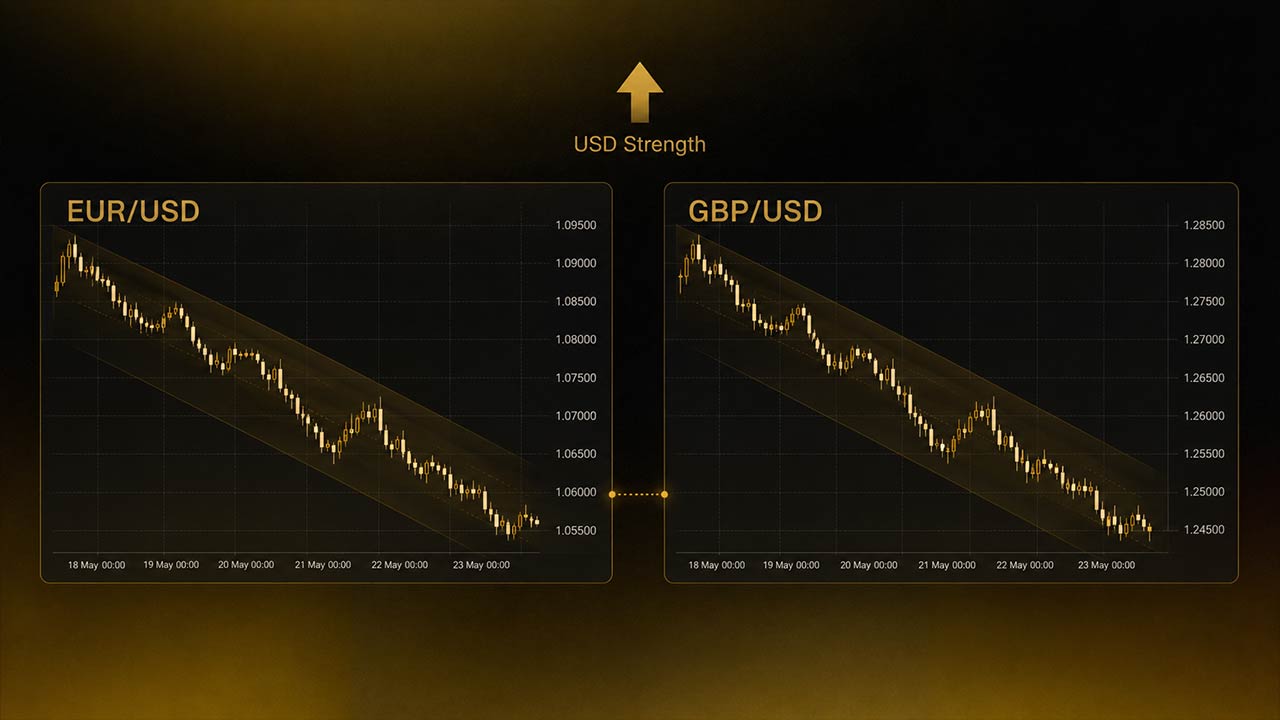
For example, being long EUR/USD and GBP/USD can create concentrated exposure against the US dollar. The trades look separate, but both may lose if the dollar strengthens.
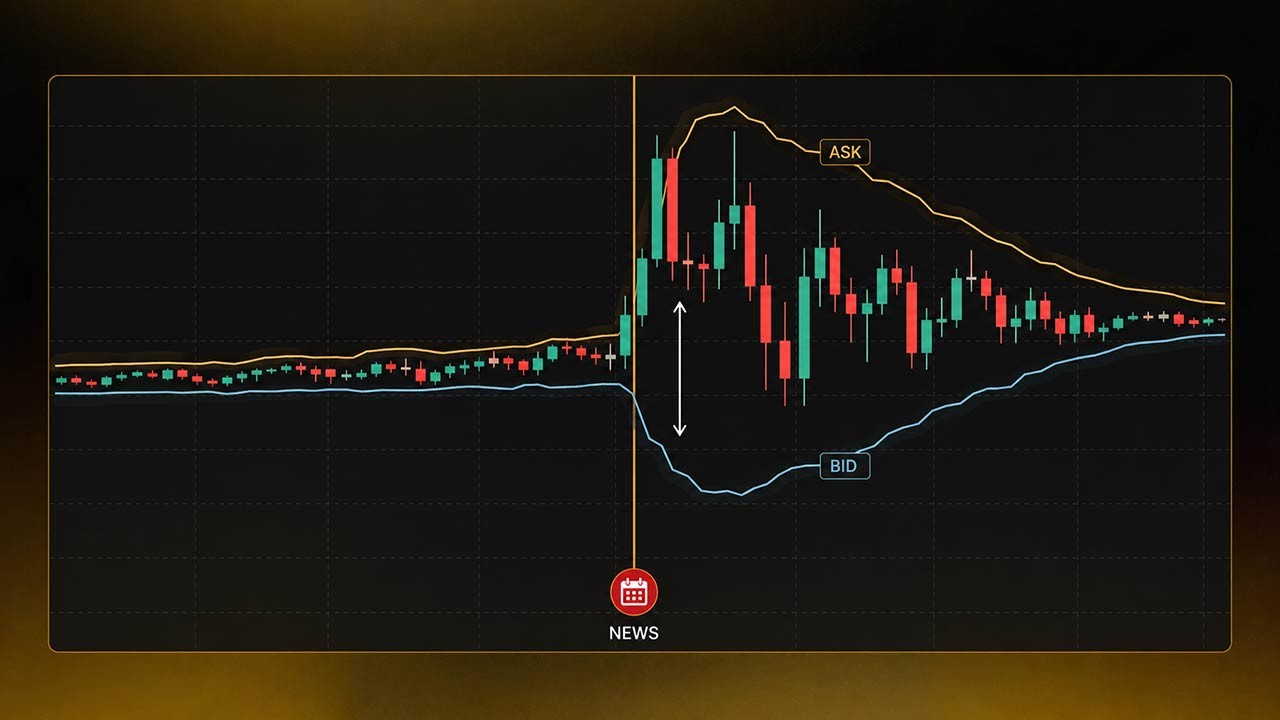
High-impact news can make the situation worse. Spreads may widen, prices can move quickly and stop-loss orders may be filled at a worse price. An account with little free margin has limited room to absorb these conditions.
Warning Signs You Are Overleveraged
Overleveraging is usually visible before an account reaches a margin call.
One Trade Can Cause a Large Loss
Calculate how much you would lose if the stop-loss is hit. If one normal losing trade could remove a large percentage of your account, the position is probably too big.
Your risk should be based on the possible loss at the stop, not just the amount of margin needed to open the trade.

Most of Your Margin Is Already in Use
Used margin is the capital locked to support open positions. Free margin is what remains to absorb losses.
If most of the account is tied up, even a minor price movement can push the margin level toward the platform’s closeout threshold.

You Cannot Tolerate Normal Pullbacks
Forex pairs rarely move straight into profit. A valid setup may briefly move against you before developing.
If a routine retracement creates panic or puts the account close to liquidation, the position has too little breathing room.
You Are Watching Every Tick
Constantly watching the chart is not always a sign of discipline. It can mean the financial impact of every price movement is too large.
If a few pips create intense stress or push you to change your plan, the position may exceed your emotional and financial tolerance.
You Keep Adding to Losing Positions
Adding to a losing trade increases exposure while the original idea is failing.
Without a planned scaling method and a firm total-risk limit, a controlled loss can quickly become an account-threatening position. Adding another trade should never replace accepting that the original setup may be wrong.
Several Trades Depend on the Same Outcome
Multiple correlated pairs can hide the real size of your exposure.
A trader may believe they have diversified by opening three different positions, but those trades may effectively be one large bet on the US dollar, euro or general market sentiment.
A Small Spread Increase Damages the Account
During news releases or thin trading hours, the bid-ask spread can widen. An overleveraged account may see its floating loss jump even when the underlying market has barely moved.
This can reduce the margin level or trigger an automatic closeout before the price reaches the planned stop.
The highest leverage available is not automatically the right choice for every trader. The best leverage for forex depends on account size, experience, strategy and the trader’s ability to control position exposure.
Main Risks of Overleveraging in Forex
Rapidly Amplified Losses
Leverage magnifies both gains and losses. At 10:1 effective leverage, a 1% adverse move represents roughly 10% of account equity before costs. At 50:1, the same move represents roughly 50%.
A trader can therefore be correct about the wider market direction and still lose the position. Excessive size may force the trade to close before the expected move has time to develop.
Margin Calls and Forced Liquidation
When account equity falls below the required margin level, the platform may issue a warning or begin closing positions automatically.
Forced liquidation can happen during a temporary price spike, widened spread or fast-moving market. The trader loses control over the exit and may be closed at an unfavorable price.
When oversized positions move against the trader, equity can fall quickly while used margin remains locked. This can eventually trigger a margin call in forex or lead to positions being closed at the stop-out level.
Slippage and Price Gaps
A stop-loss can help control risk, but it cannot always guarantee the exact exit price.
In a fast market, the next available price may be worse than the chosen stop level. For an overleveraged account, even modest slippage can push the final loss beyond the original plan.
Emotional Trading
Large exposure changes how traders behave. Fear may cause an early exit, while hope may lead someone to remove or widen a stop-loss.
After a loss, the trader may increase the next position size in an attempt to recover quickly. This creates a revenge-trading cycle where risk increases as decision-making becomes less rational.
Loss of Flexibility
Overleveraging leaves little room to adapt. You may be unable to hold through normal volatility, reduce exposure gradually or wait for a stronger setup.
Lower exposure gives the position more room to work and gives the trader more time to make a rational decision.
A Simple Overleveraging Example
Consider two traders with $5,000 accounts. Both trade EUR/USD and use a stop that would create a 1% price loss if hit.
Trader A opens a $25,000 position. A 1% adverse move creates a $250 loss, equal to 5% of the account.
Trader B opens a $100,000 position. The same move creates a $1,000 loss, equal to 20% of the account.
Their market analysis is identical. Only the position size changes.
After the loss, Trader B has $4,000 remaining and would need a 25% return just to recover the lost $1,000. This is why protecting capital is more important than maximizing exposure on one trade.
How to Reduce Overleveraging Risk
Start with the amount you are prepared to lose, not the maximum lot size the platform permits.
Place the stop-loss according to the market structure, calculate the distance between the entry and stop, and then choose a position size that keeps the possible loss within your limit.
You should also monitor total exposure across all open positions. Consider reducing size when currency pairs are highly correlated, volatility is elevated or major economic news is approaching.
Keep enough free margin so an ordinary price move does not threaten the account. Most importantly, do not increase risk because of a winning streak or a desire to recover a recent loss.
A practical trading plan, conservative leverage, stop-loss orders and adequate capital can all reduce overleveraging risk.
Final Thoughts
Overleveraging in forex is not defined by one leverage ratio. It happens when your position size exceeds what the account can reasonably withstand.
Low free margin, oversized losses, correlated positions, constant stress and an inability to survive normal pullbacks are all clear warning signs.
The goal is not to avoid leverage completely. It is to use it without allowing one trade to control the future of the account. For traders practising disciplined risk management in a simulated funding environment, Pipstone Capital provides flexible challenge models on MT5 and cTrader, no time limits on challenges and reward splits of up to 100% on eligible plans.
FAQs: Overleveraging
What is overleveraging in forex?
Using position sizes that are too large for your account to handle normal market moves.
Is high leverage always bad?
No. High leverage is only risky when position size is too large.
What is a safe risk per trade?
Many traders risk 1–2% of account equity per trade.
How do I know if I’m overleveraged?
If one trade can cause a large account drop or margin is mostly used.
Can overleveraging lead to margin call?
Yes, it increases the risk of forced liquidation.



What Is Overleveraging in Forex? Warning Signs and Risks
Leverage is one of the main reasons forex attracts traders. It lets you control a larger position with a smaller amount of capital. Used carefully, it can improve capital efficiency. Used recklessly, it can turn a normal market move into a major account loss.
Overleveraging begins when your total exposure is too large for your account to absorb ordinary volatility. The problem is not simply choosing a high leverage setting. It is opening positions that leave too little free margin and put too much equity at risk.
This matters whether you trade your own account or take part in a simulated evaluation. Pipstone Capital offers MT5 and cTrader challenges with no time limit and reward splits of up to 100% on eligible plans, but disciplined position sizing still matters.
What Is Overleveraging in Forex?
Overleveraging in forex means taking a position, or several positions, that is too large relative to your account equity, available margin and risk tolerance. Because forex positions are leveraged, even a small move against you can create a much larger percentage loss.
Suppose a trader has a $2,000 account and opens a $100,000 EUR/USD position. The position is 50 times larger than the account. A 1% move against the trade represents a $1,000 loss before costs, equal to half the account.
The market did not need to crash. An ordinary move caused serious damage because the position size was excessive.
Overleveraging happens when a trader takes more market exposure than the account can safely support. Understanding how leverage works in forex trading makes it easier to see why available buying power should not be treated as a target.
Leverage vs. Overleveraging
Leverage itself is only a tool. A platform may allow a high maximum ratio, but that does not mean you need to use all of it.
A more useful figure is effective leverage:
Effective leverage = total value of open positions ÷ account equity
A trader with access to 1:100 leverage can still trade conservatively by opening a small position. Someone using a lower ratio can still become overleveraged if one trade consumes most of the account’s margin.
Normal leverage use | Overleveraging |
Position size fits the account | Position size is too large |
Loss stays within a set limit | One loss removes a large share of equity |
Enough free margin remains | Most margin is tied up |
Normal volatility is manageable | A small move may trigger liquidation |
How Traders Become Overleveraged
Overleveraging often happens gradually. A trader may add another trade in the same direction, increase lot size after a winning streak, widen a stop-loss or open several correlated pairs without noticing the combined exposure.
For example, being long EUR/USD and GBP/USD can create concentrated exposure against the US dollar. The trades look separate, but both may lose if the dollar strengthens.
High-impact news can make the situation worse. Spreads may widen, prices can move quickly and stop-loss orders may be filled at a worse price. An account with little free margin has limited room to absorb these conditions.
Warning Signs You Are Overleveraged
Overleveraging is usually visible before an account reaches a margin call.
One Trade Can Cause a Large Loss
Calculate how much you would lose if the stop-loss is hit. If one normal losing trade could remove a large percentage of your account, the position is probably too big.
Your risk should be based on the possible loss at the stop, not just the amount of margin needed to open the trade.
Most of Your Margin Is Already in Use
Used margin is the capital locked to support open positions. Free margin is what remains to absorb losses.
If most of the account is tied up, even a minor price movement can push the margin level toward the platform’s closeout threshold.
You Cannot Tolerate Normal Pullbacks
Forex pairs rarely move straight into profit. A valid setup may briefly move against you before developing.
If a routine retracement creates panic or puts the account close to liquidation, the position has too little breathing room.
You Are Watching Every Tick
Constantly watching the chart is not always a sign of discipline. It can mean the financial impact of every price movement is too large.
If a few pips create intense stress or push you to change your plan, the position may exceed your emotional and financial tolerance.
You Keep Adding to Losing Positions
Adding to a losing trade increases exposure while the original idea is failing.
Without a planned scaling method and a firm total-risk limit, a controlled loss can quickly become an account-threatening position. Adding another trade should never replace accepting that the original setup may be wrong.
Several Trades Depend on the Same Outcome
Multiple correlated pairs can hide the real size of your exposure.
A trader may believe they have diversified by opening three different positions, but those trades may effectively be one large bet on the US dollar, euro or general market sentiment.
A Small Spread Increase Damages the Account
During news releases or thin trading hours, the bid-ask spread can widen. An overleveraged account may see its floating loss jump even when the underlying market has barely moved.
This can reduce the margin level or trigger an automatic closeout before the price reaches the planned stop.
The highest leverage available is not automatically the right choice for every trader. The best leverage for forex depends on account size, experience, strategy and the trader’s ability to control position exposure.
Main Risks of Overleveraging in Forex
Rapidly Amplified Losses
Leverage magnifies both gains and losses. At 10:1 effective leverage, a 1% adverse move represents roughly 10% of account equity before costs. At 50:1, the same move represents roughly 50%.
A trader can therefore be correct about the wider market direction and still lose the position. Excessive size may force the trade to close before the expected move has time to develop.
Margin Calls and Forced Liquidation
When account equity falls below the required margin level, the platform may issue a warning or begin closing positions automatically.
Forced liquidation can happen during a temporary price spike, widened spread or fast-moving market. The trader loses control over the exit and may be closed at an unfavorable price.
When oversized positions move against the trader, equity can fall quickly while used margin remains locked. This can eventually trigger a margin call in forex or lead to positions being closed at the stop-out level.
Slippage and Price Gaps
A stop-loss can help control risk, but it cannot always guarantee the exact exit price.
In a fast market, the next available price may be worse than the chosen stop level. For an overleveraged account, even modest slippage can push the final loss beyond the original plan.
Emotional Trading
Large exposure changes how traders behave. Fear may cause an early exit, while hope may lead someone to remove or widen a stop-loss.
After a loss, the trader may increase the next position size in an attempt to recover quickly. This creates a revenge-trading cycle where risk increases as decision-making becomes less rational.
Loss of Flexibility
Overleveraging leaves little room to adapt. You may be unable to hold through normal volatility, reduce exposure gradually or wait for a stronger setup.
Lower exposure gives the position more room to work and gives the trader more time to make a rational decision.
A Simple Overleveraging Example
Consider two traders with $5,000 accounts. Both trade EUR/USD and use a stop that would create a 1% price loss if hit.
Trader A opens a $25,000 position. A 1% adverse move creates a $250 loss, equal to 5% of the account.
Trader B opens a $100,000 position. The same move creates a $1,000 loss, equal to 20% of the account.
Their market analysis is identical. Only the position size changes.
After the loss, Trader B has $4,000 remaining and would need a 25% return just to recover the lost $1,000. This is why protecting capital is more important than maximizing exposure on one trade.
How to Reduce Overleveraging Risk
Start with the amount you are prepared to lose, not the maximum lot size the platform permits.
Place the stop-loss according to the market structure, calculate the distance between the entry and stop, and then choose a position size that keeps the possible loss within your limit.
You should also monitor total exposure across all open positions. Consider reducing size when currency pairs are highly correlated, volatility is elevated or major economic news is approaching.
Keep enough free margin so an ordinary price move does not threaten the account. Most importantly, do not increase risk because of a winning streak or a desire to recover a recent loss.
A practical trading plan, conservative leverage, stop-loss orders and adequate capital can all reduce overleveraging risk.
Final Thoughts
Overleveraging in forex is not defined by one leverage ratio. It happens when your position size exceeds what the account can reasonably withstand.
Low free margin, oversized losses, correlated positions, constant stress and an inability to survive normal pullbacks are all clear warning signs.
The goal is not to avoid leverage completely. It is to use it without allowing one trade to control the future of the account. For traders practising disciplined risk management in a simulated funding environment, Pipstone Capital provides flexible challenge models on MT5 and cTrader, no time limits on challenges and reward splits of up to 100% on eligible plans.
FAQs: Overleveraging
What is overleveraging in forex?
Using position sizes that are too large for your account to handle normal market moves.
Is high leverage always bad?
No. High leverage is only risky when position size is too large.
What is a safe risk per trade?
Many traders risk 1–2% of account equity per trade.
How do I know if I’m overleveraged?
If one trade can cause a large account drop or margin is mostly used.
Can overleveraging lead to margin call?
Yes, it increases the risk of forced liquidation.
