


Best Leverage for Forex: What Should You Really Use?

Most traders ask the wrong question when they start trading forex.
They ask, “What is the highest leverage I can get?”
The better question is, “What leverage can I use without destroying my account?”
That small change in thinking matters. Forex leverage can help you control a larger position with less money. It can make your capital go further. But it can also make losses grow faster than expected. This is why choosing the best leverage for forex is not about picking the biggest number your broker offers. It is about choosing a level that fits your account, trading style, risk limit, and experience.
A beginner with a $100 account should not trade with the same risk as a skilled trader with a $10,000 account. A scalper does not need the same setup as a swing trader. A trader risking 1% per trade is in a much safer place than someone risking 10% with no stop loss.
So, what is the best leverage for forex trading?
There is no perfect number for everyone. But there are smart ranges that make sense based on your level. For many beginners, lower leverage such as 1:10 or 1:20 is usually better. For traders with more experience, 1:30 to 1:50 may be enough. For skilled day traders or scalpers, 1:100 can work, but only with strong risk control.
The best leverage for forex is not the one that lets you trade the biggest lot size. It is the one that lets you stay calm, manage losses, and survive long enough to improve.
What Does Leverage Mean in Forex?

Leverage means you can open a trade larger than your account balance. To understand this concept in more detail, see what is forex leverage in trading.
For example, if your broker gives you 1:100 leverage, every $1 in your account can control $100 in the market. With a $1,000 account, you could control up to $100,000 in trade size.
That sounds powerful, and it is. But it works both ways.
If the trade moves in your favor, the gain can be larger. If the trade moves against you, the loss can also be larger. This is why many new traders get hurt by leverage. They see it as a way to make more money, but they forget it can also make them lose faster.
Leverage is linked to margin. Margin is the money your broker asks you to set aside to open a trade. If the margin requirement is 1%, you only need $1,000 to control a $100,000 position. That is equal to 1:100 leverage.
But the real danger is not the leverage shown on your account. The real danger is how much of it you use.
Broker Leverage vs Real Leverage
Many traders confuse broker leverage with real leverage.
Broker leverage is the maximum your broker allows. For example, your account may have access to 1:100, 1:200, or 1:500 leverage.
Real leverage is the actual exposure you take compared to your account size.
Let’s say you have a $1,000 account. Your broker offers 1:100 leverage, so you can open up to $100,000 in positions. But if you only open a $10,000 trade, your real leverage is 10:1.
That is much safer than using the full $100,000.
This is why the best leverage for forex account safety depends more on position size than the number on your broker dashboard. You can have access to high leverage and still trade safely if your lot size is small. You can also use lower leverage and still trade badly if your positions are too large.
The broker gives you the limit. You control the risk.
Why High Leverage Looks So Attractive
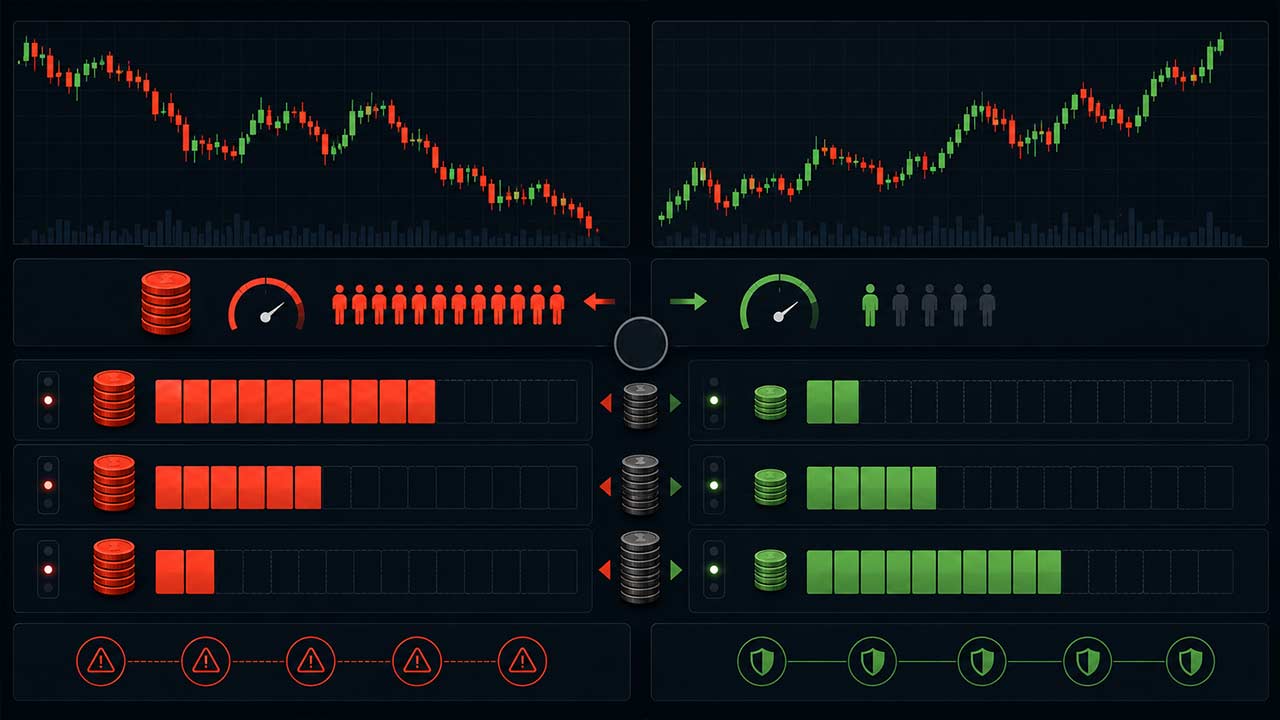
High leverage attracts traders because it makes small accounts feel bigger.
A trader with $100 may feel that low leverage is too slow. With 1:500 leverage, that same trader can open much larger trades. It feels exciting. It feels like a shortcut.
But in trading, shortcuts usually cost money.
Small accounts are already fragile. High leverage makes them even weaker. One or two bad trades can wipe out the account before the trader has learned anything useful. This is one reason many beginners lose money early. It is not only because their market direction is wrong. Their trade size is too large for their balance.
High leverage also creates pressure. When the position is too big, every small price move feels serious. A normal pullback feels like a disaster. The trader starts closing trades too early, moving stop losses, or opening revenge trades to recover losses.
That is not trading. That is panic.
The best leverage for forex should help you think clearly. If your leverage makes you scared every time price moves a few pips, it is too high.

Best Leverage for Forex Beginners
For most beginners, the best leverage for forex is usually between 1:10 and 1:20.
This range gives you enough room to place trades without making every pip dangerous. It also helps you focus on learning instead of trying to double your account quickly.
The best forex leverage for beginners is low enough to protect the account, but flexible enough to understand real market movement. At the beginner stage, your goal should not be big profit. Your goal should be learning how spreads work, how stop losses work, how sessions move, and how your emotions react when money is on the line.
Many traders search for the best leverage for forex beginner accounts because they want to grow fast. But the real answer is simple: start lower than you think you need. A low leverage setting forces you to be more selective. It stops you from opening oversized trades just because the broker allows it.
A beginner using 1:10 with good risk control is in a better position than a beginner using 1:500 with no plan.
Best Leverage for Forex Trading Based on Experience
The best leverage for forex trading changes as the trader gains skill.
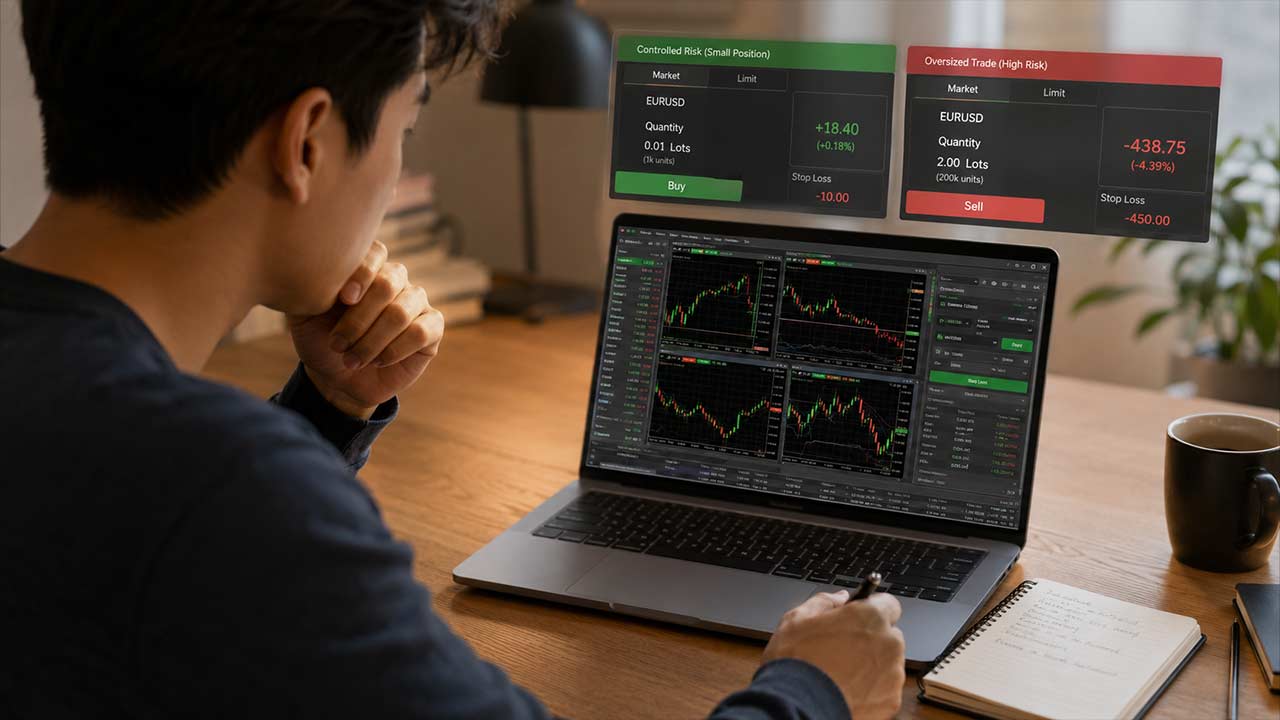
A new trader may be better with 1:10 or 1:20. This keeps risk smaller while they learn the basics. At this stage, survival matters more than profit.
An intermediate trader may use 1:30 to 1:50. By this point, the trader should know how to calculate risk per trade, use a stop loss, and avoid overtrading. This range gives more room without making the account too exposed.
An experienced trader may use 1:50 to 1:100. This can work for traders who understand position sizing and have a tested strategy. But even then, higher leverage does not mean every trade should be large.
Professional traders do not use high leverage because they want to gamble. They use it because it gives flexibility. That is a big difference.
The best leverage for forex is always tied to discipline. Without discipline, even 1:20 can be dangerous. With discipline, a trader can have access to higher leverage and still keep risk controlled.
Best Leverage for Forex Account Size
Your account size should play a big role in your choice.
For a $100 account, the best leverage for forex account safety is usually low to moderate, such as 1:10 to 1:50. Even then, trade sizes should stay small. A $100 account should be treated as a learning account, not a full income source.
Using 1:500 on a $100 account may look tempting, but it leaves almost no room for mistakes. A few bad entries can drain the balance quickly.
For a $1,000 account, 1:20 to 1:50 may be enough for most traders. This gives better flexibility while still allowing controlled risk.
For a $10,000 account, 1:50 or 1:100 may make sense, depending on the strategy. But a bigger account does not remove the need for risk control. A large account can still be damaged by poor position sizing.
The key is not only how much money you have. The key is how much you risk when you are wrong.
When traders compare funded trading conditions or account structures through firms like Pipstone Capital, they should still focus on risk rules first. The best leverage for forex is only useful when it fits the trader’s plan and does not push them into oversized trades.
Best Leverage by Account Size
$100 account: 1:10 to 1:50 (focus on learning and small trades)
$500 account: 1:10 to 1:30 (build consistency and control risk)
$1,000 account: 1:20 to 1:50 (balanced flexibility and safety)
$5,000 account: 1:30 to 1:100 (more room, but still controlled risk)
$10,000+ account: 1:50 to 1:100 (strategy-based, with strict discipline)
Best Leverage Based on Trading Style
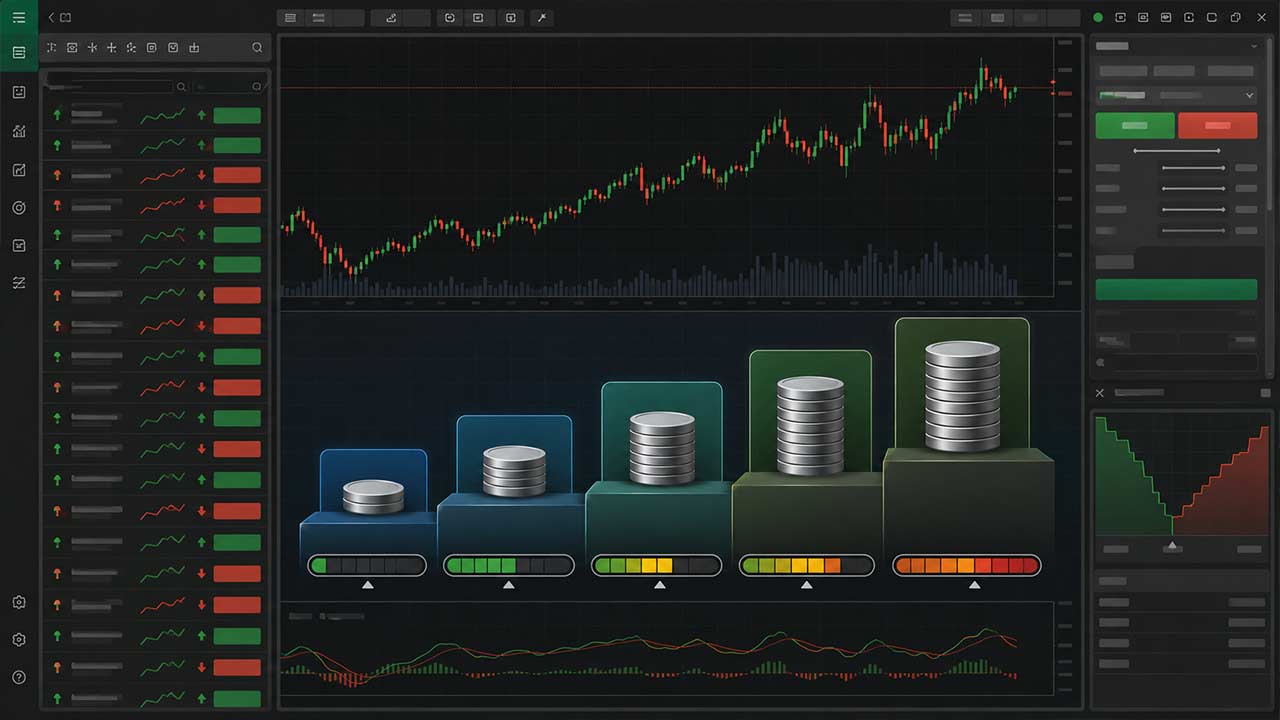
Your trading style also affects the right leverage.
Scalpers often prefer higher leverage, such as 1:100 or more. They look for small price moves and may hold trades for only a few minutes. Since their stop losses are often tight, they may need more margin flexibility. But scalping with high leverage is risky if the trader is not fast, focused, and strict.
Day traders may use 1:50 to 1:100. They open and close trades within the same day, so they need enough room to trade active market sessions. Still, news events and sudden price moves can make high leverage dangerous.
Swing traders often need lower leverage, such as 1:20 to 1:50. They hold trades for days, so stop losses are usually wider. Wider stops mean smaller position sizes are needed.
Long-term traders may use 1:10 or lower. If a trade is held for weeks, high leverage does not make much sense. Normal market movement can create large swings in the account.
The longer you hold a trade, the lower your leverage should usually be.
Why Risk Per Trade Matters More Than Leverage
Many traders focus too much on the leverage number and not enough on risk per trade.
A trader using 1:100 leverage but risking only 1% per trade may be safer than a trader using 1:20 leverage but risking 10% per trade.
This is why the best leverage for forex is not enough on its own. You also need a clear risk per trade rule.
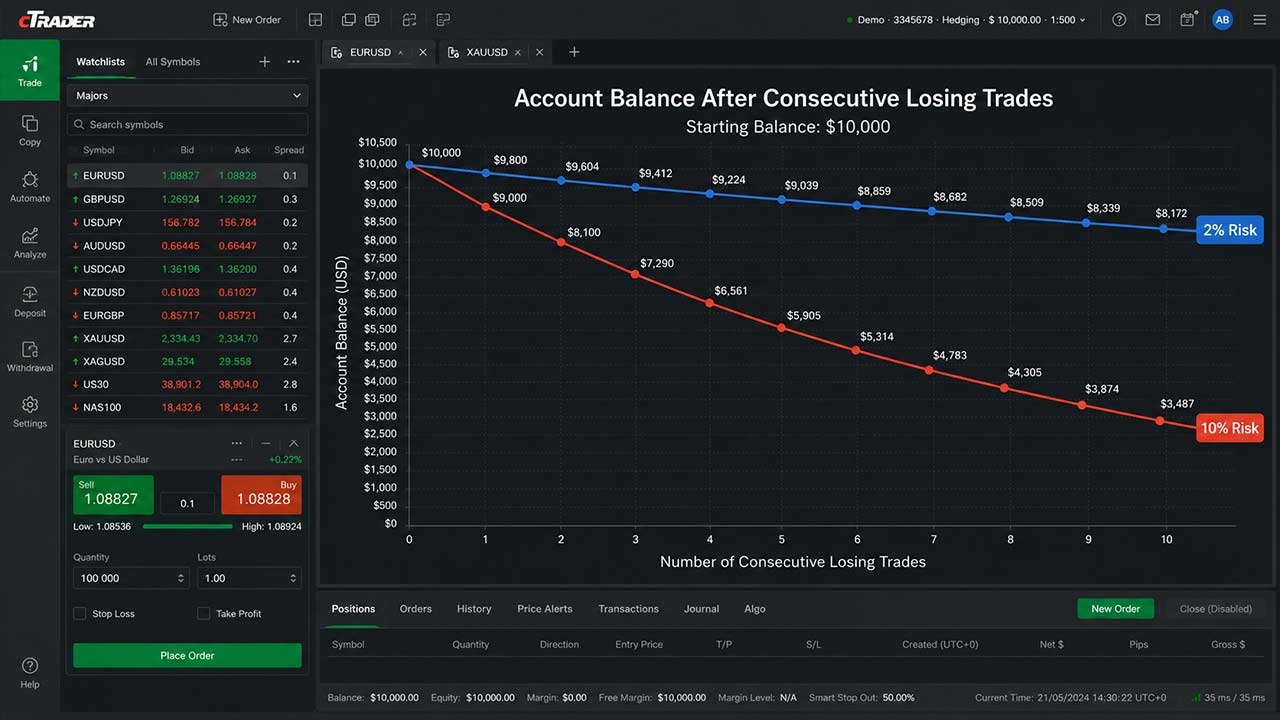
Many careful traders risk only 1% to 2% of their account on a single trade. Some may risk a little more, but once you start risking 5% or more per trade, losses become harder to handle.
Let’s say you risk 2% per trade. If you lose five trades in a row, you are down about 10%. That is not good, but it is still manageable.
If you risk 10% per trade and lose five trades in a row, your account is badly damaged. At that point, emotions take over. You may start forcing trades to recover losses.
That is where many traders lose control.
Good trading is not about being right all the time. It is about making sure one wrong trade does not ruin your account.
The Problem With Maximum Leverage
Many brokers promote high leverage because it sounds attractive.
1:200, 1:500, or even 1:1000 can look powerful. But maximum leverage should not be treated as a target.
Just because you can use high leverage does not mean you should.
High leverage gives you more room to open large trades, but it also increases the chance of margin calls if you misuse it. A margin call happens when your account no longer has enough free margin to support open trades. If losses keep growing, the broker may close your trades.
This can happen very fast when the position size is too large.
High leverage also gives normal market movement less room. Forex pairs do not move in straight lines. Even a good trade can pull back before moving in your favor. If your position is too large, that small pullback can cause a big loss, especially when you trade without a stop loss.
The best leverage for forex trading should give you enough flexibility without putting your account under constant pressure.
Simple Guide: What Leverage Should You Use?
Here is a simple way to think about it:
For beginners, 1:10 to 1:20 is often best.
For intermediate traders, 1:30 to 1:50 can be reasonable.
For experienced traders, 1:50 to 1:100 may work.
For scalpers, 1:100 or more may be used, but only with strict stop losses.
For swing traders, 1:20 to 1:50 is often more suitable.
For long-term traders, 1:10 or lower is usually safer.
This does not mean these numbers are perfect for everyone. They are starting points. The best leverage for forex depends on your risk limit, account size, stop-loss distance, and ability to follow your plan.
How to Choose the Best Leverage for Forex
Start with your experience level.
If you are new, stay low. Use 1:10 or 1:20 and focus on learning. You do not need high leverage to understand the market.
Next, look at your strategy. If you scalp, you may need more flexibility. If you swing trade, you need lower leverage because your trades stay open longer.
Then check your account size. The smaller your account, the more careful you need to be. A small account cannot handle large mistakes.
After that, decide your risk per trade. This should come before lot size. For example, if your account is $1,000 and you risk 1%, your maximum loss should be $10. Your trade size should be based on that $10 risk, your stop loss, and the pair you are trading.
Do not start with, “How big can I trade?”
Start with, “How much can I lose if this trade is wrong?”
That mindset will help you choose the best leverage for forex account growth and protection.
Here’s a quick checklist to keep your leverage in control:
Start with low leverage (1:10–1:20) if you’re new
Risk only 1–2% of your account per trade
Always use a stop loss
Adjust position size before increasing leverage
Avoid stacking too many trades at once
Match leverage to your trading style
Focus on consistency, not fast gains
Common Leverage Mistakes to Avoid
The first mistake is using high leverage too early. New traders often think they need large trades to make trading worth it. But early trading should be about learning, not forcing profit.
The second mistake is trading without a stop loss. High leverage without a stop loss can be dangerous. One sharp move can cause serious damage.
The third mistake is opening too many trades at once. One trade may look small, but five or ten open trades can create large total exposure.
The fourth mistake is moving the stop loss. If you move your stop because you hope price will come back, you are no longer following a plan.
The fifth mistake is treating leverage like free money. Leverage gives you larger exposure, but it does not remove risk. Losses still come from your account.
Avoiding these mistakes matters more than finding a magic leverage number.
Final Thoughts
The best leverage for forex is usually lower than what most new traders want to use.
If you are a beginner, 1:10 or 1:20 is a smart place to start. If you have more experience, 1:30 to 1:50 may be enough. If you are skilled and your strategy needs more room, 1:100 can work, but only with strict risk management.
Higher leverage does not make you a better trader. It only makes your results move faster. If your plan is weak, leverage exposes that weakness quickly.
The goal is not to open the biggest trade possible. The goal is to protect your capital, follow your plan, and stay in the market long enough to improve.
Whether you trade your own account or explore funded accounts through a firm like Pipstone Capital, one rule can transform your results: the best leverage for forex is the one that strengthens your strategy and protects your capital - not the one that tempts you into unnecessary risk.
Use less than you think you need. Trade smaller than you want to. Protect the account first.
That is how leverage becomes a tool instead of a trap.
FAQs: Best Leverage for Forex Trading
What is the best leverage for forex?
The best leverage for forex depends on your experience, account size, trading style, and risk control. For many beginners, 1:10 to 1:20 is a safer range. More experienced traders may use 1:30 to 1:100, but only with proper position sizing.
What is the best forex leverage for beginners?
The best forex leverage for beginners is usually low leverage, such as 1:10 or 1:20. This gives new traders time to learn without putting too much pressure on the account.
What is the best leverage for forex beginner traders with small accounts?
The best leverage for forex beginner traders with small accounts is often 1:10 to 1:50. A small account should be used to build skill and discipline, not to chase fast profit with oversized trades.
What is the best leverage for forex account growth?
The best leverage for forex account growth is the level that lets you manage risk while staying consistent. Growth comes from good entries, controlled losses, and patience. High leverage alone does not create safe growth.
Is 1:500 leverage good for forex trading?
1:500 leverage is very high. It may give more buying power, but it also increases risk. Most beginners should avoid it. It may only suit experienced traders who use tight risk rules and understand margin clearly.
Is 1:100 leverage enough?
Yes, 1:100 is enough for many traders. In fact, many traders do not need to use all of it. What matters more is the actual position size and how much of the account is at risk.



Best Leverage for Forex: What Should You Really Use?
Most traders ask the wrong question when they start trading forex.
They ask, “What is the highest leverage I can get?”
The better question is, “What leverage can I use without destroying my account?”
That small change in thinking matters. Forex leverage can help you control a larger position with less money. It can make your capital go further. But it can also make losses grow faster than expected. This is why choosing the best leverage for forex is not about picking the biggest number your broker offers. It is about choosing a level that fits your account, trading style, risk limit, and experience.
A beginner with a $100 account should not trade with the same risk as a skilled trader with a $10,000 account. A scalper does not need the same setup as a swing trader. A trader risking 1% per trade is in a much safer place than someone risking 10% with no stop loss.
So, what is the best leverage for forex trading?
There is no perfect number for everyone. But there are smart ranges that make sense based on your level. For many beginners, lower leverage such as 1:10 or 1:20 is usually better. For traders with more experience, 1:30 to 1:50 may be enough. For skilled day traders or scalpers, 1:100 can work, but only with strong risk control.
The best leverage for forex is not the one that lets you trade the biggest lot size. It is the one that lets you stay calm, manage losses, and survive long enough to improve.
What Does Leverage Mean in Forex?
Leverage means you can open a trade larger than your account balance. To understand this concept in more detail, see what is forex leverage in trading.
For example, if your broker gives you 1:100 leverage, every $1 in your account can control $100 in the market. With a $1,000 account, you could control up to $100,000 in trade size.
That sounds powerful, and it is. But it works both ways.
If the trade moves in your favor, the gain can be larger. If the trade moves against you, the loss can also be larger. This is why many new traders get hurt by leverage. They see it as a way to make more money, but they forget it can also make them lose faster.
Leverage is linked to margin. Margin is the money your broker asks you to set aside to open a trade. If the margin requirement is 1%, you only need $1,000 to control a $100,000 position. That is equal to 1:100 leverage.
But the real danger is not the leverage shown on your account. The real danger is how much of it you use.
Broker Leverage vs Real Leverage
Many traders confuse broker leverage with real leverage.
Broker leverage is the maximum your broker allows. For example, your account may have access to 1:100, 1:200, or 1:500 leverage.
Real leverage is the actual exposure you take compared to your account size.
Let’s say you have a $1,000 account. Your broker offers 1:100 leverage, so you can open up to $100,000 in positions. But if you only open a $10,000 trade, your real leverage is 10:1.
That is much safer than using the full $100,000.
This is why the best leverage for forex account safety depends more on position size than the number on your broker dashboard. You can have access to high leverage and still trade safely if your lot size is small. You can also use lower leverage and still trade badly if your positions are too large.
The broker gives you the limit. You control the risk.
Why High Leverage Looks So Attractive
High leverage attracts traders because it makes small accounts feel bigger.
A trader with $100 may feel that low leverage is too slow. With 1:500 leverage, that same trader can open much larger trades. It feels exciting. It feels like a shortcut.
But in trading, shortcuts usually cost money.
Small accounts are already fragile. High leverage makes them even weaker. One or two bad trades can wipe out the account before the trader has learned anything useful. This is one reason many beginners lose money early. It is not only because their market direction is wrong. Their trade size is too large for their balance.
High leverage also creates pressure. When the position is too big, every small price move feels serious. A normal pullback feels like a disaster. The trader starts closing trades too early, moving stop losses, or opening revenge trades to recover losses.
That is not trading. That is panic.
The best leverage for forex should help you think clearly. If your leverage makes you scared every time price moves a few pips, it is too high.
Best Leverage for Forex Beginners
For most beginners, the best leverage for forex is usually between 1:10 and 1:20.
This range gives you enough room to place trades without making every pip dangerous. It also helps you focus on learning instead of trying to double your account quickly.
The best forex leverage for beginners is low enough to protect the account, but flexible enough to understand real market movement. At the beginner stage, your goal should not be big profit. Your goal should be learning how spreads work, how stop losses work, how sessions move, and how your emotions react when money is on the line.
Many traders search for the best leverage for forex beginner accounts because they want to grow fast. But the real answer is simple: start lower than you think you need. A low leverage setting forces you to be more selective. It stops you from opening oversized trades just because the broker allows it.
A beginner using 1:10 with good risk control is in a better position than a beginner using 1:500 with no plan.
Best Leverage for Forex Trading Based on Experience
The best leverage for forex trading changes as the trader gains skill.
A new trader may be better with 1:10 or 1:20. This keeps risk smaller while they learn the basics. At this stage, survival matters more than profit.
An intermediate trader may use 1:30 to 1:50. By this point, the trader should know how to calculate risk per trade, use a stop loss, and avoid overtrading. This range gives more room without making the account too exposed.
An experienced trader may use 1:50 to 1:100. This can work for traders who understand position sizing and have a tested strategy. But even then, higher leverage does not mean every trade should be large.
Professional traders do not use high leverage because they want to gamble. They use it because it gives flexibility. That is a big difference.
The best leverage for forex is always tied to discipline. Without discipline, even 1:20 can be dangerous. With discipline, a trader can have access to higher leverage and still keep risk controlled.
Best Leverage for Forex Account Size
Your account size should play a big role in your choice.
For a $100 account, the best leverage for forex account safety is usually low to moderate, such as 1:10 to 1:50. Even then, trade sizes should stay small. A $100 account should be treated as a learning account, not a full income source.
Using 1:500 on a $100 account may look tempting, but it leaves almost no room for mistakes. A few bad entries can drain the balance quickly.
For a $1,000 account, 1:20 to 1:50 may be enough for most traders. This gives better flexibility while still allowing controlled risk.
For a $10,000 account, 1:50 or 1:100 may make sense, depending on the strategy. But a bigger account does not remove the need for risk control. A large account can still be damaged by poor position sizing.
The key is not only how much money you have. The key is how much you risk when you are wrong.
When traders compare funded trading conditions or account structures through firms like Pipstone Capital, they should still focus on risk rules first. The best leverage for forex is only useful when it fits the trader’s plan and does not push them into oversized trades.
Best Leverage by Account Size
$100 account: 1:10 to 1:50 (focus on learning and small trades)
$500 account: 1:10 to 1:30 (build consistency and control risk)
$1,000 account: 1:20 to 1:50 (balanced flexibility and safety)
$5,000 account: 1:30 to 1:100 (more room, but still controlled risk)
$10,000+ account: 1:50 to 1:100 (strategy-based, with strict discipline)
Best Leverage Based on Trading Style
Your trading style also affects the right leverage.
Scalpers often prefer higher leverage, such as 1:100 or more. They look for small price moves and may hold trades for only a few minutes. Since their stop losses are often tight, they may need more margin flexibility. But scalping with high leverage is risky if the trader is not fast, focused, and strict.
Day traders may use 1:50 to 1:100. They open and close trades within the same day, so they need enough room to trade active market sessions. Still, news events and sudden price moves can make high leverage dangerous.
Swing traders often need lower leverage, such as 1:20 to 1:50. They hold trades for days, so stop losses are usually wider. Wider stops mean smaller position sizes are needed.
Long-term traders may use 1:10 or lower. If a trade is held for weeks, high leverage does not make much sense. Normal market movement can create large swings in the account.
The longer you hold a trade, the lower your leverage should usually be.
Why Risk Per Trade Matters More Than Leverage
Many traders focus too much on the leverage number and not enough on risk per trade.
A trader using 1:100 leverage but risking only 1% per trade may be safer than a trader using 1:20 leverage but risking 10% per trade.
This is why the best leverage for forex is not enough on its own. You also need a clear risk per trade rule.
Many careful traders risk only 1% to 2% of their account on a single trade. Some may risk a little more, but once you start risking 5% or more per trade, losses become harder to handle.
Let’s say you risk 2% per trade. If you lose five trades in a row, you are down about 10%. That is not good, but it is still manageable.
If you risk 10% per trade and lose five trades in a row, your account is badly damaged. At that point, emotions take over. You may start forcing trades to recover losses.
That is where many traders lose control.
Good trading is not about being right all the time. It is about making sure one wrong trade does not ruin your account.
The Problem With Maximum Leverage
Many brokers promote high leverage because it sounds attractive.
1:200, 1:500, or even 1:1000 can look powerful. But maximum leverage should not be treated as a target.
Just because you can use high leverage does not mean you should.
High leverage gives you more room to open large trades, but it also increases the chance of margin calls if you misuse it. A margin call happens when your account no longer has enough free margin to support open trades. If losses keep growing, the broker may close your trades.
This can happen very fast when the position size is too large.
High leverage also gives normal market movement less room. Forex pairs do not move in straight lines. Even a good trade can pull back before moving in your favor. If your position is too large, that small pullback can cause a big loss, especially when you trade without a stop loss.
The best leverage for forex trading should give you enough flexibility without putting your account under constant pressure.
Simple Guide: What Leverage Should You Use?
Here is a simple way to think about it:
For beginners, 1:10 to 1:20 is often best.
For intermediate traders, 1:30 to 1:50 can be reasonable.
For experienced traders, 1:50 to 1:100 may work.
For scalpers, 1:100 or more may be used, but only with strict stop losses.
For swing traders, 1:20 to 1:50 is often more suitable.
For long-term traders, 1:10 or lower is usually safer.
This does not mean these numbers are perfect for everyone. They are starting points. The best leverage for forex depends on your risk limit, account size, stop-loss distance, and ability to follow your plan.
How to Choose the Best Leverage for Forex
Start with your experience level.
If you are new, stay low. Use 1:10 or 1:20 and focus on learning. You do not need high leverage to understand the market.
Next, look at your strategy. If you scalp, you may need more flexibility. If you swing trade, you need lower leverage because your trades stay open longer.
Then check your account size. The smaller your account, the more careful you need to be. A small account cannot handle large mistakes.
After that, decide your risk per trade. This should come before lot size. For example, if your account is $1,000 and you risk 1%, your maximum loss should be $10. Your trade size should be based on that $10 risk, your stop loss, and the pair you are trading.
Do not start with, “How big can I trade?”
Start with, “How much can I lose if this trade is wrong?”
That mindset will help you choose the best leverage for forex account growth and protection.
Here’s a quick checklist to keep your leverage in control:
Start with low leverage (1:10–1:20) if you’re new
Risk only 1–2% of your account per trade
Always use a stop loss
Adjust position size before increasing leverage
Avoid stacking too many trades at once
Match leverage to your trading style
Focus on consistency, not fast gains
Common Leverage Mistakes to Avoid
The first mistake is using high leverage too early. New traders often think they need large trades to make trading worth it. But early trading should be about learning, not forcing profit.
The second mistake is trading without a stop loss. High leverage without a stop loss can be dangerous. One sharp move can cause serious damage.
The third mistake is opening too many trades at once. One trade may look small, but five or ten open trades can create large total exposure.
The fourth mistake is moving the stop loss. If you move your stop because you hope price will come back, you are no longer following a plan.
The fifth mistake is treating leverage like free money. Leverage gives you larger exposure, but it does not remove risk. Losses still come from your account.
Avoiding these mistakes matters more than finding a magic leverage number.
Final Thoughts
The best leverage for forex is usually lower than what most new traders want to use.
If you are a beginner, 1:10 or 1:20 is a smart place to start. If you have more experience, 1:30 to 1:50 may be enough. If you are skilled and your strategy needs more room, 1:100 can work, but only with strict risk management.
Higher leverage does not make you a better trader. It only makes your results move faster. If your plan is weak, leverage exposes that weakness quickly.
The goal is not to open the biggest trade possible. The goal is to protect your capital, follow your plan, and stay in the market long enough to improve.
Whether you trade your own account or explore funded accounts through a firm like Pipstone Capital, one rule can transform your results: the best leverage for forex is the one that strengthens your strategy and protects your capital - not the one that tempts you into unnecessary risk.
Use less than you think you need. Trade smaller than you want to. Protect the account first.
That is how leverage becomes a tool instead of a trap.
FAQs: Best Leverage for Forex Trading
What is the best leverage for forex?
The best leverage for forex depends on your experience, account size, trading style, and risk control. For many beginners, 1:10 to 1:20 is a safer range. More experienced traders may use 1:30 to 1:100, but only with proper position sizing.
What is the best forex leverage for beginners?
The best forex leverage for beginners is usually low leverage, such as 1:10 or 1:20. This gives new traders time to learn without putting too much pressure on the account.
What is the best leverage for forex beginner traders with small accounts?
The best leverage for forex beginner traders with small accounts is often 1:10 to 1:50. A small account should be used to build skill and discipline, not to chase fast profit with oversized trades.
What is the best leverage for forex account growth?
The best leverage for forex account growth is the level that lets you manage risk while staying consistent. Growth comes from good entries, controlled losses, and patience. High leverage alone does not create safe growth.
Is 1:500 leverage good for forex trading?
1:500 leverage is very high. It may give more buying power, but it also increases risk. Most beginners should avoid it. It may only suit experienced traders who use tight risk rules and understand margin clearly.
Is 1:100 leverage enough?
Yes, 1:100 is enough for many traders. In fact, many traders do not need to use all of it. What matters more is the actual position size and how much of the account is at risk.
