


How Slowing Down Prevents Revenge Trading Mistakes
Every trader says they will stay disciplined after a loss, but the moment the market takes money away, emotions quickly take control and the next trade suddenly becomes personal.
That is usually how revenge trading begins. Traders start entering too early, increasing position sizes, ignoring their setups, and trying to recover losses as quickly as possible instead of thinking clearly.
Most major trading losses do not happen because traders completely lack strategy. They usually happen because emotions take over after losing money, causing traders to react too quickly instead of slowing down and staying disciplined.
At the center of revenge trading is one major problem: speed.
After a loss, many traders start reacting instead of thinking. They chase the market, force setups, and trade with frustration instead of logic. Slowing down breaks that cycle before it damages your account.
What Revenge Trading Actually Looks Like
Revenge trading is not always obvious.
Sometimes it looks aggressive. Other times it looks emotional but controlled on the surface.
Here are common signs:
entering trades without confirmation
taking random setups outside your plan
increasing lot sizes after losses
trading immediately after getting stopped out
staying glued to charts trying to recover losses
forcing trades because you feel behind
refusing to end the session red
Most traders think revenge trading only happens after huge losses. In reality, even two small losing trades can trigger emotional decisions.
Emotional mistakes are not limited to losing streaks. Some traders become just as reckless after a series of wins. If you want to understand how overconfidence can damage consistency, read Trading Greed Explained.
The market starts feeling personal.
Instead of asking, “Is this a good setup?” you start asking, “How do I recover fast?”
That mindset usually leads to more mistakes.
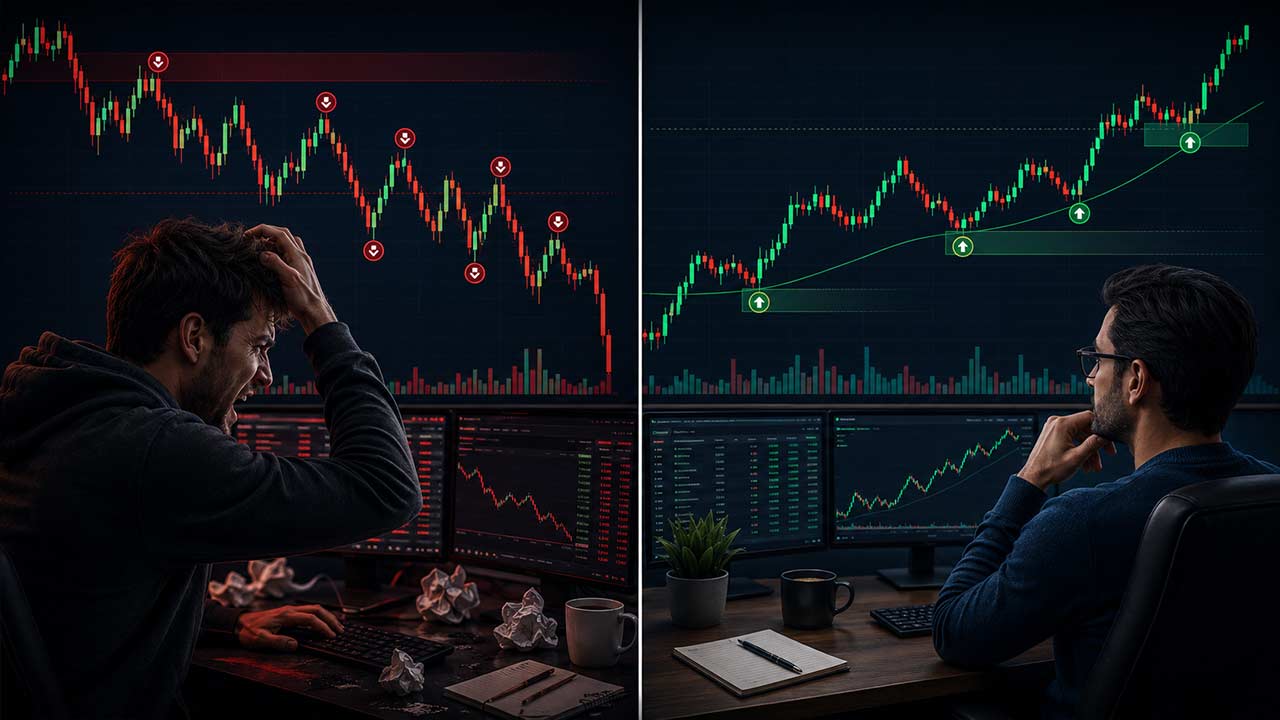
Why Traders Speed Up After Losses
Losing money creates emotional pressure. Your brain wants relief quickly.
That is why traders often start overtrading after a bad session. They want to erase the discomfort immediately.
The problem is that emotional trading reduces decision quality.
A trader who normally waits patiently for confirmation suddenly starts entering early. A trader who respects risk suddenly doubles position size. A trader who follows a plan suddenly abandons it.
The strategy usually is not the problem.
The emotional reaction is.
Many traders also tie self-worth to trading results. A losing trade feels like failure instead of normal business risk. That emotional attachment creates urgency to “fix” the loss quickly. The emotional impact of losses often goes deeper than most traders realize. Stress, pressure, and repeated setbacks can change how you respond to risk and decision-making. How Trading Greed Impacts Your Traders explains why emotional regulation plays such a major role in long-term trading performance.
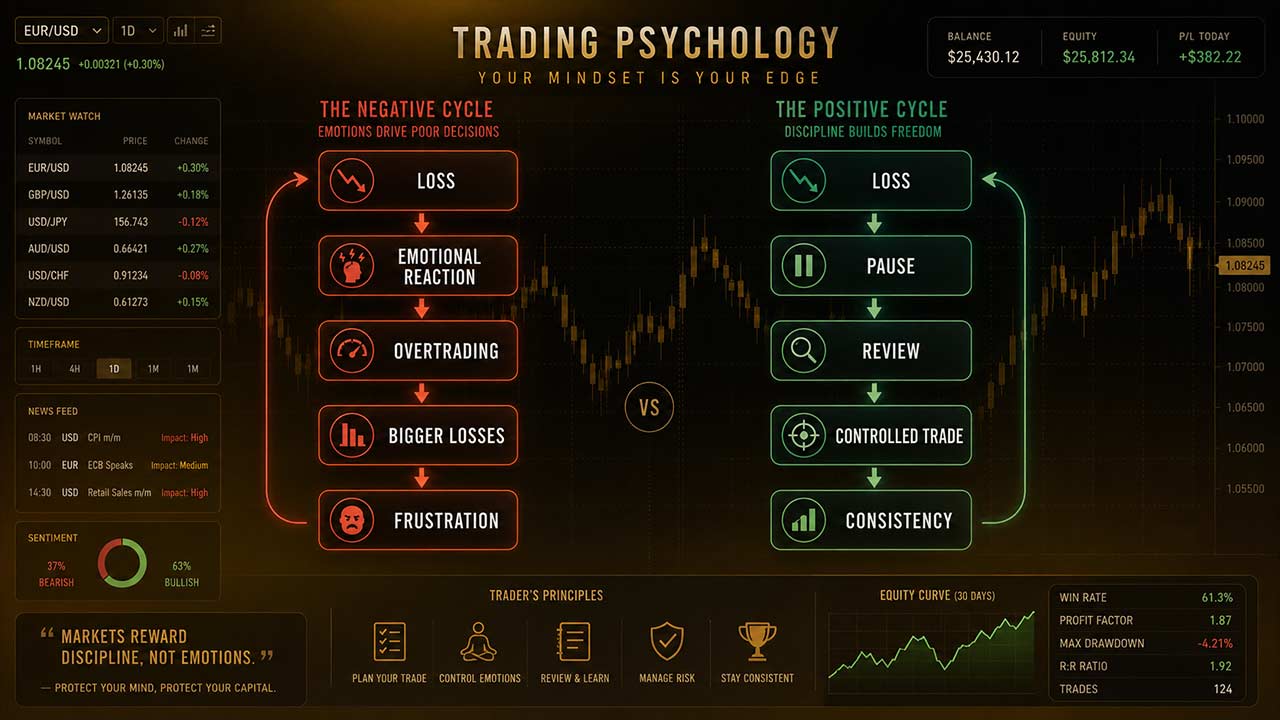
Slowing down interrupts this emotional spiral.
Why Slowing Down Works
Slowing down gives your brain time to reset before making another decision.
That sounds simple, but it changes everything.
When traders pause after losses, they stop reacting emotionally and return to process-based thinking.
Instead of chasing the market, they start asking:
Does this trade actually fit my plan?
Am I trading because of opportunity or emotion?
Would I take this setup if I were green today?
Is my risk still controlled?
Those questions rarely happen during revenge trading because emotions move faster than logic.
Professional traders understand something many beginners ignore:
Not trading is sometimes the best trading decision.
The Best Traders Often Trade Less
New traders believe more trades create more profits.
Usually the opposite happens.
The best traders are often selective. They wait longer, ignore noise, and focus only on high-quality setups.
That patience protects both capital and emotional stability.
Overtrading creates fatigue. Fatigue lowers discipline. Lower discipline creates more losses.
Then the revenge cycle begins again.
Slowing down helps traders avoid entering this loop in the first place.
In many cases, revenge trading becomes worse when mental fatigue starts affecting decision-making. Traders who notice themselves becoming emotionally drained should learn the warning signs early by reading How to Prevent Trading Burnout Before It Hurts Performance.
Small Losses Are Normal
Many revenge traders are secretly trying to avoid accepting losses.
That mindset is dangerous because losses are part of trading.
Even strong strategies lose trades regularly.
The goal is not to avoid losses completely. The goal is to keep losses controlled enough that they do not damage your account or mindset.
Traders who cannot emotionally accept small losses often create massive losses later.
They move stop losses.
They hold losing positions too long.
They average down emotionally.
They increase risk trying to recover faster.
One controlled loss is manageable. Emotional recovery trading is what destroys accounts.

How Slowing Down Protects Your Risk Management
Risk management usually breaks during emotional moments.
Very few traders blow accounts because of one normal setup. Most accounts fail because traders abandon risk rules after frustration builds.
Slowing down helps restore discipline.
After a losing trade, experienced traders often:
reduce position size
limit the number of trades
take a short break
review mistakes before re-entering
wait only for A+ setups
stop trading after hitting a loss limit
These habits may feel slow, but they protect consistency long term.
Trading is not about winning one session. It is about surviving thousands of trades over time.
Emotional Trading Feels Productive But Isn’t
One reason revenge trading is dangerous is because it feels active.
You feel like you are solving the problem.
But emotional trading usually creates more damage instead of recovery.
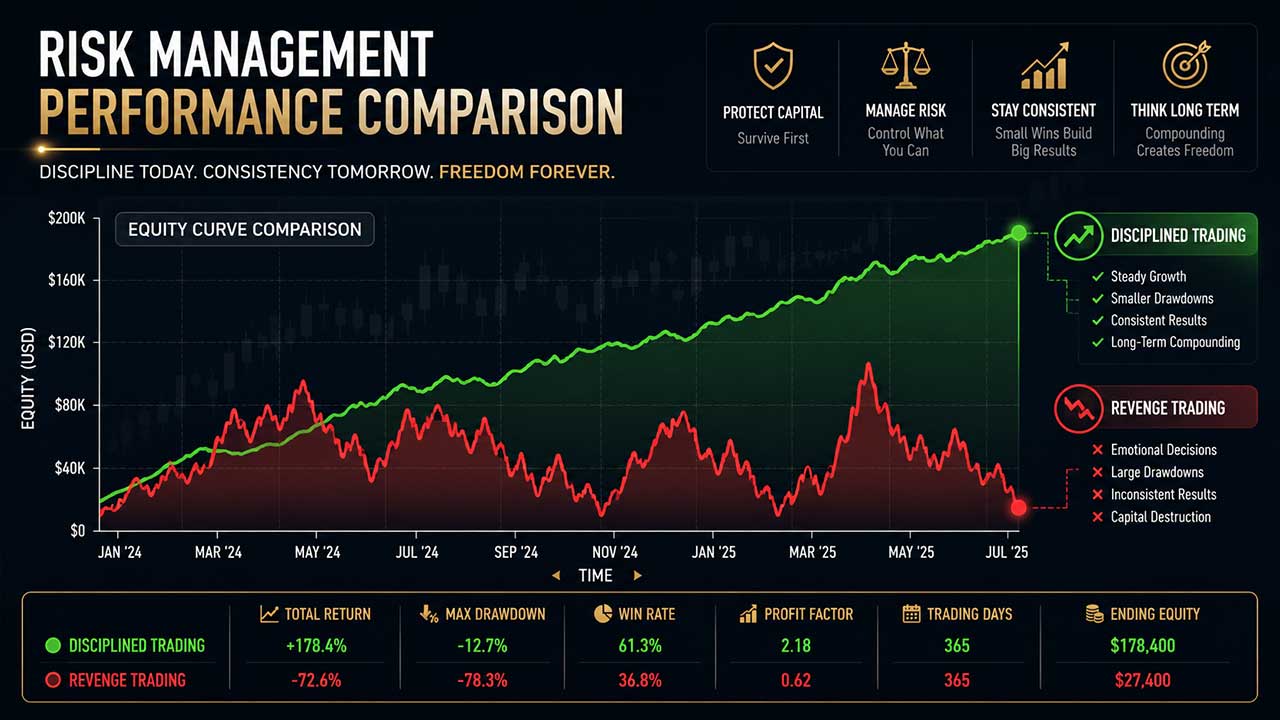
The market rewards discipline, not urgency.
Many traders confuse activity with progress. Sitting at charts for hours taking random trades feels productive, but it often lowers performance.
Sometimes the highest-quality trading decision is stepping away from the screen.
Journaling Helps You Catch Revenge Patterns
Many traders repeat the same emotional mistakes because they never review them properly.
A trading journal helps slow down your thinking.
Instead of reacting emotionally, you start analyzing behavior objectively.
You begin noticing patterns like:
taking trades immediately after losses
increasing size after drawdowns
entering during frustration
trading out of boredom
forcing setups late in the session
Awareness matters because revenge trading is often emotional and automatic.
Once traders recognize their patterns, controlling them becomes easier.
Why Prop Firm Rules Help Some Traders
Many funded traders become more disciplined because prop firm rules force them to slow down.
Daily drawdown limits and risk rules create boundaries that prevent emotional spirals from getting out of control.
Without structure, many traders keep trading emotionally until serious damage happens.
That is why structured environments help some traders improve consistency.
This is one reason many traders struggle during evaluations and funded programs. In many cases, the issue is not strategy but discipline, risk management, and emotional control. Why Traders Fail Funded Challenges explores some of the most common mistakes that prevent traders from reaching consistency.
At Pipstone Capital, traders can access funded challenges with realistic trading conditions, raw spreads, fast execution, and scaling opportunities up to $400,000. The structured evaluation process also encourages traders to respect risk management instead of chasing emotional recovery trades.
The traders who usually perform best are not always the fastest traders. They are often the most controlled.
Slowing Down Improves Decision Quality
Good trading decisions require clarity.
Clarity disappears when emotions take over.
After losses, traders often experience:
frustration
fear
urgency
anger
self-doubt
impatience
Those emotions reduce objectivity.
Slowing down gives your mind time to stabilize before risking more capital.
That can mean:
taking 15 minutes away from charts
ending the session early
reviewing your trading plan
lowering size temporarily
waiting for the next trading day
Many traders think slowing down means weakness.
Actually, it is professional behavior.
Consistency Comes From Process, Not Excitement
Social media often makes trading look fast and emotional.
Real consistency looks boring.
Professional traders usually follow routines, manage risk carefully, and avoid emotional decisions. They are not constantly chasing action.
That discipline is what keeps them stable during drawdowns.
The traders who survive long term are rarely the most emotional traders in the room.
They are the traders who stay calm after losses.
How to Slow Down After a Losing Trade
Here are practical ways to stop revenge trading before it starts:
1. Create a Mandatory Pause Rule
After every loss, step away for 10–15 minutes before looking for another trade.
This helps emotions settle before making another decision.
2. Reduce Size During Drawdowns
Smaller position sizes reduce emotional pressure.
That makes it easier to follow your system logically.
3. Limit Daily Losses
Have a clear stop point.
Once you hit it, end the session.
Many massive losses happen because traders refuse to stop.
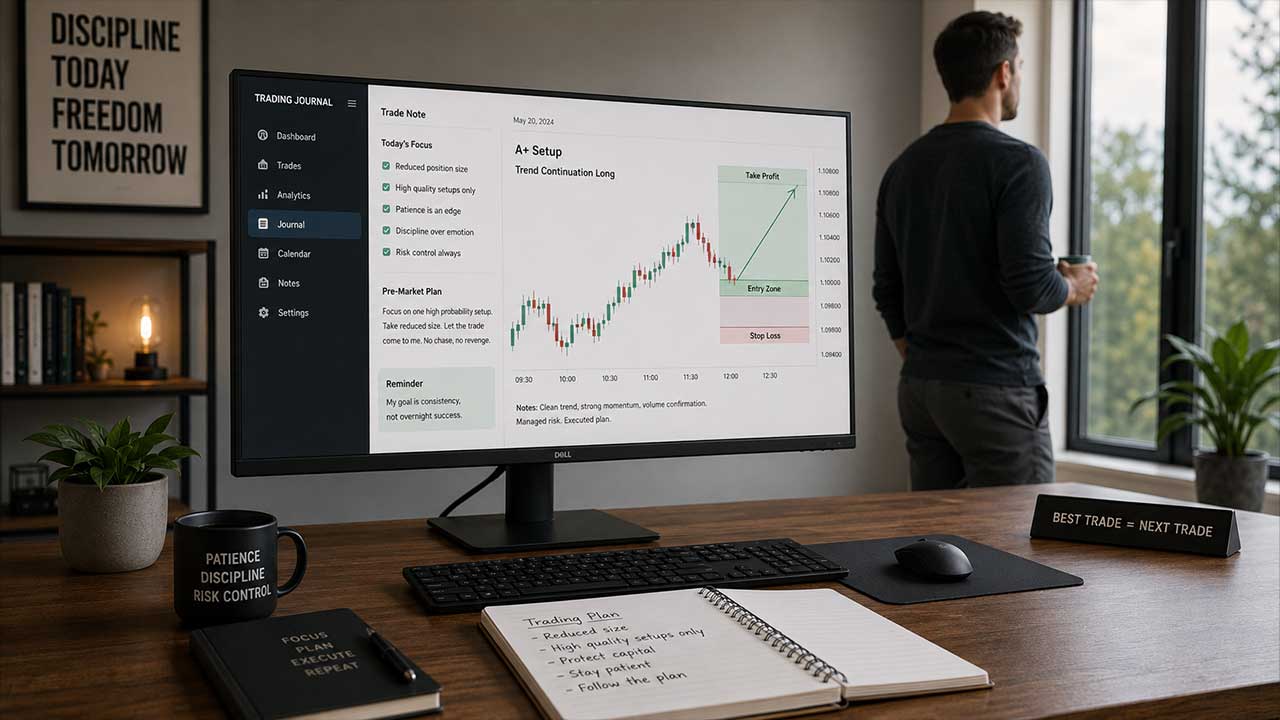
4. Focus Only on A+ Setups
After losses, avoid lower-quality trades completely.
Patience protects consistency.
5. Journal Emotional Reactions
Do not just record entries and exits.
Track emotions too.
This helps expose revenge trading patterns early.
6. Stop Watching Every Candle
Constant chart watching increases emotional reactions.
Sometimes less screen time improves decision-making.
Final Thoughts
Revenge trading is rarely a strategy problem. It is usually an emotional speed problem.
After losses, traders often react too quickly. They try to recover emotionally instead of thinking clearly. That urgency leads to forced trades, larger losses, and broken discipline.
Slowing down changes the entire cycle.
It gives traders time to reset emotionally, protect risk management, and return to process-focused thinking.
The market will always create opportunities tomorrow.
Blowing up an account trying to recover today’s losses usually removes the chance to take them.
FAQs
Can one bad trade trigger revenge trading?
Yes. It does not take a huge loss. Sometimes a single losing trade is enough to make a trader start forcing setups.
Why is it so hard to walk away after losing?
Most people want to fix the loss straight away. The problem is that this mindset often leads to more mistakes instead of better trades.
What should I do right after a losing trade?
Take a few minutes away from the screen. When you come back, focus on the next setup, not the money you just lost.
Do experienced traders revenge trade too?
They can, but experienced traders are usually better at recognizing the signs and stopping themselves before things get worse.
Is trading less sometimes better?
Often, yes. Taking fewer trades can help you stay patient and avoid entering positions for the wrong reasons.
What's the easiest way to avoid revenge trading?
Have a rule that forces you to pause after a loss. A short break can prevent a lot of expensive decisions.



How Slowing Down Prevents Revenge Trading Mistakes
Every trader says they will stay disciplined after a loss, but the moment the market takes money away, emotions quickly take control and the next trade suddenly becomes personal.
That is usually how revenge trading begins. Traders start entering too early, increasing position sizes, ignoring their setups, and trying to recover losses as quickly as possible instead of thinking clearly.
Most major trading losses do not happen because traders completely lack strategy. They usually happen because emotions take over after losing money, causing traders to react too quickly instead of slowing down and staying disciplined.
At the center of revenge trading is one major problem: speed.
After a loss, many traders start reacting instead of thinking. They chase the market, force setups, and trade with frustration instead of logic. Slowing down breaks that cycle before it damages your account.
What Revenge Trading Actually Looks Like
Revenge trading is not always obvious.
Sometimes it looks aggressive. Other times it looks emotional but controlled on the surface.
Here are common signs:
entering trades without confirmation
taking random setups outside your plan
increasing lot sizes after losses
trading immediately after getting stopped out
staying glued to charts trying to recover losses
forcing trades because you feel behind
refusing to end the session red
Most traders think revenge trading only happens after huge losses. In reality, even two small losing trades can trigger emotional decisions.
Emotional mistakes are not limited to losing streaks. Some traders become just as reckless after a series of wins. If you want to understand how overconfidence can damage consistency, read Trading Greed Explained.
The market starts feeling personal.
Instead of asking, “Is this a good setup?” you start asking, “How do I recover fast?”
That mindset usually leads to more mistakes.
Why Traders Speed Up After Losses
Losing money creates emotional pressure. Your brain wants relief quickly.
That is why traders often start overtrading after a bad session. They want to erase the discomfort immediately.
The problem is that emotional trading reduces decision quality.
A trader who normally waits patiently for confirmation suddenly starts entering early. A trader who respects risk suddenly doubles position size. A trader who follows a plan suddenly abandons it.
The strategy usually is not the problem.
The emotional reaction is.
Many traders also tie self-worth to trading results. A losing trade feels like failure instead of normal business risk. That emotional attachment creates urgency to “fix” the loss quickly. The emotional impact of losses often goes deeper than most traders realize. Stress, pressure, and repeated setbacks can change how you respond to risk and decision-making. How Trading Greed Impacts Your Traders explains why emotional regulation plays such a major role in long-term trading performance.
Slowing down interrupts this emotional spiral.
Why Slowing Down Works
Slowing down gives your brain time to reset before making another decision.
That sounds simple, but it changes everything.
When traders pause after losses, they stop reacting emotionally and return to process-based thinking.
Instead of chasing the market, they start asking:
Does this trade actually fit my plan?
Am I trading because of opportunity or emotion?
Would I take this setup if I were green today?
Is my risk still controlled?
Those questions rarely happen during revenge trading because emotions move faster than logic.
Professional traders understand something many beginners ignore:
Not trading is sometimes the best trading decision.
The Best Traders Often Trade Less
New traders believe more trades create more profits.
Usually the opposite happens.
The best traders are often selective. They wait longer, ignore noise, and focus only on high-quality setups.
That patience protects both capital and emotional stability.
Overtrading creates fatigue. Fatigue lowers discipline. Lower discipline creates more losses.
Then the revenge cycle begins again.
Slowing down helps traders avoid entering this loop in the first place.
In many cases, revenge trading becomes worse when mental fatigue starts affecting decision-making. Traders who notice themselves becoming emotionally drained should learn the warning signs early by reading How to Prevent Trading Burnout Before It Hurts Performance.
Small Losses Are Normal
Many revenge traders are secretly trying to avoid accepting losses.
That mindset is dangerous because losses are part of trading.
Even strong strategies lose trades regularly.
The goal is not to avoid losses completely. The goal is to keep losses controlled enough that they do not damage your account or mindset.
Traders who cannot emotionally accept small losses often create massive losses later.
They move stop losses.
They hold losing positions too long.
They average down emotionally.
They increase risk trying to recover faster.
One controlled loss is manageable. Emotional recovery trading is what destroys accounts.
How Slowing Down Protects Your Risk Management
Risk management usually breaks during emotional moments.
Very few traders blow accounts because of one normal setup. Most accounts fail because traders abandon risk rules after frustration builds.
Slowing down helps restore discipline.
After a losing trade, experienced traders often:
reduce position size
limit the number of trades
take a short break
review mistakes before re-entering
wait only for A+ setups
stop trading after hitting a loss limit
These habits may feel slow, but they protect consistency long term.
Trading is not about winning one session. It is about surviving thousands of trades over time.
Emotional Trading Feels Productive But Isn’t
One reason revenge trading is dangerous is because it feels active.
You feel like you are solving the problem.
But emotional trading usually creates more damage instead of recovery.
The market rewards discipline, not urgency.
Many traders confuse activity with progress. Sitting at charts for hours taking random trades feels productive, but it often lowers performance.
Sometimes the highest-quality trading decision is stepping away from the screen.
Journaling Helps You Catch Revenge Patterns
Many traders repeat the same emotional mistakes because they never review them properly.
A trading journal helps slow down your thinking.
Instead of reacting emotionally, you start analyzing behavior objectively.
You begin noticing patterns like:
taking trades immediately after losses
increasing size after drawdowns
entering during frustration
trading out of boredom
forcing setups late in the session
Awareness matters because revenge trading is often emotional and automatic.
Once traders recognize their patterns, controlling them becomes easier.
Why Prop Firm Rules Help Some Traders
Many funded traders become more disciplined because prop firm rules force them to slow down.
Daily drawdown limits and risk rules create boundaries that prevent emotional spirals from getting out of control.
Without structure, many traders keep trading emotionally until serious damage happens.
That is why structured environments help some traders improve consistency.
This is one reason many traders struggle during evaluations and funded programs. In many cases, the issue is not strategy but discipline, risk management, and emotional control. Why Traders Fail Funded Challenges explores some of the most common mistakes that prevent traders from reaching consistency.
At Pipstone Capital, traders can access funded challenges with realistic trading conditions, raw spreads, fast execution, and scaling opportunities up to $400,000. The structured evaluation process also encourages traders to respect risk management instead of chasing emotional recovery trades.
The traders who usually perform best are not always the fastest traders. They are often the most controlled.
Slowing Down Improves Decision Quality
Good trading decisions require clarity.
Clarity disappears when emotions take over.
After losses, traders often experience:
frustration
fear
urgency
anger
self-doubt
impatience
Those emotions reduce objectivity.
Slowing down gives your mind time to stabilize before risking more capital.
That can mean:
taking 15 minutes away from charts
ending the session early
reviewing your trading plan
lowering size temporarily
waiting for the next trading day
Many traders think slowing down means weakness.
Actually, it is professional behavior.
Consistency Comes From Process, Not Excitement
Social media often makes trading look fast and emotional.
Real consistency looks boring.
Professional traders usually follow routines, manage risk carefully, and avoid emotional decisions. They are not constantly chasing action.
That discipline is what keeps them stable during drawdowns.
The traders who survive long term are rarely the most emotional traders in the room.
They are the traders who stay calm after losses.
How to Slow Down After a Losing Trade
Here are practical ways to stop revenge trading before it starts:
1. Create a Mandatory Pause Rule
After every loss, step away for 10–15 minutes before looking for another trade.
This helps emotions settle before making another decision.
2. Reduce Size During Drawdowns
Smaller position sizes reduce emotional pressure.
That makes it easier to follow your system logically.
3. Limit Daily Losses
Have a clear stop point.
Once you hit it, end the session.
Many massive losses happen because traders refuse to stop.
4. Focus Only on A+ Setups
After losses, avoid lower-quality trades completely.
Patience protects consistency.
5. Journal Emotional Reactions
Do not just record entries and exits.
Track emotions too.
This helps expose revenge trading patterns early.
6. Stop Watching Every Candle
Constant chart watching increases emotional reactions.
Sometimes less screen time improves decision-making.
Final Thoughts
Revenge trading is rarely a strategy problem. It is usually an emotional speed problem.
After losses, traders often react too quickly. They try to recover emotionally instead of thinking clearly. That urgency leads to forced trades, larger losses, and broken discipline.
Slowing down changes the entire cycle.
It gives traders time to reset emotionally, protect risk management, and return to process-focused thinking.
The market will always create opportunities tomorrow.
Blowing up an account trying to recover today’s losses usually removes the chance to take them.
FAQs
Can one bad trade trigger revenge trading?
Yes. It does not take a huge loss. Sometimes a single losing trade is enough to make a trader start forcing setups.
Why is it so hard to walk away after losing?
Most people want to fix the loss straight away. The problem is that this mindset often leads to more mistakes instead of better trades.
What should I do right after a losing trade?
Take a few minutes away from the screen. When you come back, focus on the next setup, not the money you just lost.
Do experienced traders revenge trade too?
They can, but experienced traders are usually better at recognizing the signs and stopping themselves before things get worse.
Is trading less sometimes better?
Often, yes. Taking fewer trades can help you stay patient and avoid entering positions for the wrong reasons.
What's the easiest way to avoid revenge trading?
Have a rule that forces you to pause after a loss. A short break can prevent a lot of expensive decisions.
