


Trump–Xi Talks: Why Forex Volatility Could Rise This Week
Markets are watching the latest talks between Donald Trump and Xi Jinping closely this week. Currency traders know these meetings often move the forex market fast. Even one headline can shift price action within minutes.
This comes at a time when traders are already dealing with high uncertainty. Interest rate expectations remain unclear. Global growth concerns are still present. Commodity prices continue to swing. Adding US-China talks into that mix could increase volatility across major currency pairs.
Forex traders should prepare for stronger market reactions during the week. That does not mean panic trading. It means understanding where volatility may appear and why.
Why These Talks Matter to Forex Markets
The United States and China are the two largest economies in the world. When their relationship changes, markets react.
Trade policy, tariffs, exports, chip restrictions, and manufacturing agreements all affect global money flow. Currency markets price these risks quickly.
When talks between Washington and Beijing improve, traders often move toward risk-on assets. That can support currencies like the Australian dollar, New Zealand dollar, and emerging market currencies.
When tensions rise, traders usually move into safer assets. The US dollar, Japanese yen, and Swiss franc often benefit during those moments.
This week’s talks matter because traders are trying to understand one key question: will relations improve or worsen from here?
The answer may shape short-term forex direction.

Why Volatility Could Spike Fast
Forex volatility often increases when markets lack clear expectations. Right now, traders do not fully know what will come from the talks.
A positive statement about trade cooperation could weaken the US dollar against risk currencies. A negative statement about tariffs or restrictions could trigger sharp moves in the opposite direction.
The market is also sensitive because liquidity conditions remain thinner during certain sessions. That means headlines can create larger price swings than usual.
Many traders also use automated systems that react instantly to news. Once a headline appears, algorithms can enter positions within seconds. That adds more speed to market moves.
Pairs connected to China and global trade could become more active than normal. Traders preparing for major headlines should also understand how spreads, slippage, and execution behave during volatile events. This guide on things to consider before news events explains the risks in more detail.
Which Currency Pairs Could Move the Most?
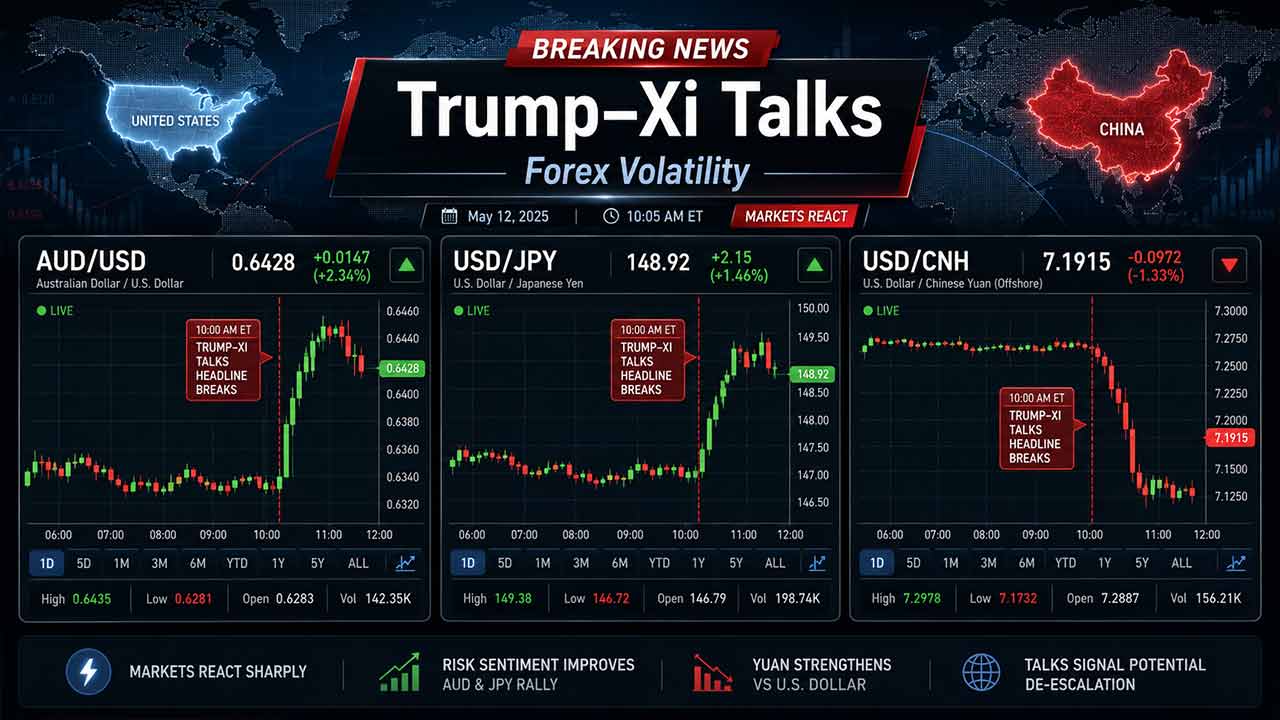
Some forex pairs usually react stronger during US-China developments.
AUD/USD
The Australian dollar has close ties to China because China is Australia’s largest trading partner.
When China’s economy looks strong, the Australian dollar often gains. When Chinese demand slows, AUD can weaken.
That makes AUD/USD one of the main pairs traders watch during Trump–Xi talks.
If markets believe trade tensions may ease, AUD/USD could push higher quickly. If talks disappoint, the pair may fall under pressure.
Traders watching this setup may also want to study how different pairs react during unstable market periods. This breakdown of the most volatile forex pairs gives more context around high-movement currency pairs.
USD/JPY
USD/JPY reacts heavily to market sentiment.
During fear-driven moves, traders often buy the Japanese yen because it is viewed as a safer currency. That can send USD/JPY lower fast.
If the talks create optimism, traders may move away from safety positions. In that case, USD/JPY could rise.
Large swings in US bond yields may also increase volatility in this pair during the week.
USD/CNH
USD/CNH tracks the offshore Chinese yuan. It is one of the clearest ways traders measure market reaction to China-related news.
Positive developments could strengthen the yuan and push USD/CNH lower.
Negative headlines could weaken the yuan and send the pair higher.
Many institutional traders monitor this pair closely because it often reflects broader market confidence around China.
Gold and Forex Correlation
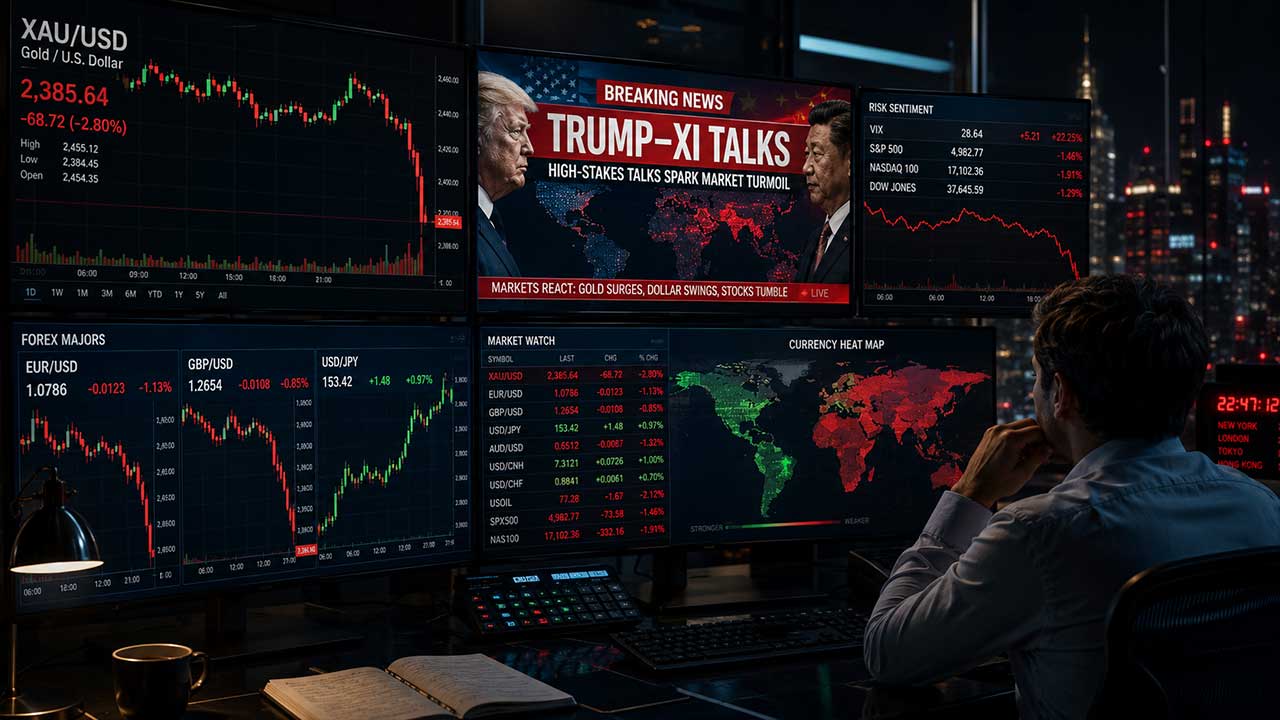
Gold traders are also paying attention to the talks. Gold and forex markets often move together during periods of uncertainty.
When fear rises, traders sometimes buy gold and safe-haven currencies at the same time. That can strengthen the Japanese yen and Swiss franc while supporting gold prices.
If market confidence improves, traders may rotate back into risk assets instead.
Forex traders who follow gold price action may gain extra insight into market sentiment during the week.
Pairs connected to gold-producing economies can also react faster when metals markets become unstable.
Interest Rates Still Matter
The talks are important, but central bank expectations still drive the bigger forex picture.
If markets think trade tensions may hurt growth, traders could adjust expectations around future rate cuts or rate hikes.
That matters because currencies move heavily based on interest rate outlooks.
For example, weaker growth concerns could pressure bond yields lower. That may weaken the US dollar in some situations.
At the same time, rising fear can also increase demand for the dollar as a safe haven.
This is why forex reactions can become mixed and difficult during political events. Markets are pricing several risks at once.
Traders Should Watch Headlines Carefully
This week is likely to bring fast-moving headlines. Traders should avoid entering positions blindly during major announcements.
Large candles and sudden reversals are common during geopolitical events.
Risk management becomes more important during these periods. Wider stop losses, smaller position sizes, and patience can help traders avoid emotional decisions.
Chasing volatility usually ends badly when markets move on headlines instead of technical structure.
Technical analysis still matters, but news can override chart patterns temporarily.
That is why many traders reduce exposure before major political meetings.
Why Prop Traders Need Extra Discipline
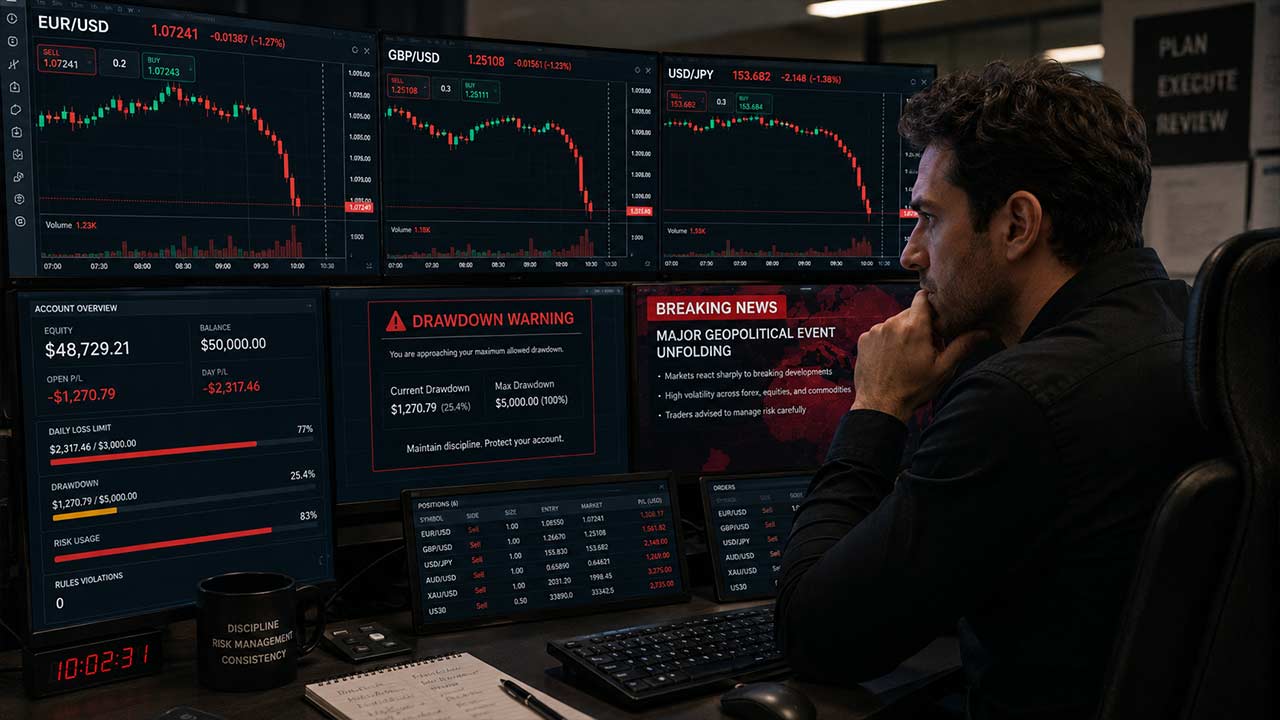
High volatility can create opportunity, but it also creates danger for funded traders and challenge accounts.
One emotional trade during a headline spike can damage days of progress.
Many prop traders lose accounts because they overtrade during news events. They try to catch every move instead of waiting for cleaner setups.
This week may reward traders who stay patient.
Strong volatility can also increase spread widening and slippage. Traders using high leverage should stay careful during major releases and press statements.
Because of this, many traders look for stable execution and trading conditions during high-impact news events. At Pipstone Capital, traders get access to raw spreads, fast execution, and real market conditions designed for volatile forex sessions. Many also value the no time limit challenges and up to 90% profit split while trading major market-moving events.
Final Thoughts
The latest Trump–Xi talks arrive at a sensitive time for global markets. Traders are already watching inflation, interest rates, and slowing growth concerns. Political headlines now add another layer of uncertainty.
Forex volatility could rise sharply this week, especially across risk-sensitive currency pairs like AUD/USD and USD/JPY.
That does not mean every move will become a trend. Markets may swing aggressively in both directions as new headlines appear.
For traders, the main goal should be staying controlled while volatility increases. Good risk management matters more than trying to predict every headline.
This week may create strong trading opportunities, but patience will likely separate disciplined traders from emotional ones.
FAQs
Why do Trump–Xi talks affect forex markets?
The US and China drive a huge part of global trade. When talks between both sides turn positive or negative, traders quickly change their positions. That often causes stronger movement across the forex market.
Which forex pairs react most during US–China news?
AUD/USD usually gets the most attention because Australia trades heavily with China. USD/JPY also moves fast during risk-off market conditions, while USD/CNH reflects direct sentiment around the Chinese economy.
Can political meetings really move the forex market that much?
They can. A single comment about tariffs, trade deals, or economic policy can trigger sharp moves within minutes. Traders react quickly because these headlines can affect global growth expectations and market confidence.



Trump–Xi Talks: Why Forex Volatility Could Rise This Week
Markets are watching the latest talks between Donald Trump and Xi Jinping closely this week. Currency traders know these meetings often move the forex market fast. Even one headline can shift price action within minutes.
This comes at a time when traders are already dealing with high uncertainty. Interest rate expectations remain unclear. Global growth concerns are still present. Commodity prices continue to swing. Adding US-China talks into that mix could increase volatility across major currency pairs.
Forex traders should prepare for stronger market reactions during the week. That does not mean panic trading. It means understanding where volatility may appear and why.
Why These Talks Matter to Forex Markets
The United States and China are the two largest economies in the world. When their relationship changes, markets react.
Trade policy, tariffs, exports, chip restrictions, and manufacturing agreements all affect global money flow. Currency markets price these risks quickly.
When talks between Washington and Beijing improve, traders often move toward risk-on assets. That can support currencies like the Australian dollar, New Zealand dollar, and emerging market currencies.
When tensions rise, traders usually move into safer assets. The US dollar, Japanese yen, and Swiss franc often benefit during those moments.
This week’s talks matter because traders are trying to understand one key question: will relations improve or worsen from here?
The answer may shape short-term forex direction.
Why Volatility Could Spike Fast
Forex volatility often increases when markets lack clear expectations. Right now, traders do not fully know what will come from the talks.
A positive statement about trade cooperation could weaken the US dollar against risk currencies. A negative statement about tariffs or restrictions could trigger sharp moves in the opposite direction.
The market is also sensitive because liquidity conditions remain thinner during certain sessions. That means headlines can create larger price swings than usual.
Many traders also use automated systems that react instantly to news. Once a headline appears, algorithms can enter positions within seconds. That adds more speed to market moves.
Pairs connected to China and global trade could become more active than normal. Traders preparing for major headlines should also understand how spreads, slippage, and execution behave during volatile events. This guide on things to consider before news events explains the risks in more detail.
Which Currency Pairs Could Move the Most?
Some forex pairs usually react stronger during US-China developments.
AUD/USD
The Australian dollar has close ties to China because China is Australia’s largest trading partner.
When China’s economy looks strong, the Australian dollar often gains. When Chinese demand slows, AUD can weaken.
That makes AUD/USD one of the main pairs traders watch during Trump–Xi talks.
If markets believe trade tensions may ease, AUD/USD could push higher quickly. If talks disappoint, the pair may fall under pressure.
Traders watching this setup may also want to study how different pairs react during unstable market periods. This breakdown of the most volatile forex pairs gives more context around high-movement currency pairs.
USD/JPY
USD/JPY reacts heavily to market sentiment.
During fear-driven moves, traders often buy the Japanese yen because it is viewed as a safer currency. That can send USD/JPY lower fast.
If the talks create optimism, traders may move away from safety positions. In that case, USD/JPY could rise.
Large swings in US bond yields may also increase volatility in this pair during the week.
USD/CNH
USD/CNH tracks the offshore Chinese yuan. It is one of the clearest ways traders measure market reaction to China-related news.
Positive developments could strengthen the yuan and push USD/CNH lower.
Negative headlines could weaken the yuan and send the pair higher.
Many institutional traders monitor this pair closely because it often reflects broader market confidence around China.
Gold and Forex Correlation
Gold traders are also paying attention to the talks. Gold and forex markets often move together during periods of uncertainty.
When fear rises, traders sometimes buy gold and safe-haven currencies at the same time. That can strengthen the Japanese yen and Swiss franc while supporting gold prices.
If market confidence improves, traders may rotate back into risk assets instead.
Forex traders who follow gold price action may gain extra insight into market sentiment during the week.
Pairs connected to gold-producing economies can also react faster when metals markets become unstable.
Interest Rates Still Matter
The talks are important, but central bank expectations still drive the bigger forex picture.
If markets think trade tensions may hurt growth, traders could adjust expectations around future rate cuts or rate hikes.
That matters because currencies move heavily based on interest rate outlooks.
For example, weaker growth concerns could pressure bond yields lower. That may weaken the US dollar in some situations.
At the same time, rising fear can also increase demand for the dollar as a safe haven.
This is why forex reactions can become mixed and difficult during political events. Markets are pricing several risks at once.
Traders Should Watch Headlines Carefully
This week is likely to bring fast-moving headlines. Traders should avoid entering positions blindly during major announcements.
Large candles and sudden reversals are common during geopolitical events.
Risk management becomes more important during these periods. Wider stop losses, smaller position sizes, and patience can help traders avoid emotional decisions.
Chasing volatility usually ends badly when markets move on headlines instead of technical structure.
Technical analysis still matters, but news can override chart patterns temporarily.
That is why many traders reduce exposure before major political meetings.
Why Prop Traders Need Extra Discipline
High volatility can create opportunity, but it also creates danger for funded traders and challenge accounts.
One emotional trade during a headline spike can damage days of progress.
Many prop traders lose accounts because they overtrade during news events. They try to catch every move instead of waiting for cleaner setups.
This week may reward traders who stay patient.
Strong volatility can also increase spread widening and slippage. Traders using high leverage should stay careful during major releases and press statements.
Because of this, many traders look for stable execution and trading conditions during high-impact news events. At Pipstone Capital, traders get access to raw spreads, fast execution, and real market conditions designed for volatile forex sessions. Many also value the no time limit challenges and up to 90% profit split while trading major market-moving events.
Final Thoughts
The latest Trump–Xi talks arrive at a sensitive time for global markets. Traders are already watching inflation, interest rates, and slowing growth concerns. Political headlines now add another layer of uncertainty.
Forex volatility could rise sharply this week, especially across risk-sensitive currency pairs like AUD/USD and USD/JPY.
That does not mean every move will become a trend. Markets may swing aggressively in both directions as new headlines appear.
For traders, the main goal should be staying controlled while volatility increases. Good risk management matters more than trying to predict every headline.
This week may create strong trading opportunities, but patience will likely separate disciplined traders from emotional ones.
FAQs
Why do Trump–Xi talks affect forex markets?
The US and China drive a huge part of global trade. When talks between both sides turn positive or negative, traders quickly change their positions. That often causes stronger movement across the forex market.
Which forex pairs react most during US–China news?
AUD/USD usually gets the most attention because Australia trades heavily with China. USD/JPY also moves fast during risk-off market conditions, while USD/CNH reflects direct sentiment around the Chinese economy.
Can political meetings really move the forex market that much?
They can. A single comment about tariffs, trade deals, or economic policy can trigger sharp moves within minutes. Traders react quickly because these headlines can affect global growth expectations and market confidence.
