


How US–Iran Tensions Move Oil, Gold, and Forex Markets
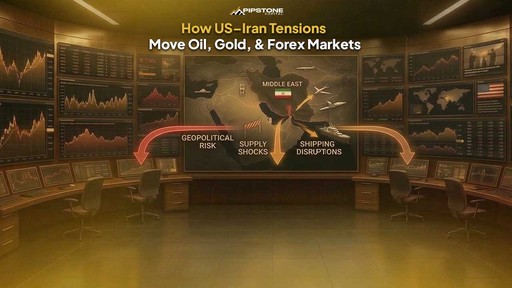
News about conflict can move markets in seconds. This is true when tensions rise between the United States and Iran. Traders across oil, gold, and forex markets react fast to any new headline.
The reason is simple. The Middle East plays a major role in global energy supply. If conflict threatens oil flow, markets adjust quickly.
These events also raise fear and risk. Investors shift money to assets they trust more during uncertain times.
This shift often moves oil, gold, and currencies at the same time.
Why Geopolitical Events Shake Markets
Most of the time, markets react to data. Traders watch interest rates, jobs reports, and inflation.
But conflict changes the focus.
When tension rises between major powers, risk becomes the main driver. Investors worry about trade routes, energy supply, and global growth.
Money starts moving toward safer assets.
At the same time, risky assets may fall.
This shift can create fast price swings across many markets.
Oil Usually Moves First
Oil is often the first market to react.
That is because a large share of global oil comes from the Middle East. If supply looks at risk, traders begin buying oil contracts.
One key location is the Strait of Hormuz. This narrow sea route sits between Iran and Oman.
A large part of the world’s oil passes through this route every day.
If conflict threatens this passage, markets fear supply cuts.
Even the chance of disruption can move prices.
How Oil Reacts During Tension
Oil markets often follow a clear pattern when conflict risk rises.
First, news breaks about conflict or attacks.
Second, traders fear supply problems.
Third, oil prices jump as buyers rush in.
This move can happen very fast.
Oil traders also watch shipping safety, energy sites, and new sanctions. Each of these can affect supply.
When oil rises, it can also raise inflation fears. That adds pressure to other markets.
Why Gold Often Rises
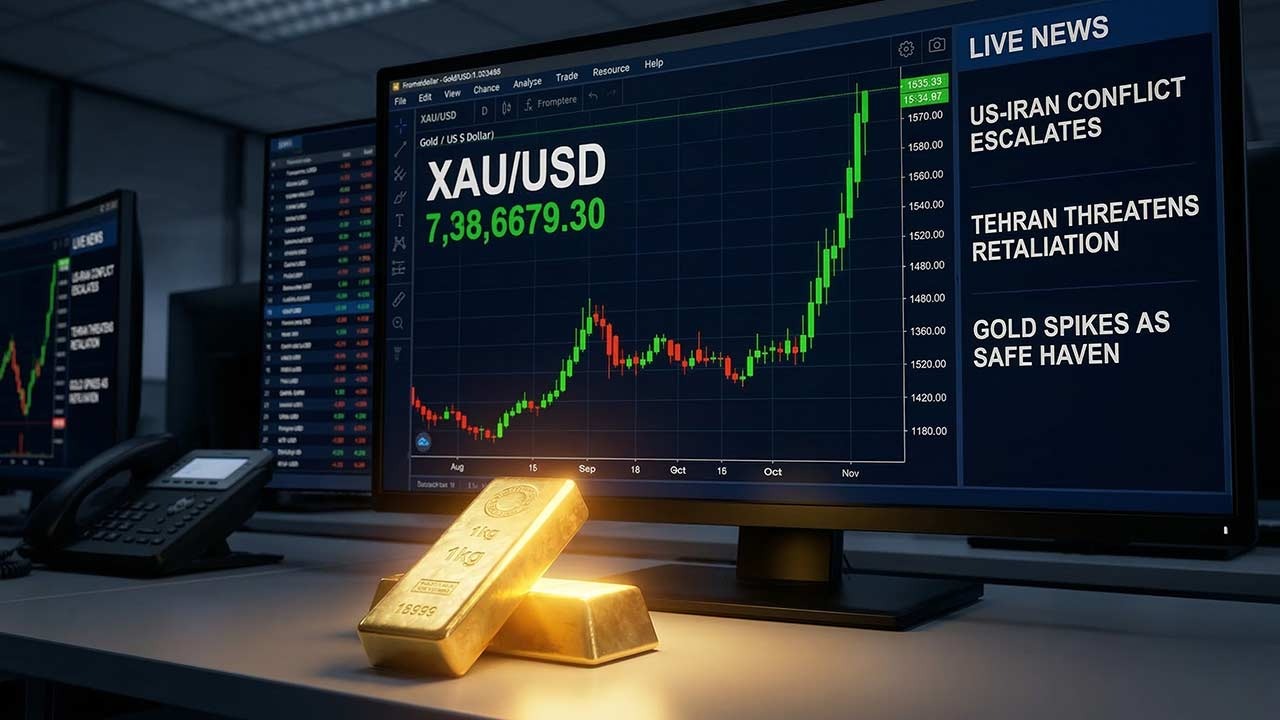
Gold has long been a safe place for money during uncertain times.
When risk rises, many investors move funds from stocks to gold.
They do this because gold holds value during crisis.
What Drives Gold During Conflict
Gold prices usually move due to three main forces.
Safe demand
Investors buy gold to protect wealth when markets feel unstable.
Inflation fears
If oil prices jump, inflation may rise. Gold often gains when inflation risk grows.
Dollar strength
Gold trades in U.S. dollars. If the dollar climbs, gold may drop in the short term.
Because of this, gold does not always rise right away. It can move both ways during early market reactions.
Still, during long periods of tension, gold demand often grows. Traders who focus on gold should also study XAU/USD trading strategies to better understand how price reacts during periods of global tension.
Forex Markets React to Risk
Currency markets respond fast when risk rises.
Currencies move based on money flow between countries. When investors feel unsure, they move funds into stable currencies.
Safe Currencies
Some currencies gain strength during global tension.
These include:
• U.S. dollar
• Japanese yen
• Swiss franc
Traders see these as safer places to hold money.
Large banks, funds, and traders move capital into them when risk grows.
This demand can push these currencies higher.
Risk Currencies
Other currencies tend to fall during global tension.
These include currencies tied to growth or trade.
Examples include:
• Australian dollar
• New Zealand dollar
• Emerging market currencies
When fear rises, traders often sell these currencies first.
This can cause sharp moves in forex pairs.
Pairs such as AUD/USD or NZD/USD often drop during risk events.
Oil Also Affects Currencies
Oil prices can influence currency moves.
Some countries export large amounts of oil. Others import most of their energy.
When oil rises, these economies react in different ways.
Oil Exporters
Countries that sell oil may gain when prices rise.
Their export income increases.
Currencies like the Canadian dollar may benefit from higher oil prices.
Oil Importers
Countries that buy large amounts of oil may face pressure.
Higher energy prices raise costs for companies and households.
This can slow growth and weaken their currencies.
These shifts add more movement to forex markets during conflict.
The Market Chain Reaction
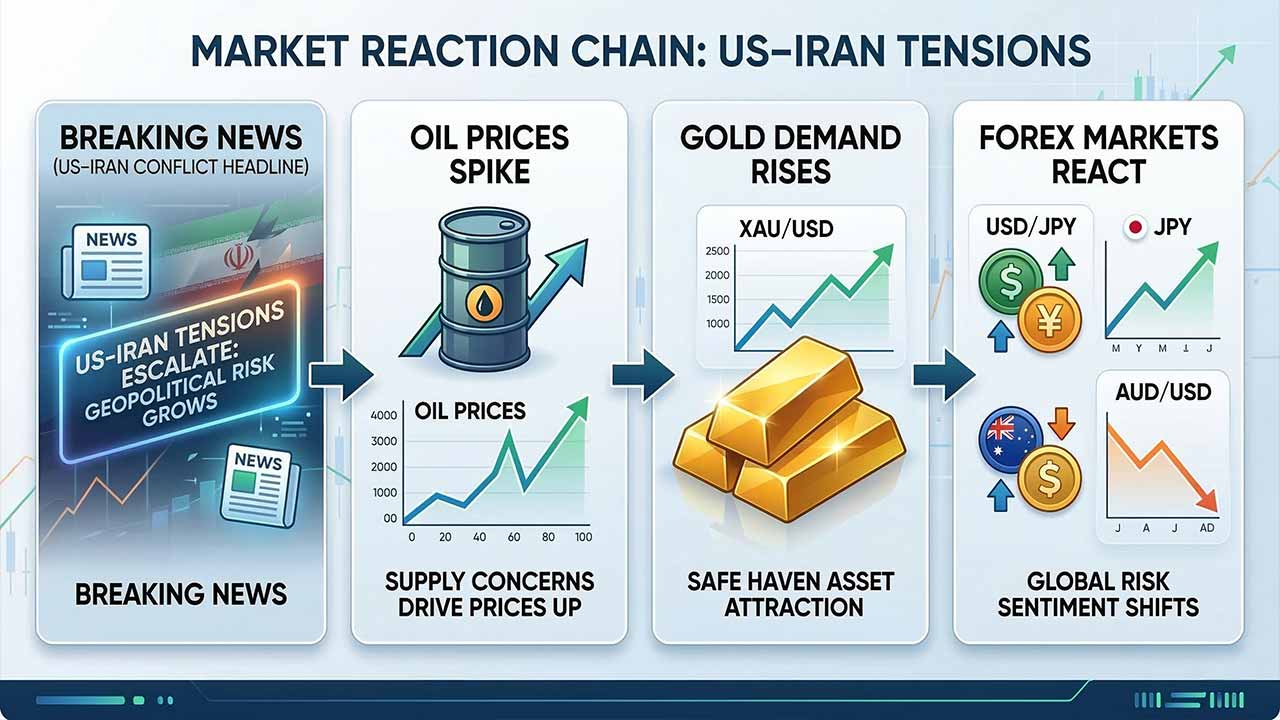
When tension rises between the United States and Iran, markets often move in stages.
First comes the news. Traders react to reports of attacks, sanctions, or military action.
Oil usually moves first. Supply fears drive prices higher.
Gold often follows as investors seek safety.
Currency markets adjust as money flows toward safer economies.
These moves can happen within minutes.
Assets that often react include:
• Gold (XAU/USD)
• Oil (WTI or Brent)
• USD/JPY
• AUD/USD
Because several markets move together, volatility rises.
Why Traders Watch These Events Closely
Geopolitical events can override normal market analysis.
Chart patterns and economic reports may matter less during conflict.
Instead, traders focus on news.
They track:
• Military actions
• Shipping threats
• Energy facility attacks
• New sanctions
Each new update can move markets quickly.
Volatility often increases during these periods.
Price swings can become larger and faster.
What Traders Should Watch
Several signals can help traders understand market direction during geopolitical tension.
Oil prices often give the first clue. If oil spikes, markets may fear supply problems.
Gold demand can show whether investors are seeking safety.
Currency flows reveal where capital is moving.
Watching these relationships can help traders react faster when markets shift.
Final Thoughts
Tension between the United States and Iran can affect several markets at once.
Oil may jump due to supply fears. Gold may gain as investors seek safety. Forex markets adjust as money flows toward stable currencies.
These reactions show how global events shape market behavior.
For traders, understanding these links helps explain why oil, gold, and currencies often move together during times of conflict.
FAQs
Why does oil rise during US–Iran tensions?
Traders fear supply problems in the Middle East. When oil flow looks at risk, buyers rush into oil markets and prices often rise.
Why do investors buy gold during global conflict?
Gold is seen as a safe place to hold money. When risk rises, many investors move funds from stocks into gold.
Which forex pairs move the most during geopolitical tension?
Pairs tied to risk often move the most. AUD/USD and NZD/USD may fall, while safe pairs like USD/JPY can gain strength.



How US–Iran Tensions Move Oil, Gold, and Forex Markets
News about conflict can move markets in seconds. This is true when tensions rise between the United States and Iran. Traders across oil, gold, and forex markets react fast to any new headline.
The reason is simple. The Middle East plays a major role in global energy supply. If conflict threatens oil flow, markets adjust quickly.
These events also raise fear and risk. Investors shift money to assets they trust more during uncertain times.
This shift often moves oil, gold, and currencies at the same time.
Why Geopolitical Events Shake Markets
Most of the time, markets react to data. Traders watch interest rates, jobs reports, and inflation.
But conflict changes the focus.
When tension rises between major powers, risk becomes the main driver. Investors worry about trade routes, energy supply, and global growth.
Money starts moving toward safer assets.
At the same time, risky assets may fall.
This shift can create fast price swings across many markets.
Oil Usually Moves First
Oil is often the first market to react.
That is because a large share of global oil comes from the Middle East. If supply looks at risk, traders begin buying oil contracts.
One key location is the Strait of Hormuz. This narrow sea route sits between Iran and Oman.
A large part of the world’s oil passes through this route every day.
If conflict threatens this passage, markets fear supply cuts.
Even the chance of disruption can move prices.
How Oil Reacts During Tension
Oil markets often follow a clear pattern when conflict risk rises.
First, news breaks about conflict or attacks.
Second, traders fear supply problems.
Third, oil prices jump as buyers rush in.
This move can happen very fast.
Oil traders also watch shipping safety, energy sites, and new sanctions. Each of these can affect supply.
When oil rises, it can also raise inflation fears. That adds pressure to other markets.
Why Gold Often Rises
Gold has long been a safe place for money during uncertain times.
When risk rises, many investors move funds from stocks to gold.
They do this because gold holds value during crisis.
What Drives Gold During Conflict
Gold prices usually move due to three main forces.
Safe demand
Investors buy gold to protect wealth when markets feel unstable.
Inflation fears
If oil prices jump, inflation may rise. Gold often gains when inflation risk grows.
Dollar strength
Gold trades in U.S. dollars. If the dollar climbs, gold may drop in the short term.
Because of this, gold does not always rise right away. It can move both ways during early market reactions.
Still, during long periods of tension, gold demand often grows. Traders who focus on gold should also study XAU/USD trading strategies to better understand how price reacts during periods of global tension.
Forex Markets React to Risk
Currency markets respond fast when risk rises.
Currencies move based on money flow between countries. When investors feel unsure, they move funds into stable currencies.
Safe Currencies
Some currencies gain strength during global tension.
These include:
• U.S. dollar
• Japanese yen
• Swiss franc
Traders see these as safer places to hold money.
Large banks, funds, and traders move capital into them when risk grows.
This demand can push these currencies higher.
Risk Currencies
Other currencies tend to fall during global tension.
These include currencies tied to growth or trade.
Examples include:
• Australian dollar
• New Zealand dollar
• Emerging market currencies
When fear rises, traders often sell these currencies first.
This can cause sharp moves in forex pairs.
Pairs such as AUD/USD or NZD/USD often drop during risk events.
Oil Also Affects Currencies
Oil prices can influence currency moves.
Some countries export large amounts of oil. Others import most of their energy.
When oil rises, these economies react in different ways.
Oil Exporters
Countries that sell oil may gain when prices rise.
Their export income increases.
Currencies like the Canadian dollar may benefit from higher oil prices.
Oil Importers
Countries that buy large amounts of oil may face pressure.
Higher energy prices raise costs for companies and households.
This can slow growth and weaken their currencies.
These shifts add more movement to forex markets during conflict.
The Market Chain Reaction
When tension rises between the United States and Iran, markets often move in stages.
First comes the news. Traders react to reports of attacks, sanctions, or military action.
Oil usually moves first. Supply fears drive prices higher.
Gold often follows as investors seek safety.
Currency markets adjust as money flows toward safer economies.
These moves can happen within minutes.
Assets that often react include:
• Gold (XAU/USD)
• Oil (WTI or Brent)
• USD/JPY
• AUD/USD
Because several markets move together, volatility rises.
Why Traders Watch These Events Closely
Geopolitical events can override normal market analysis.
Chart patterns and economic reports may matter less during conflict.
Instead, traders focus on news.
They track:
• Military actions
• Shipping threats
• Energy facility attacks
• New sanctions
Each new update can move markets quickly.
Volatility often increases during these periods.
Price swings can become larger and faster.
What Traders Should Watch
Several signals can help traders understand market direction during geopolitical tension.
Oil prices often give the first clue. If oil spikes, markets may fear supply problems.
Gold demand can show whether investors are seeking safety.
Currency flows reveal where capital is moving.
Watching these relationships can help traders react faster when markets shift.
Final Thoughts
Tension between the United States and Iran can affect several markets at once.
Oil may jump due to supply fears. Gold may gain as investors seek safety. Forex markets adjust as money flows toward stable currencies.
These reactions show how global events shape market behavior.
For traders, understanding these links helps explain why oil, gold, and currencies often move together during times of conflict.
FAQs
Why does oil rise during US–Iran tensions?
Traders fear supply problems in the Middle East. When oil flow looks at risk, buyers rush into oil markets and prices often rise.
Why do investors buy gold during global conflict?
Gold is seen as a safe place to hold money. When risk rises, many investors move funds from stocks into gold.
Which forex pairs move the most during geopolitical tension?
Pairs tied to risk often move the most. AUD/USD and NZD/USD may fall, while safe pairs like USD/JPY can gain strength.
