


How Much Money Do You Need to Start Forex Trading?
This is one of the most searched questions in forex trading.
“How much money do I need to start trading?”
Most answers online are either too vague or unrealistic. Some say you need thousands. Others say you can start with almost nothing.
The truth sits in the middle.
You can start with a small amount. But how much you should start with depends on how you want to trade and what your goal is.
Let’s break it down properly.
The Real Minimum to Start Forex Trading
Technically, you can start forex trading with as little as $10 to $100.
Most retail brokers allow:
Micro lot trading
High leverage
Low minimum deposits
That makes entry easy.
But starting is not the same as trading properly.
A very small account limits you in two ways:
You cannot manage risk properly
You cannot generate meaningful returns
So while the barrier to entry is low, the barrier to consistency is not.

Why Starting Too Small Holds You Back
Many traders start with $50 or $100 thinking they can grow it fast.
That usually leads to:
Over-leveraging
Taking bigger risks
Emotional decisions
You feel pressure to grow the account quickly. That pressure leads to mistakes.
With a small account, even a well-managed trade produces very small returns.
Example:
2% gain on $100 = $2
That pushes traders to risk more than they should.
A Realistic Starting Range for Forex Trading
If you want to trade properly, a better starting range is:
$300 to $500 → learning stage
$500 to $1,000 → basic strategy testing
$1,000+ → more controlled trading
This allows you to:
Use proper position sizing
Manage risk per trade
Avoid emotional pressure
It doesn’t guarantee success, but it gives you room to trade correctly.
Risk Management Matters More Than Capital
The amount you start with matters less than how you manage it.
Good traders focus on:
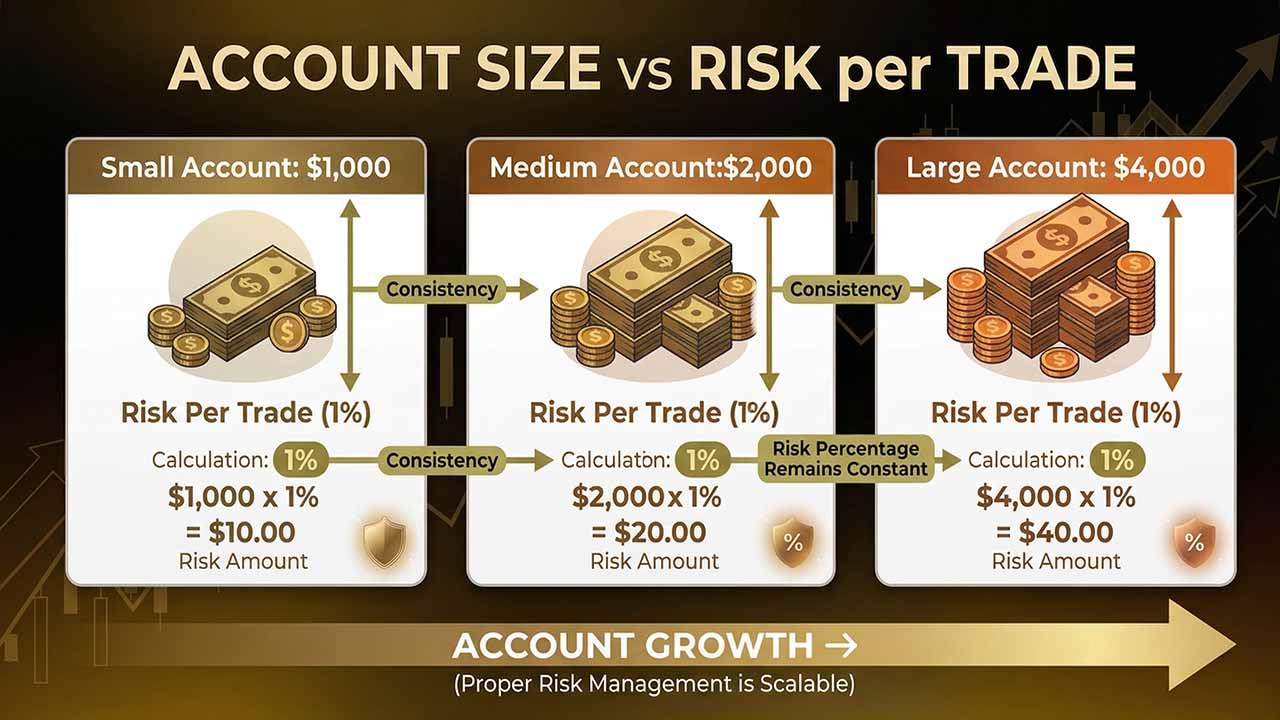
Risk per trade (usually 1–2%)
Consistency over time
Protecting capital
Even a large account can disappear fast without risk control.
This is why many traders fail, regardless of starting balance.
The Role of Leverage in Forex Trading
Leverage is what makes forex trading accessible.
It allows you to control larger positions with a smaller account.
Example:
With 1:100 leverage, $100 controls $10,000 in the market.
That sounds powerful. But it increases risk just as much as it increases potential returns.
Leverage should support your strategy, not replace it.
Can You Start Trading Without Your Own Money?
Yes, and this is where many traders shift their approach.
Instead of growing a small personal account, they use prop firms.
With a prop firm:
You pay a small fee
Pass a challenge
Get access to larger capital
This removes the need to deposit large amounts yourself. To understand how this works in practice, see what is a funded forex account.
Forex Trading With a Small Account vs Funded Account
Let’s compare both paths.
Small Personal Account
Low starting capital
Full control
Slower growth
Higher emotional pressure
Funded Prop Account
Larger capital access
Structured rules
Faster scaling potential
Focus on consistency
This is why many traders move toward prop firms once they understand the basics.
How Much Do You Actually Need to Make Money?
This is where expectations need to be realistic.
Forex trading is not about turning a small account into huge profits quickly.
A more realistic approach:
Aim for 3–5% monthly returns
Focus on consistency
Scale capital over time
Example:
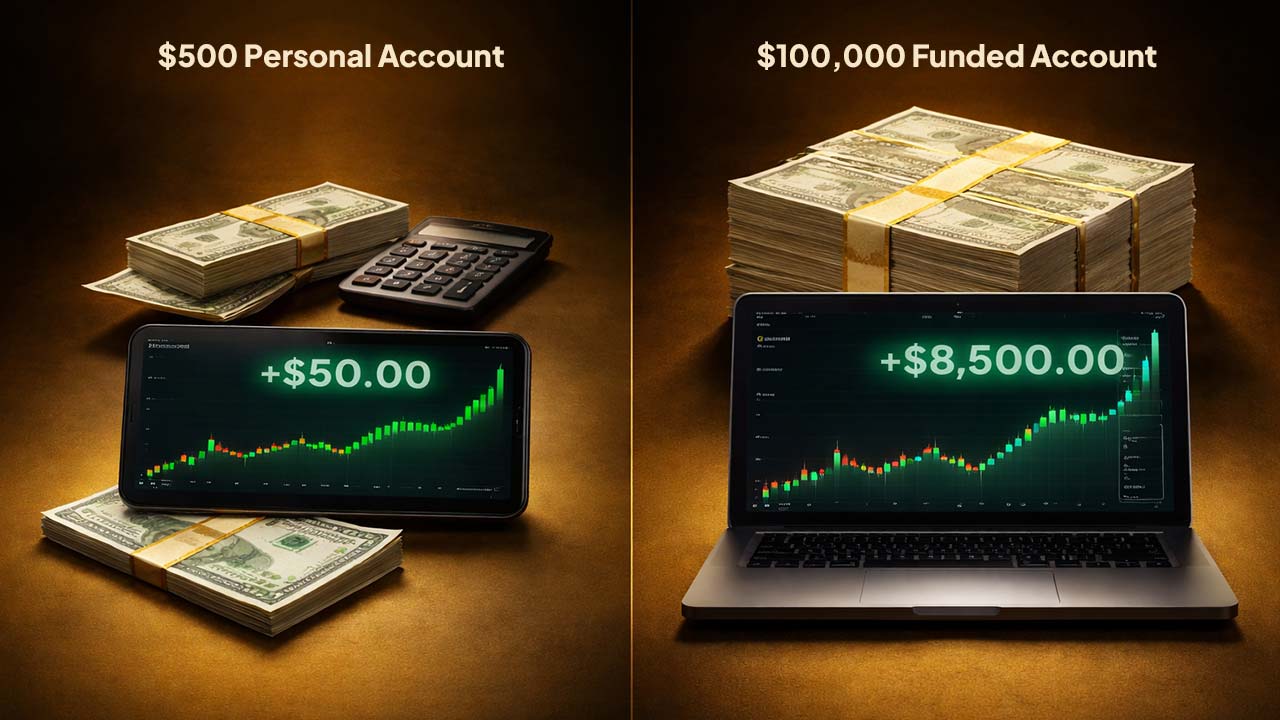
5% on $1,000 = $50
5% on $100,000 = $5,000
The strategy stays the same. The capital changes the outcome. A deeper look at scaling returns is covered in how traders earn money with funded accounts.
Common Mistakes When Starting Forex Trading
Most traders don’t fail because of capital. They fail because of behavior.
Common mistakes include:
Starting too small and overtrading
Ignoring risk management
Chasing fast profits
Using high leverage without control
Fixing these matters more than increasing your starting balance.
Should You Save More Before Starting?
If your goal is long-term trading, yes.
A slightly larger account gives you:
Better risk control
Less emotional pressure
More realistic growth
But you don’t need to wait forever.
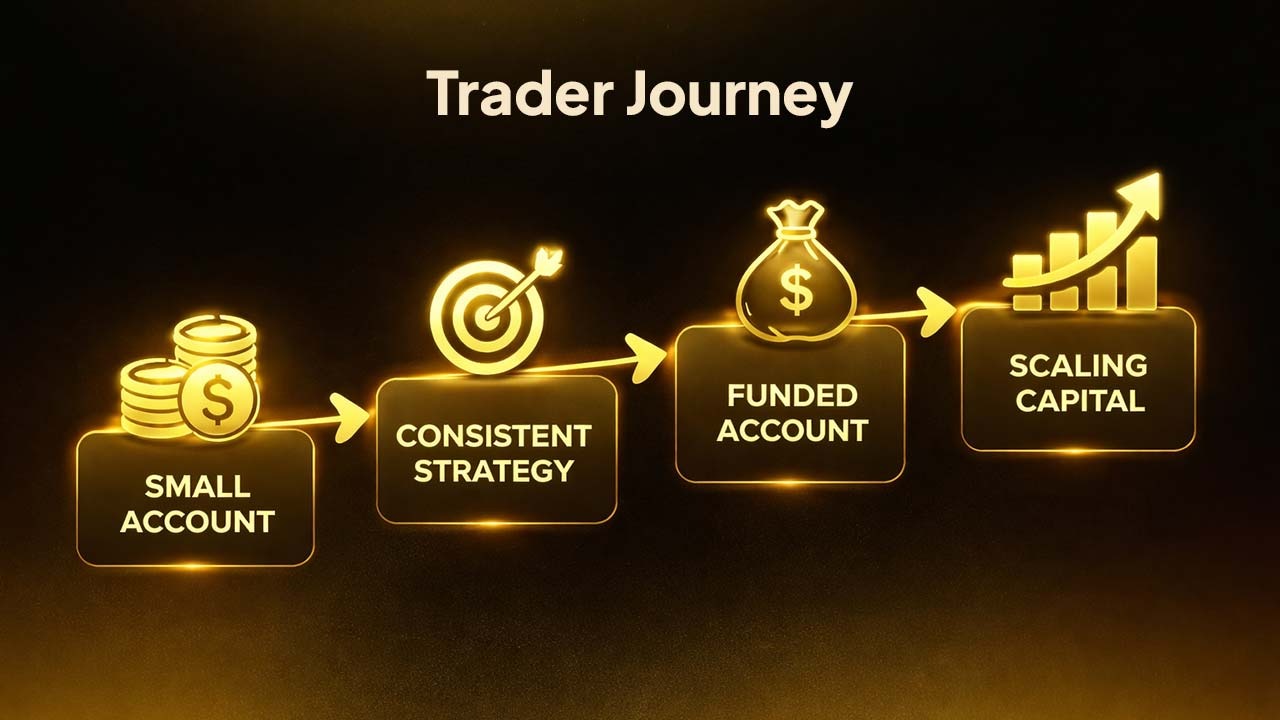
Start small to learn. Scale once your system works.
When Should You Consider a Prop Firm?
You should consider moving to a prop firm when:
Your strategy is tested
You can follow rules consistently
You understand risk management
You are no longer guessing trades
At that stage, capital becomes the main limitation.
Prop firms solve that. The next step is execution, which is covered in how to pass a funded account challenge.
Final Take
You don’t need a large amount to start forex trading.
But starting too small creates pressure that leads to bad decisions.
Focus on:
Learning first
Risk management
Consistency
Then scale your capital.
Many traders eventually move toward funded models through firms like Pipstone Capital, where structured challenges give access to larger accounts without risking personal savings.
FAQs
What is the minimum amount to start forex trading?
You can start with as little as $10 to $100, but this is not ideal for consistent trading.
Is $500 enough to start forex trading?
Yes. $500 allows better risk management and gives you more flexibility compared to very small accounts.
Can I make money with a small forex account?
Yes, but returns will be limited. Small accounts often lead traders to take higher risks, which can result in losses.
Should beginners start with a prop firm?
Not immediately. Beginners should first learn with a small personal account before attempting a prop firm challenge.
How much should I risk per trade?
Most traders risk 1–2% of their account per trade to manage losses effectively.
Is leverage good for beginners?
Leverage can help but also increases risk. Beginners should use low leverage until they understand risk management.



How Much Money Do You Need to Start Forex Trading?
This is one of the most searched questions in forex trading.
“How much money do I need to start trading?”
Most answers online are either too vague or unrealistic. Some say you need thousands. Others say you can start with almost nothing.
The truth sits in the middle.
You can start with a small amount. But how much you should start with depends on how you want to trade and what your goal is.
Let’s break it down properly.
The Real Minimum to Start Forex Trading
Technically, you can start forex trading with as little as $10 to $100.
Most retail brokers allow:
Micro lot trading
High leverage
Low minimum deposits
That makes entry easy.
But starting is not the same as trading properly.
A very small account limits you in two ways:
You cannot manage risk properly
You cannot generate meaningful returns
So while the barrier to entry is low, the barrier to consistency is not.
Why Starting Too Small Holds You Back
Many traders start with $50 or $100 thinking they can grow it fast.
That usually leads to:
Over-leveraging
Taking bigger risks
Emotional decisions
You feel pressure to grow the account quickly. That pressure leads to mistakes.
With a small account, even a well-managed trade produces very small returns.
Example:
2% gain on $100 = $2
That pushes traders to risk more than they should.
A Realistic Starting Range for Forex Trading
If you want to trade properly, a better starting range is:
$300 to $500 → learning stage
$500 to $1,000 → basic strategy testing
$1,000+ → more controlled trading
This allows you to:
Use proper position sizing
Manage risk per trade
Avoid emotional pressure
It doesn’t guarantee success, but it gives you room to trade correctly.
Risk Management Matters More Than Capital
The amount you start with matters less than how you manage it.
Good traders focus on:
Risk per trade (usually 1–2%)
Consistency over time
Protecting capital
Even a large account can disappear fast without risk control.
This is why many traders fail, regardless of starting balance.
The Role of Leverage in Forex Trading
Leverage is what makes forex trading accessible.
It allows you to control larger positions with a smaller account.
Example:
With 1:100 leverage, $100 controls $10,000 in the market.
That sounds powerful. But it increases risk just as much as it increases potential returns.
Leverage should support your strategy, not replace it.
Can You Start Trading Without Your Own Money?
Yes, and this is where many traders shift their approach.
Instead of growing a small personal account, they use prop firms.
With a prop firm:
You pay a small fee
Pass a challenge
Get access to larger capital
This removes the need to deposit large amounts yourself. To understand how this works in practice, see what is a funded forex account.
Forex Trading With a Small Account vs Funded Account
Let’s compare both paths.
Small Personal Account
Low starting capital
Full control
Slower growth
Higher emotional pressure
Funded Prop Account
Larger capital access
Structured rules
Faster scaling potential
Focus on consistency
This is why many traders move toward prop firms once they understand the basics.
How Much Do You Actually Need to Make Money?
This is where expectations need to be realistic.
Forex trading is not about turning a small account into huge profits quickly.
A more realistic approach:
Aim for 3–5% monthly returns
Focus on consistency
Scale capital over time
Example:
5% on $1,000 = $50
5% on $100,000 = $5,000
The strategy stays the same. The capital changes the outcome. A deeper look at scaling returns is covered in how traders earn money with funded accounts.
Common Mistakes When Starting Forex Trading
Most traders don’t fail because of capital. They fail because of behavior.
Common mistakes include:
Starting too small and overtrading
Ignoring risk management
Chasing fast profits
Using high leverage without control
Fixing these matters more than increasing your starting balance.
Should You Save More Before Starting?
If your goal is long-term trading, yes.
A slightly larger account gives you:
Better risk control
Less emotional pressure
More realistic growth
But you don’t need to wait forever.
Start small to learn. Scale once your system works.
When Should You Consider a Prop Firm?
You should consider moving to a prop firm when:
Your strategy is tested
You can follow rules consistently
You understand risk management
You are no longer guessing trades
At that stage, capital becomes the main limitation.
Prop firms solve that. The next step is execution, which is covered in how to pass a funded account challenge.
Final Take
You don’t need a large amount to start forex trading.
But starting too small creates pressure that leads to bad decisions.
Focus on:
Learning first
Risk management
Consistency
Then scale your capital.
Many traders eventually move toward funded models through firms like Pipstone Capital, where structured challenges give access to larger accounts without risking personal savings.
FAQs
What is the minimum amount to start forex trading?
You can start with as little as $10 to $100, but this is not ideal for consistent trading.
Is $500 enough to start forex trading?
Yes. $500 allows better risk management and gives you more flexibility compared to very small accounts.
Can I make money with a small forex account?
Yes, but returns will be limited. Small accounts often lead traders to take higher risks, which can result in losses.
Should beginners start with a prop firm?
Not immediately. Beginners should first learn with a small personal account before attempting a prop firm challenge.
How much should I risk per trade?
Most traders risk 1–2% of their account per trade to manage losses effectively.
Is leverage good for beginners?
Leverage can help but also increases risk. Beginners should use low leverage until they understand risk management.
